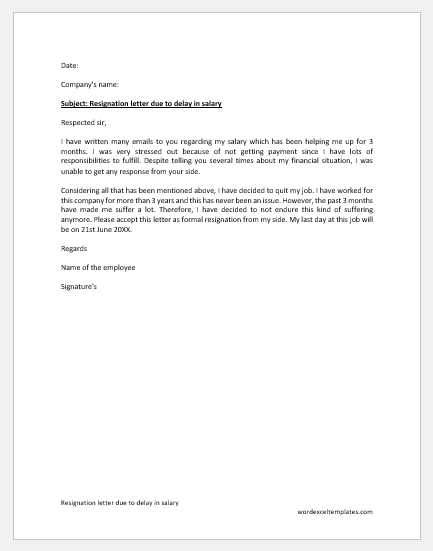
Employees may face different challenges in the workplace, some of which can affect their job satisfaction, motivation, and professional growth. Compensation is one factor that may influence an employee’s decision to remain with an organization. If an employee believes that their salary does not adequately reflect their responsibilities, experience, or financial needs, they may eventually decide to seek other opportunities.
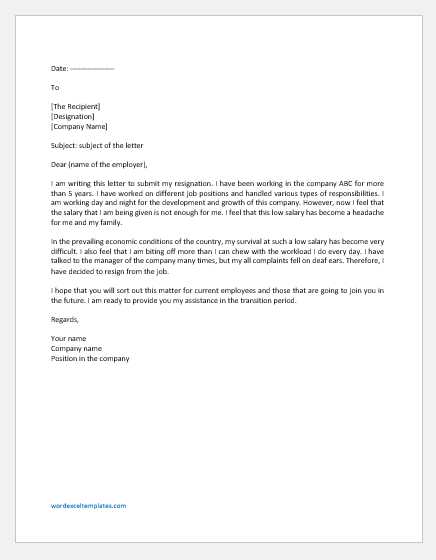
A resignation letter due to low salary allows an employee to formally communicate the decision to leave while explaining compensation as one of the primary reasons for the resignation.
Be Clear and Straightforward
If you have decided to resign because you are dissatisfied with your salary, communicate your decision clearly and professionally. State that you are resigning from your position and mention your intended last working day according to the applicable notice period.
You may explain that your current compensation no longer meets your expectations or is not proportionate to your responsibilities. However, avoid overly emotional or accusatory language.
Convey Your Dissatisfaction Professionally
A resignation letter is a formal workplace document, even when the reason for leaving involves dissatisfaction with salary. Explaining your concern professionally can help the employer understand the factors that influenced your decision.
Constructive feedback may also encourage management to review compensation structures, particularly if similar concerns have been raised by other employees.
Resigning from a job can be a significant professional decision, and communicating that decision appropriately is equally important. The following tips can help you write an effective resignation letter due to low salary.
Inform the Employer About Your Decision
Begin the letter with a clear statement of resignation. Mention your position and your intended last working day. There is no need for a lengthy introduction before communicating the main purpose of the letter.
Mention Relevant Employment Details
You may briefly mention your job title and how long you have worked for the organization. There is usually no need to provide a complete description of your duties unless your workload or increased responsibilities are directly relevant to your reason for leaving.
Explain the Reason for Resignation
If compensation is the main reason for your resignation, explain it respectfully. You may state that your current salary no longer meets your financial needs or that you believe your compensation does not adequately reflect your responsibilities and workload.
Avoid blaming individuals or using aggressive language. A concise and factual explanation is usually more effective.
Offer Assistance During the Transition
Leaving on professional terms can help maintain a positive relationship with your employer and colleagues. Where practical, offer to assist with the transition by completing pending assignments, documenting your responsibilities, or helping hand over your work to another employee.
Decide Whether Your Resignation Is Final
Before submitting the letter, decide whether you are formally resigning or seeking a salary review. These are different conversations.
If your resignation is final, communicate your decision clearly. If you would prefer to remain with the organization if your compensation is reviewed, it may be better to discuss a salary adjustment with your manager before submitting a formal resignation.
Sample Letter
Date: [Date]
Subject: Resignation Due to Compensation Concerns
Dear [Manager’s Name],
Please accept this letter as formal notice of my resignation from my position as [Job Title] at [Company Name], effective [Last Working Day].
I have been associated with the company for more than five years and am grateful for the professional experience and opportunities I have received during this time. I have worked in different roles and taken on various responsibilities that have contributed significantly to my professional development.
After careful consideration, I have decided to resign because my current compensation no longer adequately meets my financial needs or reflects the level of responsibility and workload associated with my position. I have previously discussed my compensation concerns with management, but unfortunately, we have not been able to reach a satisfactory resolution.
This has not been an easy decision, and I appreciate the experience I have gained while working with the company. I hope management will continue to review compensation and workload considerations as part of its efforts to retain and support employees.
During my remaining time with the company, I will do my best to complete pending responsibilities and assist with the handover process to help ensure a smooth transition.
Thank you for the opportunities and experience I have gained during my employment. I wish the company and my colleagues continued success.
Regards,
[Your Name]
[Job Title]
[Company Name]
File: 143 KB