Non-profit organizations work to achieve social, educational, humanitarian, environmental, and other public-benefit objectives rather than distribute profits to owners or shareholders. Many non-governmental organizations (NGOs) depend on donations, grants, and other funding sources to support their activities and projects.
When an NGO plans to launch a new project or expand an existing initiative, it may need financial assistance from individuals, businesses, foundations, or other funding organizations. However, securing donations can be challenging because prospective donors often want assurance that their contributions will be used responsibly and for the intended purpose.
A well-prepared funding proposal letter can help an NGO explain its objectives, demonstrate its credibility, and present a clear case for financial support.
What is a Funding Proposal Letter by an NGO?
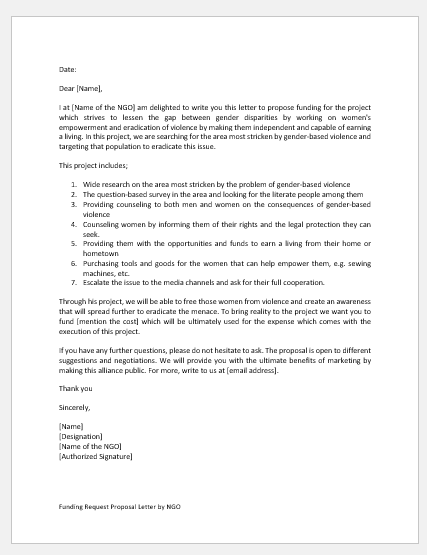
A funding proposal letter by an NGO is a formal document that introduces a proposed or ongoing project and requests financial assistance from a prospective donor or funding organization.
The letter typically explains the project’s purpose, the community or individuals it aims to benefit, the activities involved, and the amount of funding required.
It serves as a professional communication between the NGO and a potential donor, providing an overview of the initiative and explaining how the requested contribution would support its implementation.
NGOs may send these letters to individuals, businesses, charitable foundations, grant-making institutions, or other organizations that support causes aligned with their objectives.
A successful proposal should focus on presenting accurate information, demonstrating the project’s potential benefits, and explaining how donated funds will be managed.
How to Write a Funding Proposal Letter for an NGO
A funding proposal letter should be clear, persuasive, and supported by relevant facts. Rather than relying on emotional appeals alone, it should help prospective donors understand the project’s purpose, financial requirements, and expected outcomes.
The following guidelines can help you prepare an effective proposal.
Introduce Your Organization
Begin by briefly introducing your NGO and explaining its mission, background, and areas of work.
Mention the communities or causes your organization serves and highlight relevant projects or initiatives it has completed.
Where appropriate, include information about your organization’s registration status, relevant experience, partnerships, and previous achievements.
You may also provide examples of completed projects or measurable outcomes to demonstrate your organization’s experience and commitment.
The purpose of this introduction is to help the prospective donor understand who you are, what your organization does, and why it is qualified to undertake the proposed project.
Give Details About the Project
Clearly describe the project for which you are requesting funding.
Explain the problem or need the project aims to address, why the initiative is necessary, and how it will benefit the intended community.
Include relevant information such as the project’s location, target beneficiaries, planned activities, and expected duration.
If possible, provide an estimate of the number of people who may benefit from the initiative and explain how that estimate was determined.
You may also mention whether the project has already received financial support or whether additional funding is required to begin or continue its implementation.
A clear project description helps donors evaluate whether the initiative aligns with their interests and funding priorities.
Explain Your Objectives and Expected Outcomes
Describe what your organization intends to achieve through the proposed project.
For example, an NGO seeking funding for an educational initiative may aim to provide learning materials, improve access to education, or offer training opportunities to underserved communities.
Explain the specific changes or improvements the project is expected to produce.
Where possible, include measurable objectives, such as the number of people to be served, activities to be completed, or services to be delivered within a defined period.
It is also useful to explain how the organization plans to monitor progress and evaluate the project’s results.
Clear objectives and realistic expected outcomes can help donors understand the potential value of their contributions.
Explain How the Funds Will Be Used
Prospective donors often want to know how their financial contributions will be allocated.
Provide a clear explanation of the activities and expenses that require funding.
Depending on the nature of the project, these may include equipment, educational materials, transportation, staffing, training, supplies, or other necessary operational expenses.
You should also explain how the project will be implemented and identify the activities that depend on the requested financial support.
If possible, include a brief budget breakdown showing the estimated cost of each major component.
For larger projects, you may attach a detailed budget and implementation plan to the proposal letter.
Providing this information demonstrates financial planning and helps donors understand how their contributions would support the project’s objectives.
Specify the Funding Requirements
Clearly state the total amount of funding required for the project and, where applicable, the amount you are requesting from the prospective donor.
If the project has already received partial funding, mention the amount secured and the remaining financial requirement.
You may also explain whether the organization is seeking a one-time contribution, recurring financial support, or funding for a particular project activity.
If partial donations are acceptable, let the recipient know that contributions of different amounts would also be appreciated.
However, if the project requires a minimum funding commitment or has specific grant requirements, communicate those conditions accurately.
A transparent funding request allows donors to assess the proposal and determine whether they can provide support.
Provide Your Contact Details and Request a Response
Conclude the letter by thanking the prospective donor for considering your funding request.
Invite them to contact your organization if they would like additional information, a detailed project proposal, supporting documents, or a discussion about the initiative.
Provide the name and designation of the relevant contact person, along with the organization’s email address, phone number, and other appropriate contact details.
If the project has a funding deadline, mention it politely so the recipient understands when a decision would be helpful.
End the letter with a professional closing that expresses appreciation for the donor’s time and consideration.
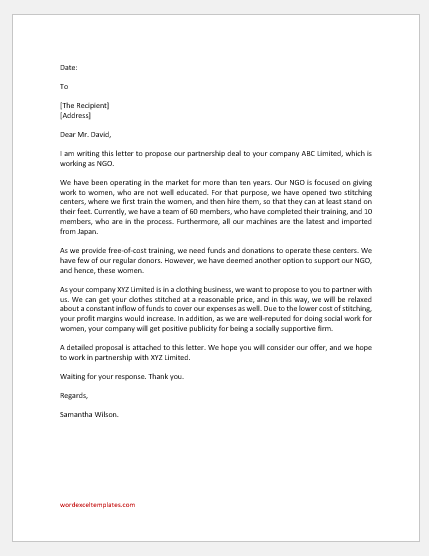
Here are the samples to download and use.
#1
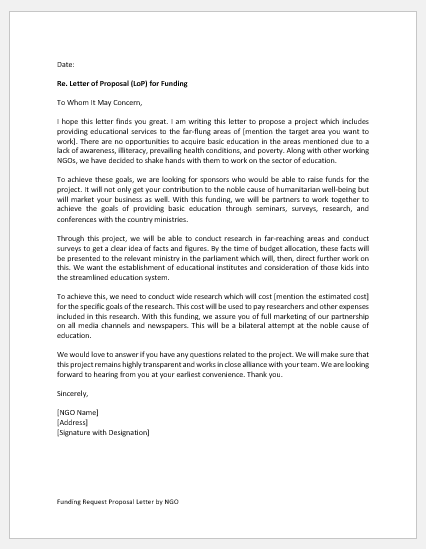
#2