Everyone may need to write an explanation letter at some point in their professional life. When you are invited to attend an important meeting for decision-making but are unable to attend due to personal or unforeseen reasons, writing an explanation letter for not attending the meeting can help resolve misunderstandings and maintain professional relationships.
Sometimes, intentionally or unintentionally, we may cause inconvenience to others. By writing an explanation letter for not attending a meeting, you communicate that you are aware of the inconvenience caused by your absence. When you consider the perspective of the other party, it helps build trust and strengthens professional relationships.
The main purpose of an explanation letter is to clearly inform the concerned party about the reason for your absence and to express sincere regret. It also helps in maintaining goodwill and encouraging continued cooperation and positive professional relations.
Tips for Writing an Explanation Letter
An explanation letter should include both the reason for absence and a clear apology. Regardless of the situation, it is important to take responsibility for not attending the meeting.
You should:
- Clearly mention the reason for your absence
- Take full responsibility where appropriate
- Include a sincere apology
- Explain how you will avoid similar issues in the future or how you will make up for the missed meeting
Sometimes, explanation letters can worsen a situation if they are not written carefully. Blaming others or using unclear or weak excuses can reduce their effectiveness.
A genuine explanation letter should be honest, concise, and to the point. Avoid unnecessary details or multiple excuses, and focus on clarity and sincerity.
Regardless of the purpose of the meeting, an apology is essential along with the explanation. The goal of the letter is not only to inform the reader about your absence but also to express regret. The language used should always remain clear, respectful, and formal, as improper wording can sometimes lead to misunderstandings or conflict.
See the samples below.
Letters
#1
I am writing to sincerely apologize for my inability to attend the scheduled meeting on Friday with the Chinese clients. I understand the importance of this meeting and deeply regret any inconvenience caused by my absence.
Unfortunately, I had an unexpected family emergency that required my immediate attention. However, I informed XYZ two hours before the meeting so that alternative arrangements could be made to attend to the clients.
I acknowledge the significance of my presence and the contribution I could have made to the discussion. I was also scheduled to present our team’s proposal through a multimedia presentation. My participation could have added value and contributed to a more successful outcome of the meeting.
I would like to request your permission to personally contact the clients to arrange another meeting. I will do my best to persuade them to review my presentation. If an in-person meeting is not possible, I suggest that we conduct the discussion online at a convenient time for them.
Once again, I sincerely apologize for any inconvenience caused by my absence. I am willing to make every effort to make up for it by rescheduling the meeting at the earliest possible time.
Thank you for your understanding and consideration.
#2
Subject: Apology for Not Attending the Meeting
Dear Sir/Madam,
I am writing to sincerely apologize for not attending the meeting scheduled today at 10:00. I deeply regret the inconvenience caused by my absence.
The reason for my absence was a misunderstanding regarding the meeting time. I mistakenly believed that it was scheduled for tomorrow. I take full responsibility for this confusion and acknowledge my mistake.
I sincerely regret missing the opportunity to present my ideas and contribute to the discussion. My absence may have affected the team’s progress, and I am truly sorry for that.
I assure you that I will take the necessary steps to prevent such a situation in the future. I will ensure better attention to meeting schedules and carefully review all invitations. In addition, I will promptly clarify any uncertainties regarding timings and set reminders to avoid any misunderstanding.
I fully understand the importance of punctuality and active participation in official meetings. I have learned from this experience and will make every effort to ensure that it does not happen again.
Thank you for your understanding and consideration. I sincerely appreciate your support.
Yours faithfully,
[Your Name]
#3
Subject: Explanation for Not Attending the Meeting
I hope you are doing well and enjoying the pleasant weather.
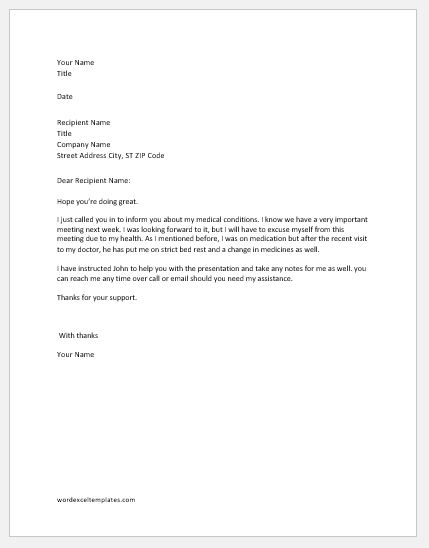
I am writing to inform you about my medical condition. I am aware that we have an important meeting scheduled for next week, and I was looking forward to it. However, I regret to inform you that I will not be able to attend due to health issues.
As mentioned earlier, I have been on medication. After my recent visit to the doctor, I have now been advised strict bed rest along with a change in my treatment plan.
I have instructed John to assist you with the presentation and to take notes on my behalf. You may also contact me anytime via phone or email if you require any support or clarification.
Thank you for your understanding and support.
Kind regards,
[Your Name]
- Character Reference Letter Generator
- Hospital HR Letter Writer/Generator
- HR Letter Writer/Generator
- Recommendation Letter Generator
- Job Application Cover Letter
- First Warning Letter for Negligence of Duty
- Ramadan Schedule Notification for Staff
- One Day Absent Note to Boss
- Request Letter to Staff for Voluntary Deduction from Salary
- Holiday Closing Messages
- Letter Requesting Transfer to another Department
- Letter Requesting Promotion Consideration
- Advice Letter to Subordinate to Set Clear Goal
- Umrah Leave Request Letter to Boss
- Ramadan Office Schedule Announcement Letters/Emails