Childproofing is the process of identifying and reducing hazards in spaces used by infants, toddlers, and young children. Young children are naturally curious and may explore without recognizing danger. Infants also need protection from hazards, including unsafe sleep surfaces, falls, and choking risks.
Childproofing is useful at home and in other places where children spend time, such as childcare facilities, workplaces, shops, and restaurants. A checklist helps caregivers review each area and address hazards appropriate to the child’s age and abilities. It supports, but does not replace, active supervision.
Create your childproofing checklist below:
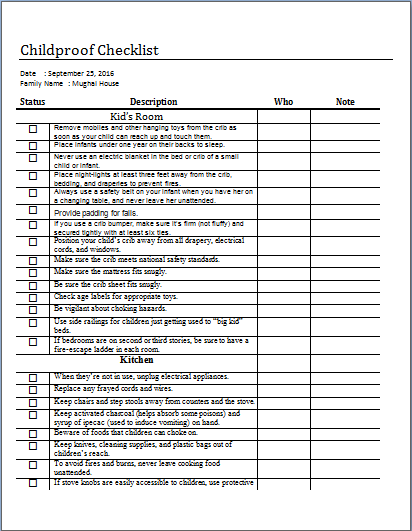
Childproofing Checklist
Inspect household hazards, assign corrective actions, and track safety progress.
Home & Inspection Details
Childproofing Tasks
Check each hazard, choose its safety status, and record the corrective action. Open a task to edit it.
Safety Plan & Emergency Readiness
Inspection Summary
Download the editable Excel checklist or print the A4 safety report using the buttons below.
Components of a Childproofing Checklist
1. Living Room or Common Area
- Cover sharp furniture edges where appropriate.
- Secure televisions and heavy furniture to prevent them from tipping over.
- Use suitable outlet covers and keep electrical cords out of reach.
- Use a securely fitted barrier around fireplaces and heaters.
- Keep breakable decorations, small objects, and other choking hazards out of children’s reach.
2. Kitchen
- Use child-resistant locks on cabinets and drawers containing hazards.
- Keep knives, scissors, cleaning products, and other dangerous items in a secure place out of reach.
- Clean up spills promptly to reduce slipping.
- Keep hot food and liquids away from counter edges, turn pan handles inward, and supervise children near cooking appliances.
- Keep appliance cords out of reach so children cannot pull appliances down.
3. Bathroom
- Use a child-resistant lock to limit unsupervised access to the bathroom.
- Use toilet-lid locks where appropriate, and empty buckets and containers after use.
- Never leave a young child alone in or near bathwater, even briefly.
- Store medicines, toiletries, and cleaning products securely and out of reach.
- Check bathwater temperature before placing a child in it.
4. Bedroom
- Anchor heavy furniture to prevent tipping.
- Keep electrical cords, blind cords, small objects, and breakable decorations out of reach.
- Keep climbable furniture away from windows and use appropriate window safety devices.
- For infants, provide a separate, firm, flat sleep surface and keep it free of pillows, loose bedding, and toys.
5. Play Area
- Choose toys suitable for the child’s age and check them regularly for loose parts or damage.
- Clean toys and play surfaces as needed, following the manufacturer’s instructions.
- Remove sharp objects and other hazards from the play area.
- Supervise children while they play, according to their age and the activity.
6. Stairs and Other Areas
- Install properly fitted safety gates where needed, especially at the top and bottom of stairs.
- Keep medicines, batteries, magnets, and chemicals locked away and out of reach.
- Check outdoor areas for water, tools, and other hazards before children use them.
7. Emergency Preparation
- Keep a well-stocked first-aid kit accessible to adults and out of children’s reach.
- Keep emergency contact numbers readily available.
- Consider learning child first aid and CPR.
- Seek medical or emergency assistance when needed.
Benefits of a Childproofing Checklist
- It helps caregivers review hazards room by room.
- It provides a record of precautions already taken and items that still need attention.
- It can be updated as a child grows and begins to reach or explore new areas.
- It helps families and caregivers communicate about safety arrangements.
File: Word (.doc)
Size: 118 KB