Organizations often arrange training programs to help employees develop new skills and keep their professional knowledge up to date. Regular training can improve employee performance, support professional development, and help organizations adapt to changing workplace requirements.
To meet these needs, companies may organize training workshops conducted by internal specialists or external professional trainers. Training companies and independent trainers can submit proposals to organizations interested in developing their employees’ skills.
What is a Proposal Letter for a Training Workshop?
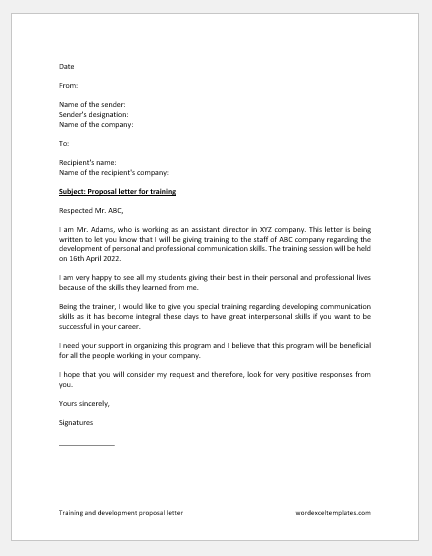
A proposal letter for a training workshop is a formal business letter written by a professional trainer or training company to offer training services to an organization.
The letter introduces the proposed workshop, outlines its objectives, describes the training sessions, and explains how the program can benefit the organization’s employees.
Such proposals may be submitted by independent trainers, training institutes, consulting firms, or organizations that specialize in professional development. Depending on the nature of the workshop, the training may be delivered by an individual instructor or a team of subject-matter experts.
How to Write a Proposal Letter for a Training Workshop
A training workshop proposal should clearly explain the services being offered and demonstrate how the proposed program addresses the recipient’s training needs.
The following guidelines can help you prepare an effective proposal letter.
Give a Brief Introduction to the Training Company
Begin by introducing yourself or your training company. Provide a concise overview of your professional background, areas of expertise, and relevant experience.
You may also mention the qualifications of your trainers, the types of workshops you conduct, and your experience working with similar organizations.
Make sure the introduction is relevant to the recipient’s industry and training requirements.
For example, if you are submitting a proposal to an educational institution, you may highlight your experience in teacher training, curriculum development, classroom management, or other relevant educational areas.
Where appropriate, include information about the qualifications and professional achievements of the trainers who will conduct the workshop.
Describe the Training Sessions
Provide a clear overview of the proposed training program.
Mention the number of sessions, duration of each session, topics to be covered, and methods of instruction.
You may also explain whether the workshop will include presentations, practical exercises, group discussions, demonstrations, assessments, or other learning activities.
If the training requires specific equipment, software, or online platforms, include these details as well.
A well-structured description helps the recipient understand what participants can expect from the workshop.
Explain How the Training Services Will Be Delivered
Describe how the organization can arrange the proposed training program.
Specify whether the workshop will be conducted on-site, online, or through a combination of both methods. You may also mention the proposed schedule, number of participants, training materials, and responsibilities of each party.
If a formal service agreement is required, briefly explain the main terms, including the duration of the engagement and any arrangements for modifying the schedule or scope of training.
Detailed contractual provisions can be included in a separate agreement or proposal document.
Provide Payment Details
Clearly explain the proposed training fees and any additional charges.
Mention whether the fee covers training materials, assessments, certificates, travel expenses, or other related services.
You should also specify the proposed payment schedule, such as an advance payment, installment payments, or payment upon completion of the workshop.
Providing transparent pricing information helps the recipient evaluate the proposal and plan the required budget.
Explain the Cancellation and Rescheduling Terms
Include information about the conditions under which the workshop may be canceled or rescheduled.
For example, you may specify the notice period required for cancellation, whether advance payments are refundable, and how changes to the training schedule will be handled.
Avoid promising unrestricted cancellation unless your company genuinely offers that arrangement.
Clear and reasonable cancellation terms help both parties understand their responsibilities and reduce the possibility of misunderstandings.
End with a Clear Call to Action
Conclude the letter by explaining what you would like the recipient to do next.
For example, you may invite the organization to review the proposal, schedule a meeting, request a detailed training plan, or contact you to discuss its requirements.
Include your contact information and express your willingness to answer questions or customize the proposed workshop according to the organization’s needs.
A polite and professional closing can encourage further discussion and help establish a positive business relationship.
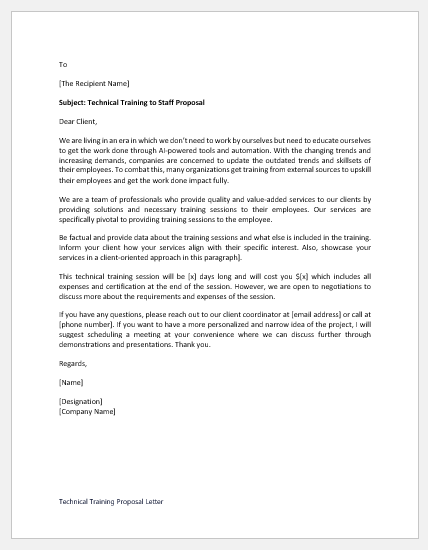
Sample Letters
#1

#2