Meeting Record Sheet with Minutes Generator
Create, edit, save, print, and export professional meeting minutes.
Meeting Information
Attendees
| Name | Designation / Role | Department | Attendance Status | Signature / Initials | Action |
|---|
Agenda Items
| No. | Topic / Agenda Title | Discussion Summary | Decision Made | Responsible Person | Deadline / Follow-up Date | Action |
|---|
Meeting Minutes
Approval Section
Meetings play a vital role in every organization, helping teams communicate, review performance, solve problems, and make important decisions. However, meetings are only effective when discussions and outcomes are properly documented. A Meeting Record Sheet with Minutes Template provides a structured way to record meeting information and ensure that key topics are consistently addressed during different types of organizational meetings.
This template is designed to help businesses maintain organized meeting records while ensuring that important operational, management, and executive-level discussions are not overlooked. By providing predefined meeting categories and discussion points, it supports better planning, consistency, and accountability across all levels of an organization.
What Is a Meeting Record Sheet with Minutes?
A Meeting Record Sheet with Minutes is a document used to record meeting information and provide guidance on the topics that should be discussed during various types of meetings. Rather than relying on memory or informal notes, organizations can use this template to create a standardized meeting process.
The template serves as both a meeting agenda reference and a meeting documentation tool. It helps meeting organizers identify important discussion areas and ensures that meeting records remain consistent throughout the organization.
Why Is a Meeting Record Sheet Important?
Many organizations conduct multiple meetings every week. Without proper documentation, important decisions, risks, and action items can easily be forgotten. A meeting record sheet helps teams stay organized and creates a reliable record of discussions.
Some key benefits include:
- Improves communication among departments
- Creates a documented history of decisions
- Ensures consistency in meeting management
- Supports accountability and follow-up actions
- Helps management monitor organizational performance
- Provides evidence of discussions and approvals
- Assists with compliance and audit requirements
A structured meeting record also makes it easier for employees who were unable to attend to understand what was discussed.
Types of Meetings Covered in the Template
One of the most useful features of this template is that it identifies different meeting categories and outlines the typical topics that should be covered in each.
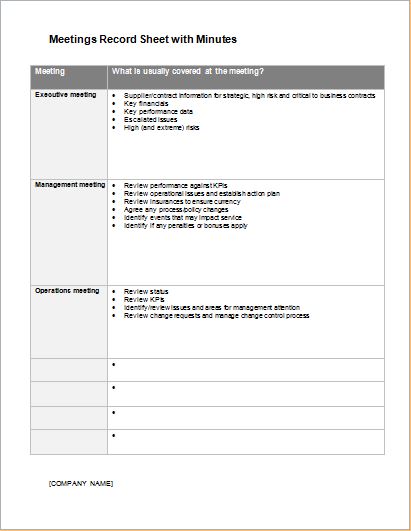
Executive Meetings
Executive meetings focus on strategic and high-level organizational matters. These meetings generally involve senior management and decision-makers.
Topics may include:
- Strategic supplier and contract information
- Critical business contracts
- Key financial performance indicators
- Business performance data
- Escalated organizational issues
- High-priority risks and concerns
These discussions help leadership teams make informed decisions regarding the future direction of the organization.
Management Meetings
Management meetings concentrate on operational performance and organizational oversight.
Common discussion areas include:
- Reviewing performance against KPIs
- Addressing operational challenges
- Establishing action plans
- Reviewing insurance coverage
- Evaluating process and policy updates
- Identifying events that may affect service delivery
- Reviewing penalties, incentives, or bonuses
These meetings help managers coordinate activities and maintain operational efficiency.
Operations Meetings
Operations meetings focus on day-to-day business activities and performance monitoring.
Typical discussion points include:
- Reviewing operational status
- Monitoring KPIs
- Identifying operational issues
- Escalating concerns requiring management attention
- Reviewing change requests
- Managing change control procedures
These meetings ensure that operational activities remain aligned with organizational goals.
How Organizations Use Meeting Minutes
Meeting minutes provide a summary of what was discussed during a meeting. They are often used to:
- Record important decisions
- Document approvals
- Track ongoing projects
- Monitor performance objectives
- Identify risks and opportunities
- Create action plans for future activities
By maintaining accurate meeting records, organizations can improve transparency and reduce misunderstandings.
Advantages of Using a Template
Using a pre-designed meeting record template offers several advantages:
Saves Time
Meeting organizers do not need to create a new format for every meeting. The structure is already prepared and ready for use.
Improves Consistency
All meetings follow a standardized format, making records easier to review and compare.
Enhances Accountability
Documented discussions and decisions make it easier to assign responsibilities and track progress.
Supports Better Decision-Making
Historical meeting records provide valuable information that can be used when evaluating future decisions and strategies.
About This Meeting Record Sheet with Minutes Template
The attached template provides a simple and professional framework for documenting organizational meetings. It includes predefined categories for Executive Meetings, Management Meetings, and Operations Meetings, along with a list of recommended discussion topics for each meeting type. The template also contains a dedicated company name section, allowing businesses to customize it according to their organizational requirements.
Preview
File: Word (.docx) iPad
Size: 32 KB
See Also
- Client Information Sheets
- Bar Staff Sign-Off Sheet
- Sports Signup Sheet Generator
- New Year’s Eve Potluck Signup Sheet
- Christmas Party Sign Up Sheets
- Customer Profile Sheet
- Sign In & Sign Out Sheets
- Tools Sign Out Sheet
- New Customer Information Sheet -Generate Online
- Product Sales Record Sheet
- Potluck Sign Up Sheet Template
- Hotel Comparison Sheet
- Equipment Sign Out Sheet
- Task Completion Status Sheet
- Open House Sign in Sheet Template