An Electricity Consumption Calculator helps estimate electricity use in kilowatt-hours (kWh) and the corresponding energy cost using the appliance, meter, electricity-rate, and billing information entered by the user.
The calculator suite below includes separate tools for home, office, apartment, factory, daily and weekly electricity tracking, monthly bill estimation, appliance costs, air-conditioner usage, and solar energy analysis. Select the required calculator and enter the information relevant to that calculation. The Live Preview updates as the values are changed and can be printed or saved as an A4 PDF report.
Electricity costs calculated by the tool are estimates. Actual utility bills may differ because of tariff slabs, time-of-use rates, fuel or regulatory adjustments, taxes, minimum charges, demand charges, meter factors, and other utility-specific billing rules. Use the electricity rate and billing information applicable to your situation when preparing an estimate.
Electricity Consumption Cluster
Select a worksheet and prepare a printable electricity report.
Live Electricity Report
Report updates automatically as you type.
FAQs
Using the Electricity Calculator Suite
Choose the calculator that best matches the type of electricity analysis you want to perform. Household and office tools can estimate appliance-level consumption, while the apartment, factory, daily, weekly, monthly bill, AC, appliance-cost, and solar tools provide fields suited to those specific calculations.
The suite separates electricity usage calculations from billing estimates where appropriate. Enter your actual electricity rate, meter readings, billing charges, and other requested values rather than relying on sample figures. Use Load Sample only to see an example of how a selected calculator can be completed.
How Electricity Consumption Is Calculated
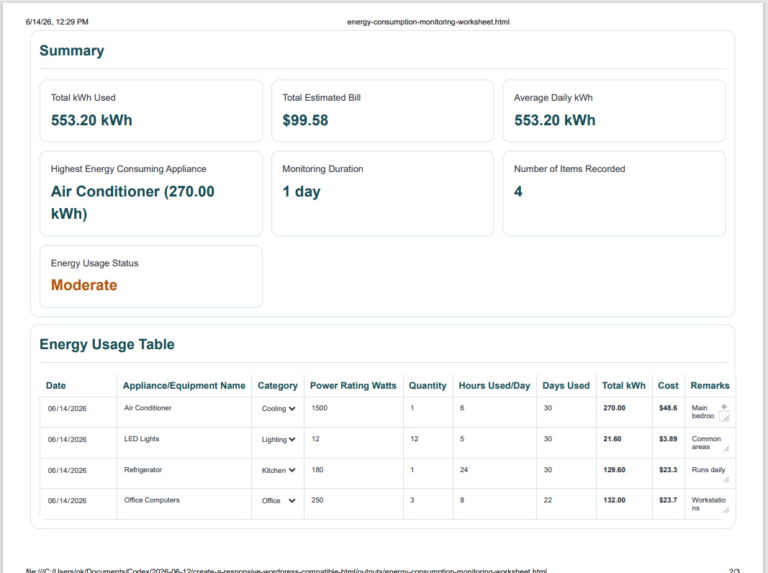
For appliances and equipment, electricity consumption is generally calculated from the equipment’s power rating and operating time:
Electricity Consumption (kWh) = Quantity × Power (Watts) × Operating Hours ÷ 1000
When usage extends over several days, the applicable number of days is included in the calculation.
For example, a 1000-watt appliance operating for 3 hours uses:
1 × 1000 × 3 ÷ 1000 = 3 kWh
Its estimated energy cost can then be calculated as:
Energy Cost = Electricity Consumption (kWh) × Rate per kWh
The actual calculation varies according to the selected worksheet because some tools use meter readings, entered kWh values, adjustments, solar generation, or other information instead of appliance wattage alone.
Choosing the Right Calculator
Use the Home Electricity Calculator for household appliances and the Office Electricity Calculator for departments, rooms, or workplace equipment. The Apartment Calculator can record tenant usage or allocate costs using percentage shares when individual usage figures are not available.
The Factory Calculator uses machine load and runtime to estimate electricity consumption and can relate electricity cost to entered production output. The Daily and Weekly Calculators are intended for shorter-period tracking, while the Monthly Bill Estimator can work from meter readings or itemized electricity usage.
For individual equipment analysis, use the Appliance Cost Calculator or AC Electricity Calculator. The Solar Calculator separates solar generation from consumption loads so estimated solar offset and grid requirements can be reviewed more clearly.
Understanding Electricity Bill Estimates
An electricity bill can contain more than the basic cost of consumed energy. Where applicable, the calculator lets you include fixed charges, tax, and a discount or rebate in the estimate.
These values should be entered according to the billing information available to you. The calculator should not be treated as a reproduction of a particular utility company’s tariff because electricity providers may use different tariff slabs, tax rules, minimum charges, time-of-use rates, demand charges, and other adjustments.
For the Monthly Bill Estimator, choose the appropriate calculation basis. Meter Reading uses the difference between the ending and starting meter readings, while Itemized Units uses the electricity quantities and applicable rates entered in the itemized table.
AC and Solar Estimates
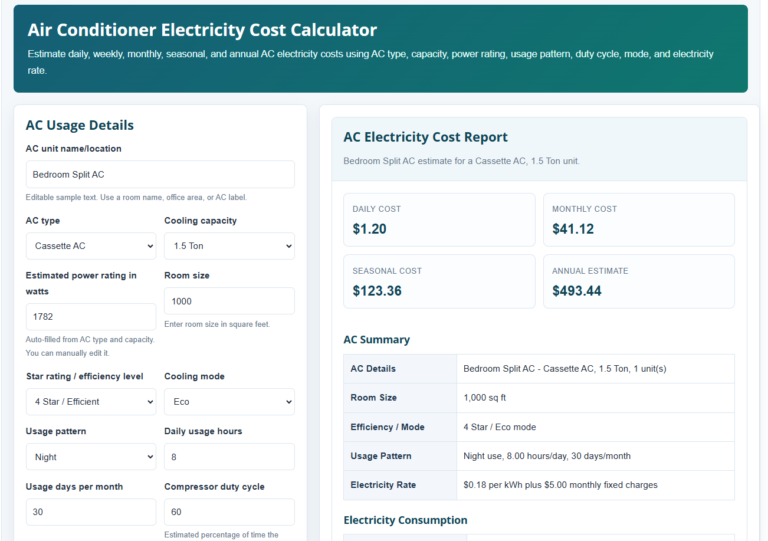
The AC calculator estimates electricity consumption from the entered input power in watts, operating hours, and days of use. When an inverter comparison is enabled, any displayed inverter savings figure is an assumed estimate based on the savings percentage entered by the user. It should not be interpreted as a guaranteed efficiency difference between two AC models.
For solar analysis, classify rows according to their purpose, such as Solar Generation, Consumption Load, or Battery Loss / Consumption. This allows the calculator to distinguish generated energy from electricity demand rather than relying on the wording of an item description.
Solar savings and grid requirements remain estimates. Actual solar production can vary with panel orientation, shading, temperature, weather, system losses, inverter efficiency, battery behavior, and other installation-specific conditions.
Reading the Results
Review individual appliance or equipment rows as well as the overall electricity-use and cost estimates. A high numerical value does not automatically mean that electricity use is excessive; appropriate consumption depends on the property, equipment, operating period, production requirements, climate, and other circumstances.
The calculator therefore focuses on the measured or estimated figures entered by the user rather than applying a universal “normal” or “high” electricity-use threshold.