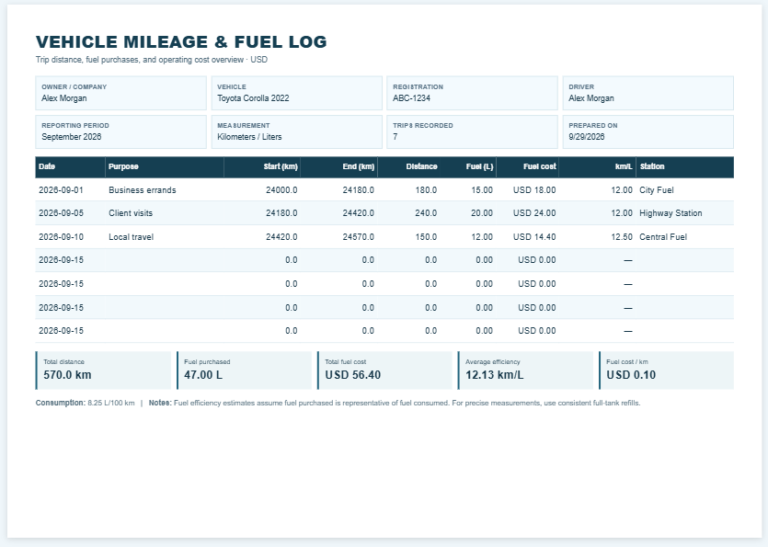
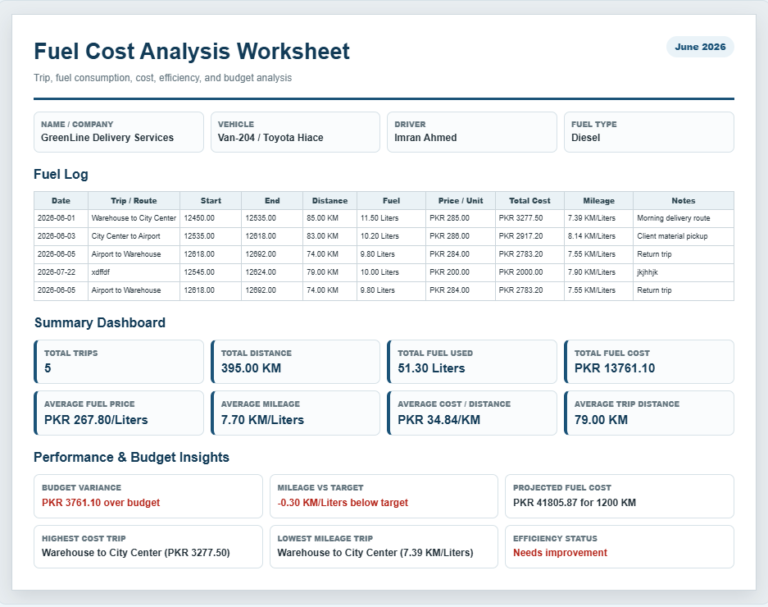
A fuel consumption calculator helps estimate how efficiently a vehicle or fuel-powered machine uses fuel over a recorded distance. By entering the distance traveled, fuel used, and fuel price, you can calculate fuel economy, total fuel cost, and cost per mile or kilometer.
The calculator below can be used for cars, trucks, buses, fleet vehicles, generators, and other equipment where distance-based fuel records are available. It supports miles/gallons and kilometers/liters and can also project fuel use and cost based on the number of similar trips or uses entered.
For the most meaningful results, use actual figures from odometer readings, fuel receipts, fuel-card records, trip sheets, or equipment logs. Fuel economy can vary with vehicle condition, load, route, traffic, driving style, weather, and operating conditions, so calculated figures should be treated as estimates rather than guaranteed future consumption.
Fuel Consumption Calculator
Calculate fuel economy, fuel usage, trip cost, cost per distance, and operating projections.
Calculator Inputs
Operations and MaintenanceTip: For accurate results, enter actual distance and fuel filled/used from logs, receipts, odometer records, or equipment run sheets.
Live Calculation Report
MPGFuel Consumption Report
Operations and Maintenance - Fuel Use and Cost Calculation
| Metric | Value | Notes |
|---|---|---|
| Distance Traveled | Distance covered during the selected period. | |
| Fuel Used | Total fuel consumed for the distance. | |
| Fuel Economy | Higher MPG or lower L/100 km indicates better efficiency. | |
| Total Fuel Cost | Fuel used multiplied by fuel price per unit. | |
| Cost Per Distance | Useful for route, job, delivery, or equipment costing. | |
| Monthly Projection | Based on the entered similar trips per month. | |
| CO2 Estimate | Approximate value for internal tracking only. |
Notes
Frequently Asked Questions
1. What is a Fuel Consumption Calculator?
A Fuel Consumption Calculator estimates fuel economy, fuel used, fuel cost, cost per mile or kilometer, monthly fuel spending, and approximate emissions from distance and fuel inputs.
2. Who can use this calculator?
Drivers, fleet managers, maintenance teams, operations supervisors, logistics staff, equipment operators, and small businesses can use it for distance-based vehicles or operating-hour-based equipment.
3. Can I use miles and gallons?
Yes. Select Miles and Gallons to calculate miles per gallon, total trip cost, cost per mile, projected monthly gallons, and estimated CO2.
4. Can I use kilometers and liters?
Yes. Select Kilometers and Liters to calculate kilometers per liter, liters per 100 kilometers, total fuel cost, cost per kilometer, and monthly liters.
5. How is fuel consumption calculated?
For miles and gallons, fuel economy is distance divided by fuel used. For kilometers and liters, the calculator shows both kilometers per liter and liters per 100 kilometers. In Operating Hours mode, it shows fuel used per operating hour.
6. How is total fuel cost calculated?
Total fuel cost is calculated by multiplying fuel used by the fuel price per unit, such as price per gallon or price per liter.
7. What does cost per distance mean?
Cost per distance shows how much fuel money is spent for each mile or kilometer. It is useful for route pricing, job costing, delivery planning, and budget reviews.
8. Are CO2 results exact?
No. CO2 results are approximate estimates based on common gasoline and diesel emission factors. They are useful for internal tracking but should not replace certified environmental reporting.
9. Can I print the fuel consumption report?
Yes. Use the Print Report button to print the live calculation report for records, approvals, fleet files, or maintenance documentation.
10. What records should I use for accurate calculations?
Use odometer readings, fuel receipts, fuel card data, trip sheets, fleet reports, hour-meter readings, or equipment run logs for the most meaningful results.