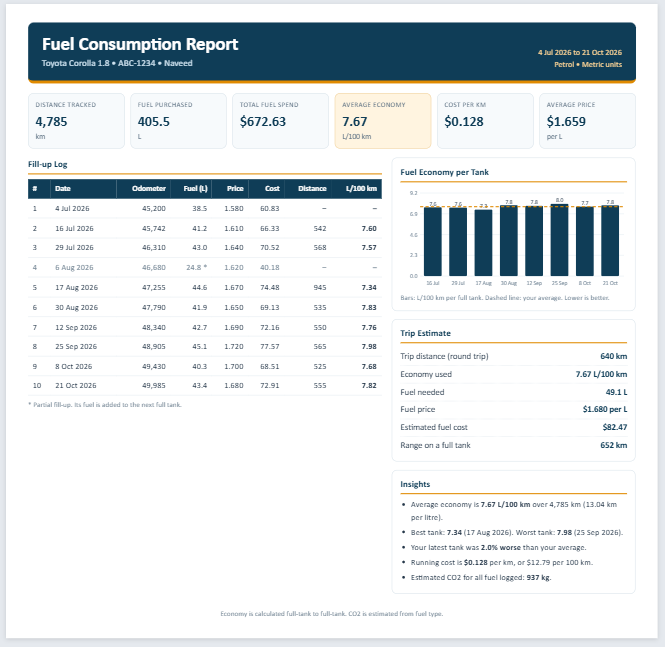
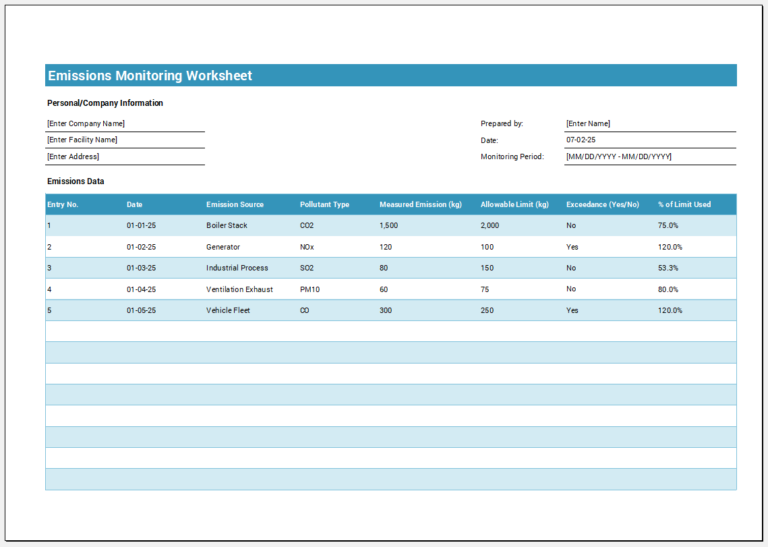
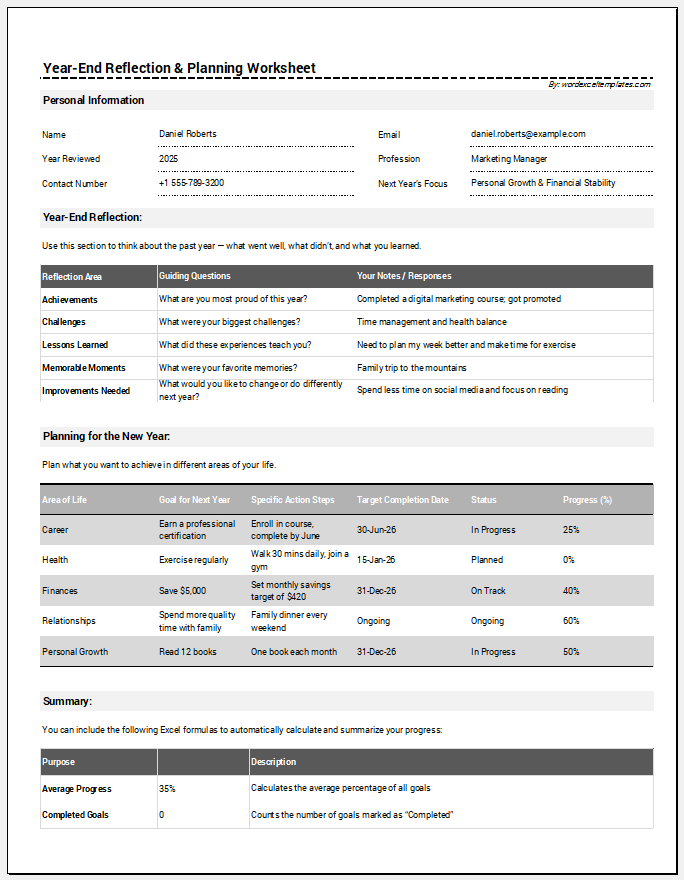
Monitoring energy consumption helps businesses and individuals understand how much energy they use and where it is being consumed. This information can help identify inefficient equipment, unnecessary usage, and opportunities to reduce costs.
One way to record energy consumption is to use an energy consumption monitoring worksheet. This document records and tracks energy usage by appliances, equipment, or an entire building over a specified period.
The worksheet organizes readings or estimates so users can compare consumption over time and assess the effects of energy-saving measures. It does not measure energy use itself; the information must come from meter readings, monitoring devices, or calculations based on equipment ratings and operating hours.
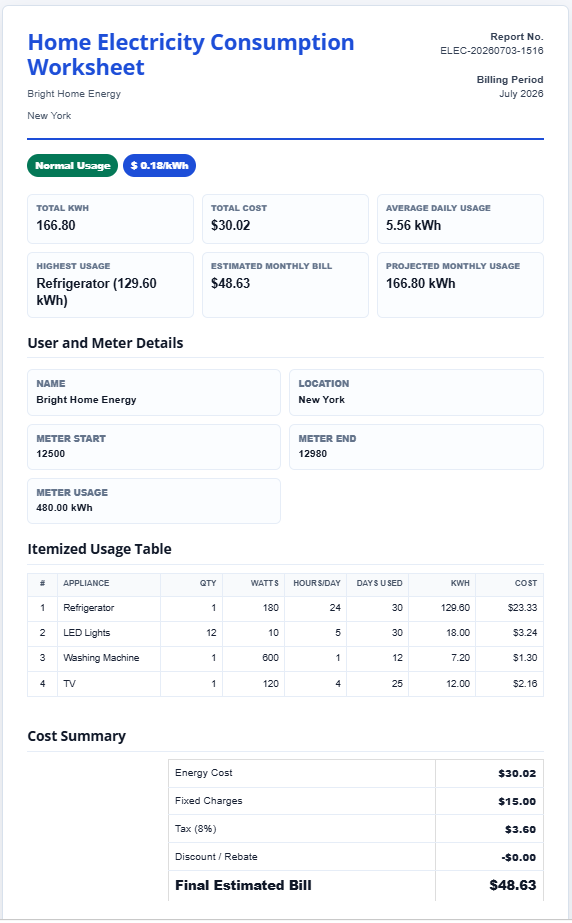
The worksheet can list each appliance or piece of equipment, its power rating, quantity, and operating hours. These details can be used to estimate consumption and cost. Actual meter readings can also be recorded to track measured usage.
Use the given sheet below.
Energy Consumption Monitoring Worksheet
Record measured meter readings and estimate appliance energy use from power ratings and operating hours. This tool does not measure consumption.
Site & Monitoring Period
Estimated consumption = power (W) ÷ 1000 × quantity × hours per day × days. Meter readings provide measured consumption; do not add estimates and meter readings together as if they were separate usage.
Appliances & Equipment
Enter rated power, quantity, daily operating hours, and operating days for each appliance.
Actual Meter Readings
Record previous and current electricity meter readings (kWh) for the reporting period. Readings may come from meters or monitoring devices.
Use non-overlapping meters when comparing totals. Submeters may be included in a main meter and should not be summed twice.
Review & Energy-Saving Measures
Benefits of an Energy Consumption Monitoring Worksheet
The following are some advantages of using this worksheet:
- It keeps energy usage information organized in one place.
- It helps identify unusually high consumption and potential opportunities to save energy.
- It allows users to compare consumption before and after introducing energy-saving measures.
- It supports decisions about equipment upgrades and changes in usage habits.
- It helps estimate energy costs and plan budgets.
There are also some limitations to consider:
- Collecting and updating readings can be time-consuming, particularly when many devices are involved.
- Incorrect entries or formulas can produce misleading results. Spreadsheet formulas reduce repetitive calculations, but the inputs and results still need to be checked.
- Estimates based on rated power may differ from actual consumption, especially for equipment that cycles on and off or operates at varying power levels.
How to Create an Energy Consumption Monitoring Worksheet?
Use a clear layout that is easy to complete, review, and update. The following points can help:
Format the Worksheet
Give the document a heading such as “Energy Consumption Monitoring Worksheet.” Include the company, building, or household name and the monitoring period. State the electricity rate per kilowatt-hour (kWh) and clearly label all measurement units.
Record Estimated Appliance Consumption
Create a table with columns for:
- Appliance or equipment name
- Quantity
- Power rating in watts (W)
- Average operating hours per day
- Estimated daily consumption in kWh
- Number of operating days in the reporting period
- Estimated consumption for the period
- Electricity rate per kWh
- Estimated energy cost
Calculate estimated daily consumption as follows:
Daily consumption (kWh) = Power rating (W) × Quantity × Operating hours per day ÷ 1,000
Multiply daily consumption by the number of operating days to estimate consumption for the reporting period. Multiply the resulting kWh figure by the applicable electricity rate to estimate the energy cost.
Record Meter Readings
If you are using a cumulative electricity meter, include a separate section for the reading dates, previous reading, current reading, and consumption difference. Where the meter records kWh directly, subtract the previous reading from the current reading to determine consumption between those dates.
Keep whole-building readings separate from appliance estimates to avoid counting the same consumption twice.
Review Costs and Results
Compare totals across reporting periods and note changes in operating hours, equipment, or occupancy that may explain differences. If electricity rates vary by usage level or time of day, account for those differences when calculating costs. Fixed charges and other bill components should be recorded separately where relevant.
Keep the Worksheet Clear and Useful
The worksheet should include only the details needed for its intended purpose. Update it consistently and distinguish measured consumption from estimates.
A well-maintained energy consumption monitoring worksheet helps users understand usage patterns, evaluate potential savings, and make more informed decisions about equipment and everyday energy use.