When the year ends, many people reflect on their experiences and achievements. This helps them recognize their progress and identify areas they would like to improve. A year-end reflection and planning worksheet can help organize these thoughts.
You can use this worksheet to review your successes, the challenges you faced, and the lessons you learned. These insights can guide your plans for the year ahead.
What is a Year-End Reflection & Planning Worksheet?
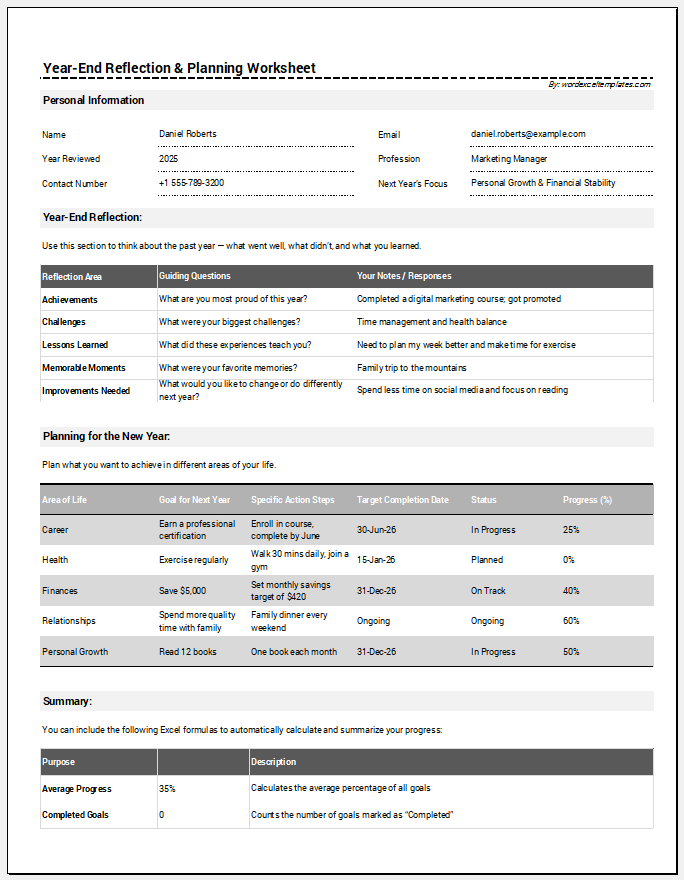
It is a document that helps you review the past year and plan for the next one. It provides space to record achievements, challenges, and meaningful experiences, then use them to set realistic goals.
Key Sections of the Worksheet
The worksheet includes space to reflect on the past year, recognize successes, and consider how you responded to challenges. A planning section allows you to set priorities and outline steps toward future goals.
Benefits of a Year-End Reflection & Planning Worksheet
The worksheet can help you:
- Recognize what you achieved during the past year.
- Review the challenges you faced.
- Record the lessons you learned.
- Identify areas for growth or change.
- Plan for the next year using insights from your experiences.
How to Create a Year-End Reflection & Planning Worksheet
Keep the worksheet clear and easy to complete. Consider the following points when designing it:
Select an Application
Use an application such as Microsoft Excel or Word to organize your reflections and plans in one place. Choose a format that provides enough space for your answers and is easy to update.
Organize the Layout
The heading can be “Year-End Reflection & Planning Worksheet.” Divide the content into clearly labeled sections so that you can review the past year before planning the next one.
Include Relevant Sections
Begin with prompts about what you enjoyed and how you would describe the past year. Add space for your biggest achievements, completed goals, and challenges.
You can also record personal highlights, such as a favorite show, hobby, or activity. Include sections for new skills, things you are grateful for, and lessons learned.
Next, create a planning section for the coming year. Group your goals into categories such as work, education, health, and family. For each goal, note practical steps and a target date where useful. This structure makes your plans easier to review and follow.
Reflecting on the year helps you acknowledge progress as well as areas that need attention. Recognizing positive experiences can encourage you, while reviewing difficulties can reveal what support or changes might help.
Keeping your reflections and plans together gives you a useful reference throughout the next year. Revisit the worksheet periodically to check your progress and adjust your goals as circumstances change.
Format: MS Excel (.xlsx)