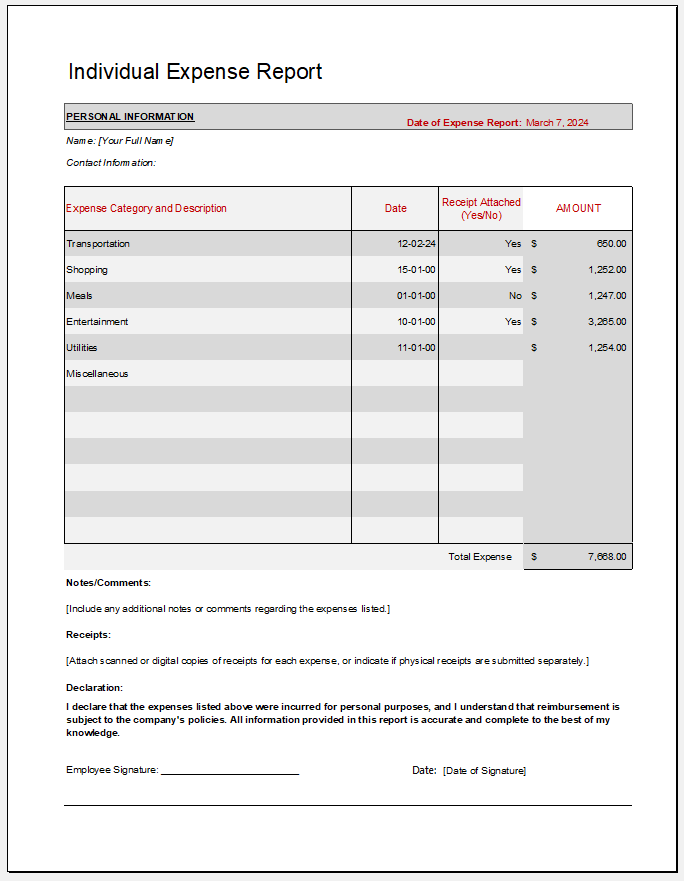
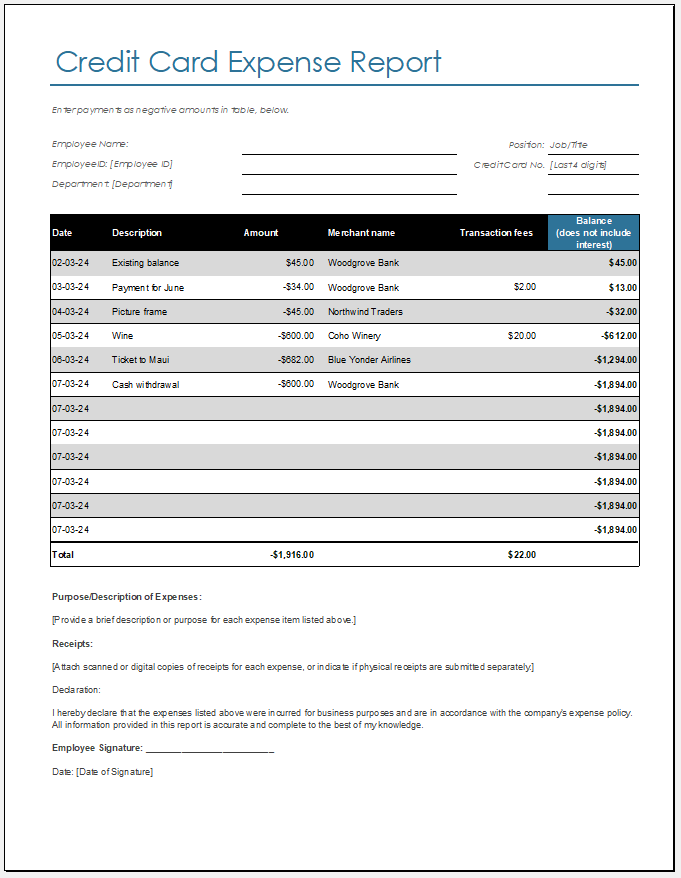
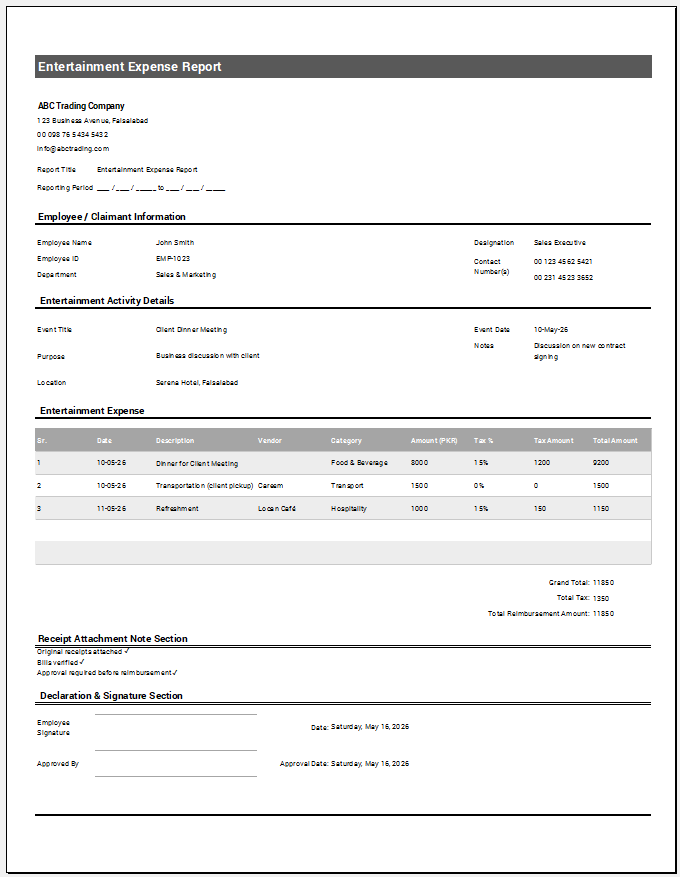
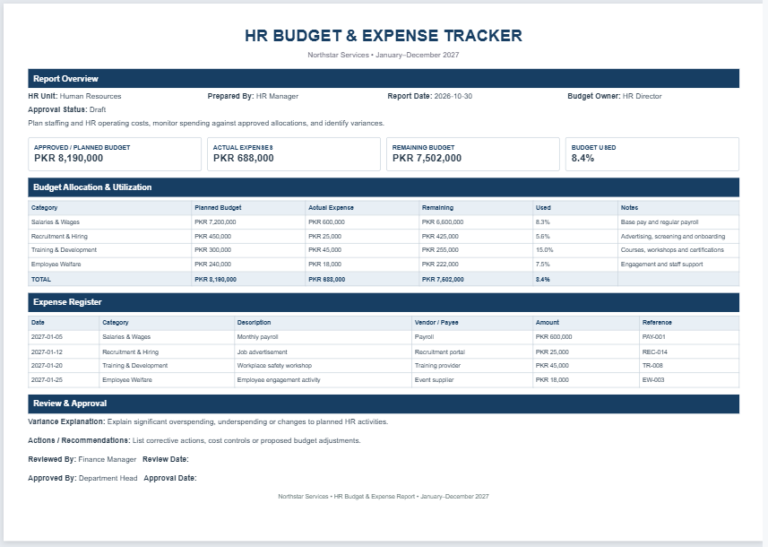
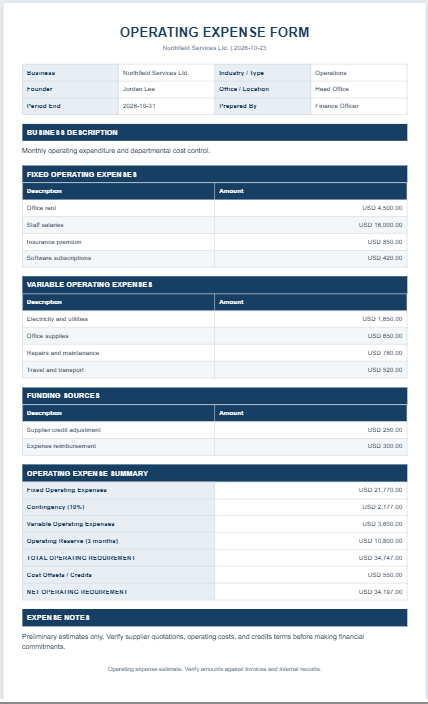
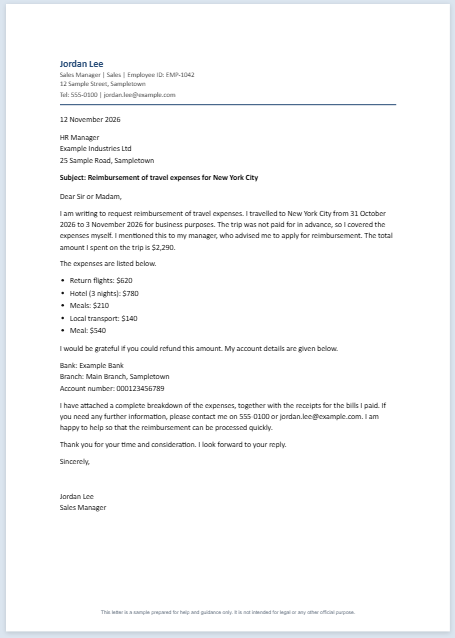
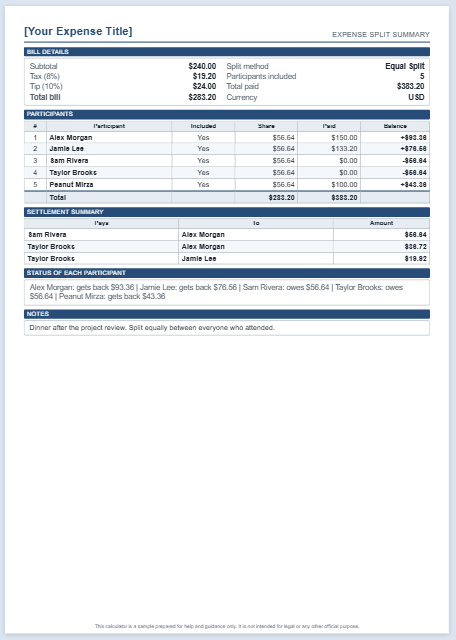
Keeping track of everyday expenses is important for small business financial planning and budgeting. Daily expense reports provide a structured way to record spending and review costs regularly. A daily expense report worksheet brings these records together in one place.
How to Create an Expense Worksheet?
You can create the worksheet using spreadsheet software such as Microsoft Excel or Google Sheets. It can be tailored to the company’s specific needs. Some businesses may require detailed expense categories and approval information, whereas others may need only a basic spending record.
(Create your worksheet below).
Daily Expense Report Worksheet
Track small-business spending, receipts, payment methods, and reimbursements.
Business & Report Details
Expense Entries
Add each expense, receipt reference, tax and reimbursement status.
Budget & Policies
Review & Approval
What to Include in the Worksheet
Common fields include the transaction date, supplier, item or service purchased, expense category, amount spent, payment method, and business purpose. A receipt or invoice reference helps link each entry to its supporting document.
The worksheet helps business owners review spending and identify potential cost savings. It also provides supporting information for bookkeeping and financial reporting.
Spreadsheet tools can help summarize expenses by category, department, project, or period. Reviewing these patterns makes it easier to compare spending with the budget and identify areas that need attention.
The Worksheet Provides a Clearer View of Spending
For small companies, a regularly updated expense worksheet provides a useful overview of recorded costs. This supports decisions about future spending and budgeting. However, expenses alone do not show the business’s complete financial position; income, assets, liabilities, and cash balances must also be considered.
A daily expense report worksheet can help identify overspending and opportunities to reduce costs. This is particularly important for small businesses with limited resources. Complete entries and supporting documents also make expenses easier to review and verify.
Organized expense records can reduce the time spent searching through receipts and invoices when preparing financial statements or information for tax returns. Their usefulness depends on accurate data, appropriate categorization, and reconciliation with other accounting records.
The worksheet supports record-keeping but does not, by itself, guarantee accurate financial statements or compliance with reporting requirements.
A Practical Tool for Small Businesses
A daily expense report worksheet helps small businesses organize spending, compare costs with budgets, and investigate unexpected changes. Recording expenses promptly and reviewing them regularly can reveal unnecessary expenditure and support more informed planning.
Keep the worksheet simple, retain supporting documents, and check entries against payment records. Used consistently alongside other financial records, it can make day-to-day expense management more efficient.
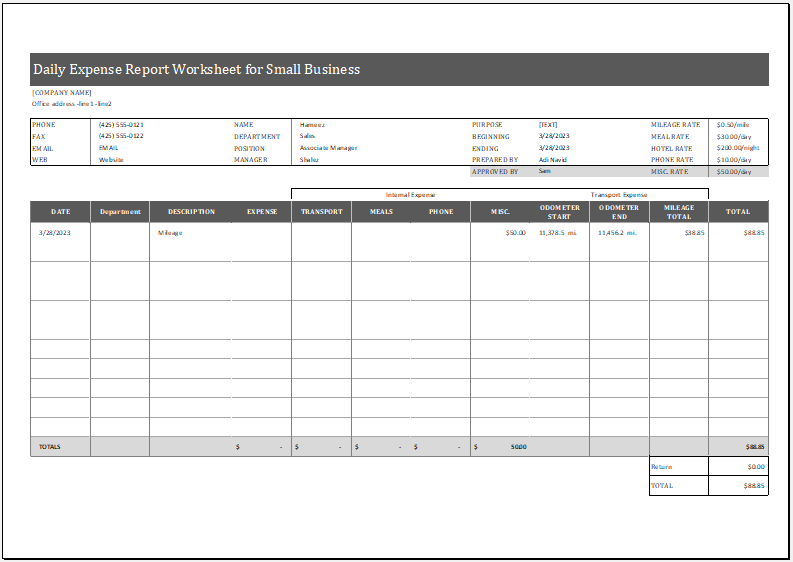
MS Excel Worksheet Template
File Size: 120 KB