A company must understand its operating expenses because they affect profitability and resource allocation. Tracking these costs helps a business assess its spending, identify inefficiencies, and make informed decisions. An operating expenses form can organize this information in one place.
This document records the costs associated with running a business during a specified period. Common examples include office rent, utilities, administrative salaries, marketing, and office supplies. Expense classifications depend on the nature of the business and the accounting approach used.
The form helps a company track and manage its operating expenses by providing a consistent record for review. Comparing costs with budgets and previous periods can help identify changes that require attention.
Expenses can be grouped into categories, such as administration, sales, and maintenance. Identifying fixed and variable costs may also help the business understand how spending changes with activity levels. Category totals are combined to calculate operating expenses for the period.
Create a FREE operating expense form below.
Operating Expense Form
Track fixed and variable operating expenses, allowances, and cost adjustments in a clear variable budget.
Expense Report Details
Fixed Operating Expenses
Include registration, premises, equipment, opening inventory, marketing, and other initial expenses.
Variable Costs & Adjustments
Variable Operating Expenses
Cost Offsets / Credits
Review & Export
Benefits and Limitations of an Operating Expenses Form
Benefits include the following:
- The form helps a company track, analyze, and manage its ongoing expenses.
- It provides a basis for reviewing spending against the budget.
- It helps identify essential costs and opportunities to reduce unnecessary expenditure.
- It supports decisions about resource allocation, operational improvements, and pricing when considered alongside other financial information.
Limitations include the following:
- A single reporting period provides limited insight into trends. Comparing forms across periods gives a clearer view of how costs change over time.
- Missing entries, incorrect classifications, or calculation errors can produce inaccurate totals.
- The form alone does not establish overall profitability; revenue and other relevant costs must also be considered.
How to Create an Operating Expenses Form?
Use a clear layout that makes entries easy to record, check, and summarize. The following points can help:
Use a Professional Format
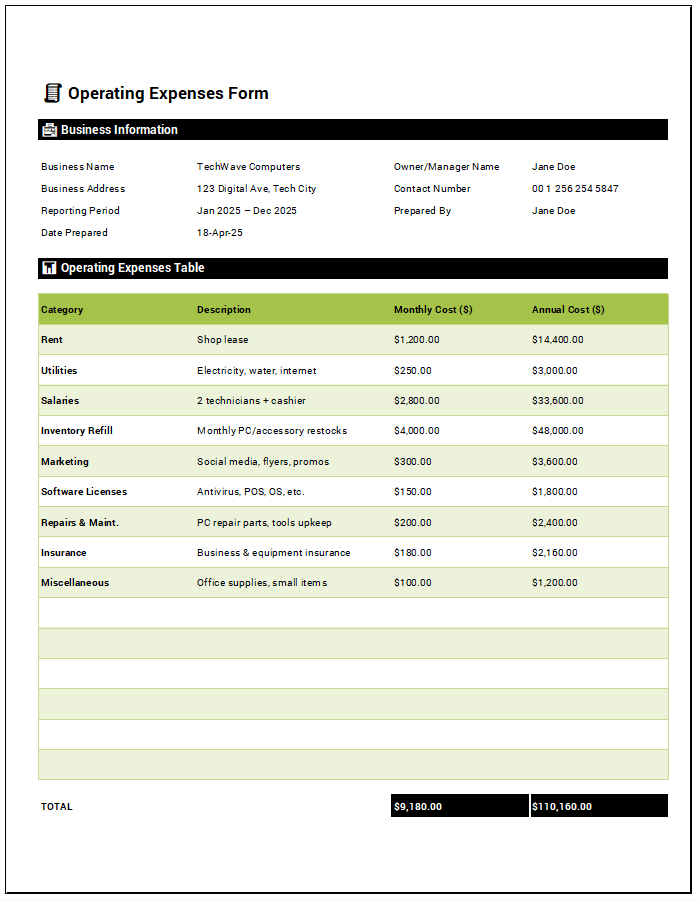
Add the heading “Operating Expenses Form.” Include the company name, reporting period, currency, and preparation date. Organize the expense details into a table with clearly labeled sections.
Create Separate Sections
Group expenses into categories appropriate to the business. These may include administration, employee costs, maintenance, marketing, and other operating expenses. Include research and development costs where they are treated as operating expenses.
List each expense in a separate row. Useful columns include:
- Expense date
- Description
- Category
- Supplier or payee
- Invoice or reference number
- Budgeted amount, if applicable
- Actual expense amount
- Difference from budget
- Notes
Calculate a subtotal for each category and an overall total for the reporting period. Avoid counting the same expense in more than one category, and keep equipment purchases or other capital expenditure separate where appropriate.
Include Only Relevant Details
Keep the form focused on information needed to identify, classify, and review expenses. Use consistent categories and retain references to supporting records so entries can be checked.
Operating expenses support the activities a business needs to function, so reducing them should involve considering their purpose and value. Cutting essential spending without assessing the consequences may affect service quality or operational capacity.
A well-maintained operating expenses form helps a company understand where resources are being used and identify changes worth investigating. Reviewing the information alongside revenue, budgets, and other financial records supports more informed decisions about costs and profitability.
File: Excel (.xlsx) -143 KB
You May Also Need
Explore templates, tools, calculators, and articles connected to this resource.
Related Templates
Holiday Expense Tracker Template
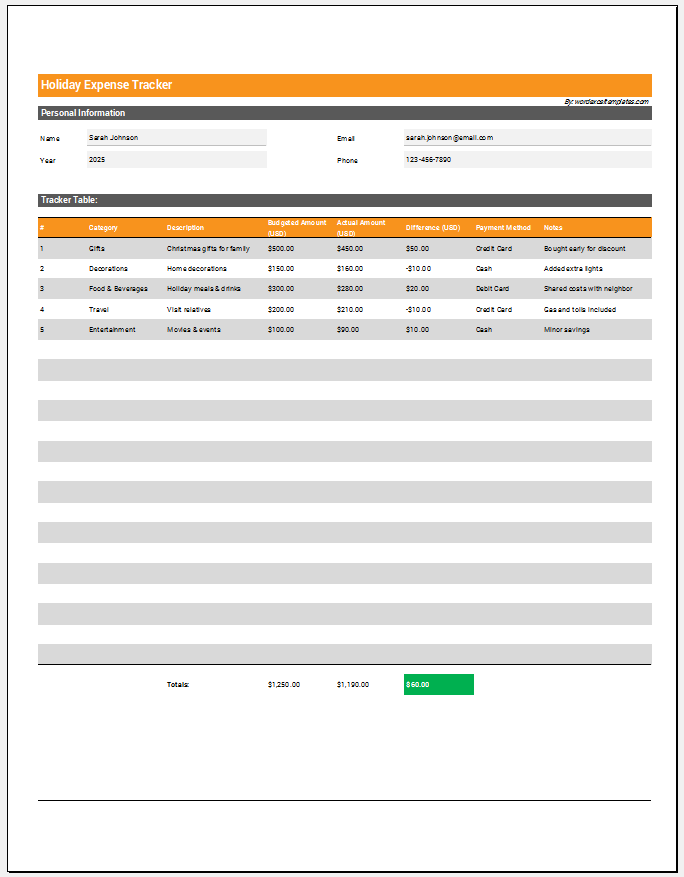
The holiday season lets one relax and enjoy time with their loved ones. It lets one unwind and be ready for work or school. However, holidays can end up being stressful if one spends too much money or does not track how much money they are spending. Holidays can only be enjoyed if you know […]
Individual Expense Report Template
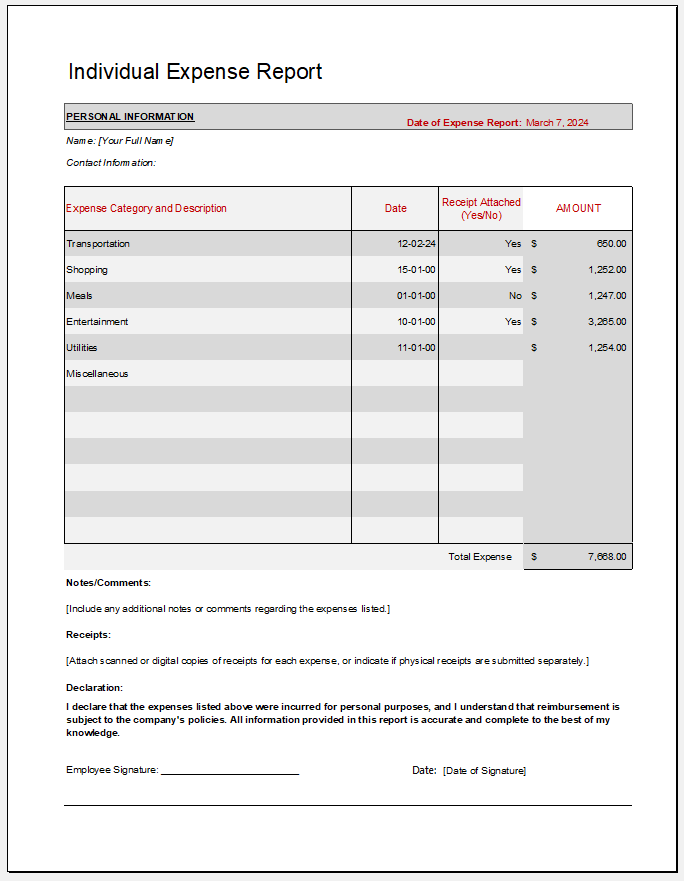
Employees of some businesses incur different business expenses which they pay by themselves. These expenses tend to be unavoidable as they are needed to run the business. This may include travel-connected expenses such as airfare, car rentals, etc. They may be business expenses such as meals, office supplies, etc. They will be related to the […]
Inventory Budget Sheet Template
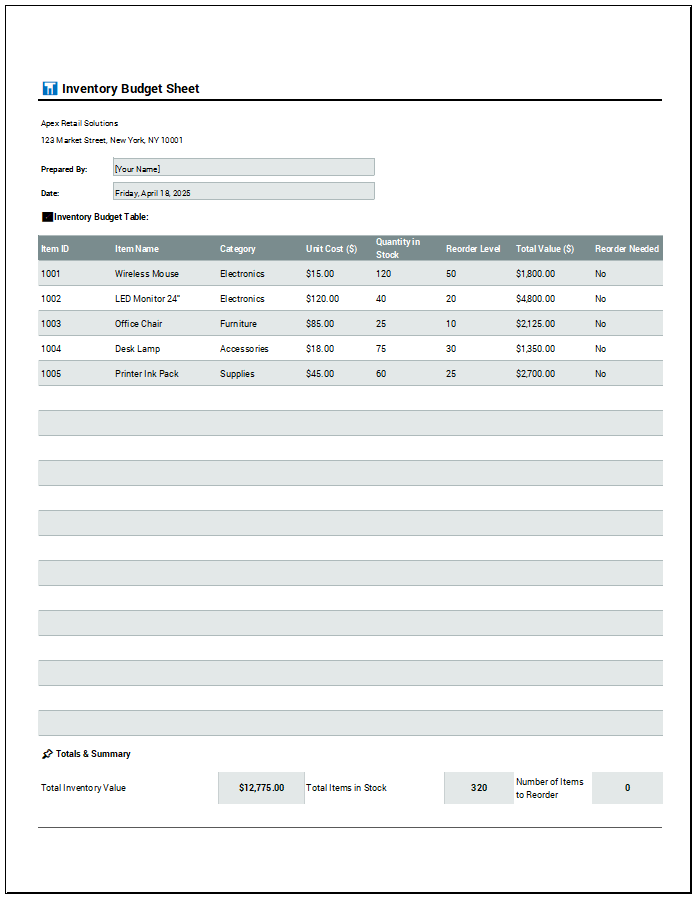
Inventory is a crucial component of all businesses and must be managed carefully. A business needs to know its entire inventory and the associated costs. Managing inventory can be challenging, as it requires careful and accurate attention. An inventory budget sheet can be helpful in this case. This document tracks and manages a business’s inventory. […]
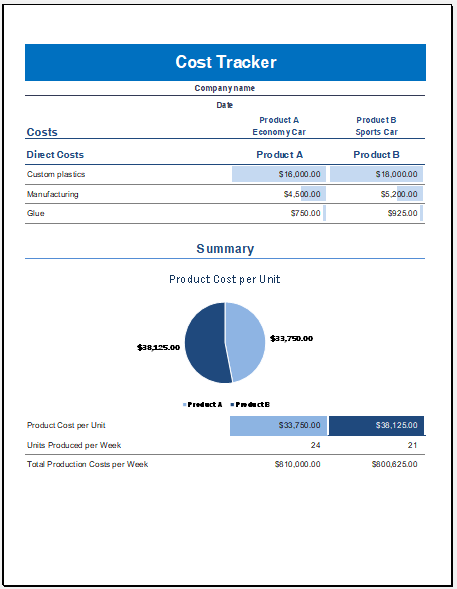
Product Cost Comparison and Tracking Template
Keeping track of product costs is essential for any business aiming to improve profitability by reducing expenses. Businesses and individuals often take specific steps to manage and lower costs. To evaluate whether these efforts are effective, many use a Product Cost Comparison and Tracking Template. This tool helps monitor expenses, compare costs across products or […]
Related Generators
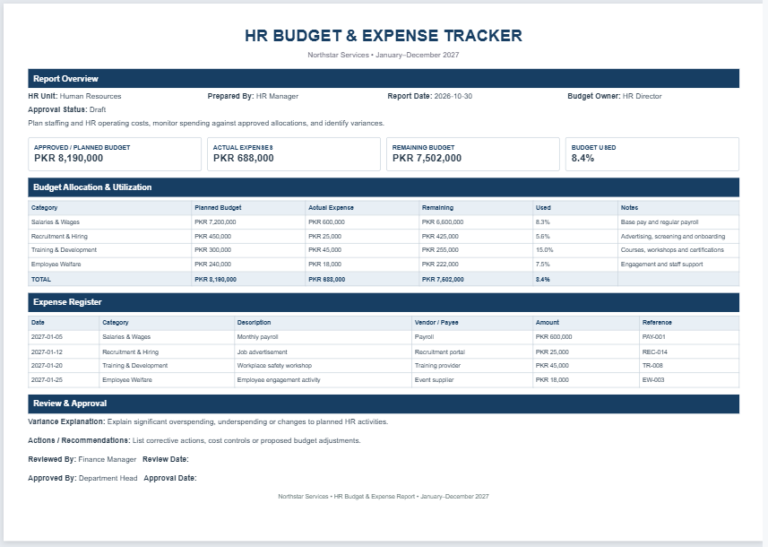
HR Budget & Expense Tracker
Managing human resource expenses effectively is essential for every organization. The HR department is responsible for recruitment, employee onboarding, training programs, compensation planning, employee benefits, and many other workforce-related activities. Keeping track of these expenses helps organizations control costs and make informed financial decisions. Our HR Budget & Expense Tracker Generator provides a modern and […]
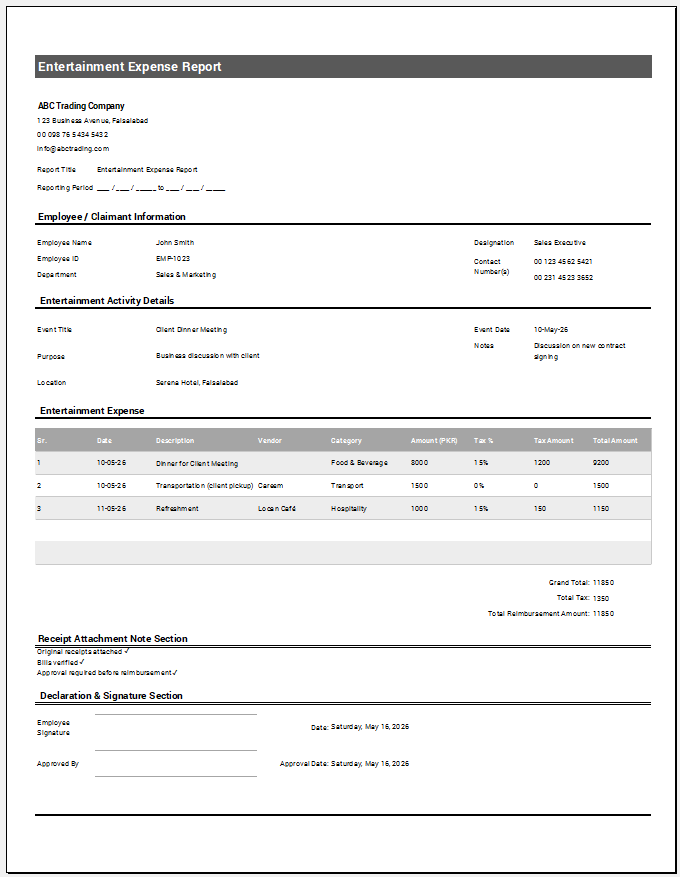
Entertainment Expense Report
Businesses may organize entertainment activities, such as client dinners or staff events, for work-related purposes. Employees or other authorized individuals may sometimes pay these expenses out of pocket and then request reimbursement according to company policy. An entertainment expense report provides a structured way to record these costs, explain their business purpose, and submit them […]
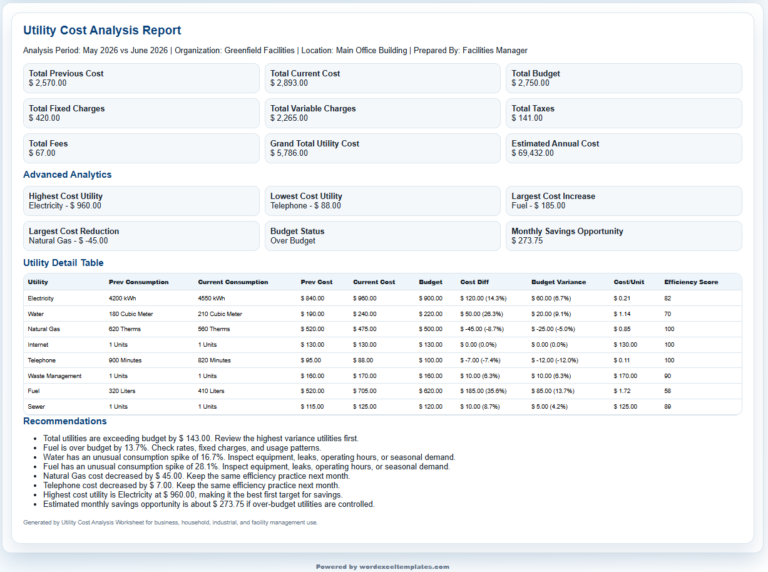
Utility Cost Analysis Worksheet
Managing utility expenses is an important part of maintaining a healthy household budget or controlling business operating costs. Whether you are tracking electricity, water, gas, internet, telephone, waste management, or other utility expenses, having a clear overview of your spending can help you identify trends, reduce waste, and make better financial decisions. Our Utility Cost […]
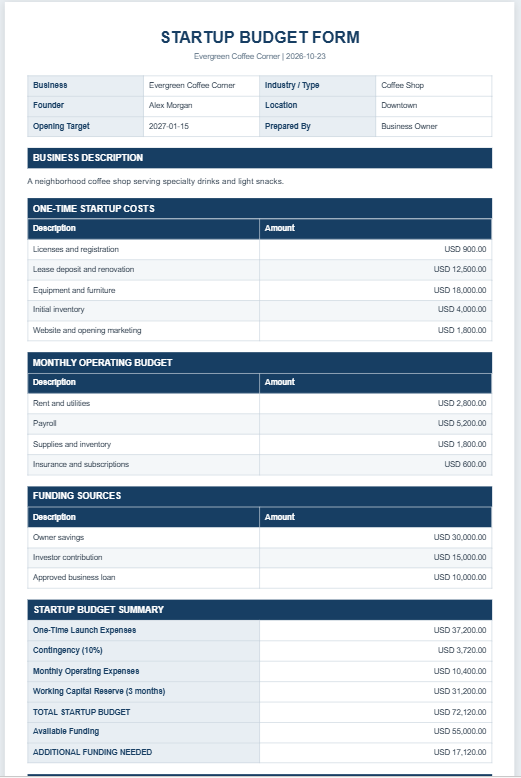
Startup Budget Form Template
Careful planning before starting a business helps entrepreneurs assess risks, establish priorities, and prepare for expected costs. A startup budget form supports this process by organizing financial estimates in one place. This document outlines the funding, projected revenue, and anticipated costs of a new business. It helps entrepreneurs understand the financial resources required to launch […]
Related Calculators
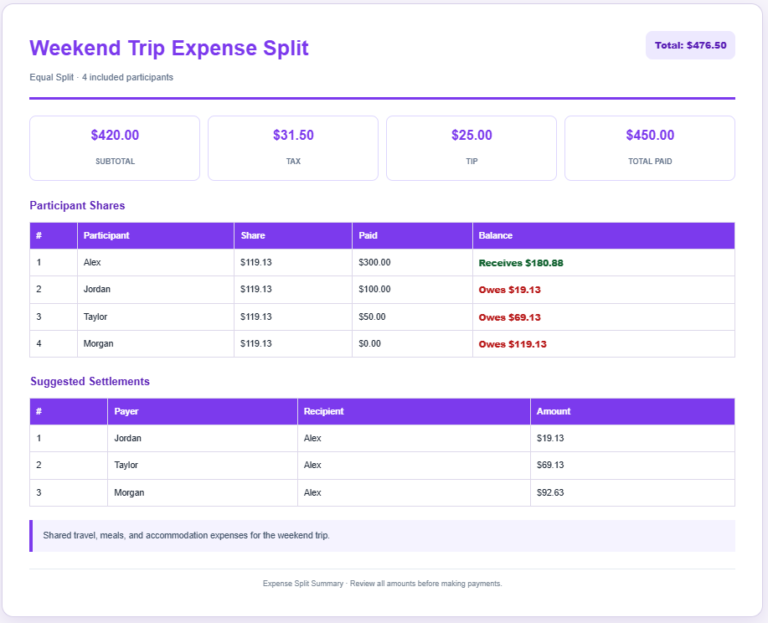
Expense Split Calculator
An Expense Split Calculator is a convenient financial tool that helps divide shared expenses fairly among multiple participants. Whether you’re splitting the cost of a restaurant bill, vacation, household expenses, office purchases, event costs, or group activities, the calculator quickly determines how much each person should contribute. It eliminates manual calculations and reduces the chance […]
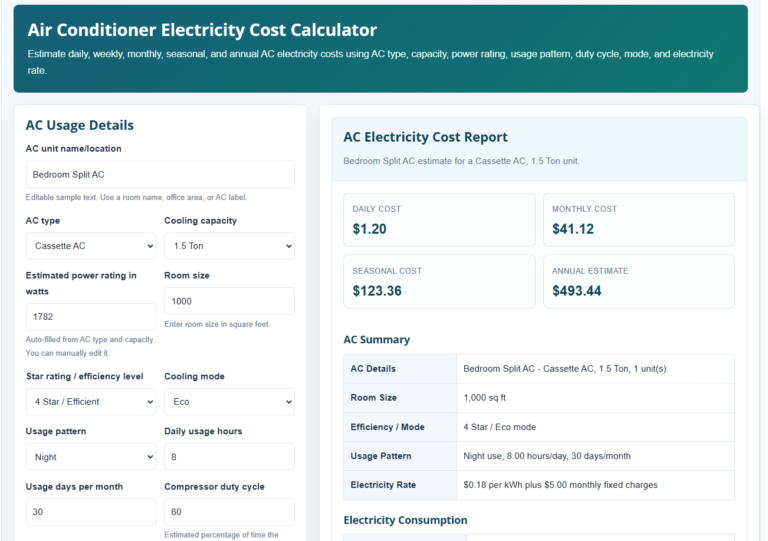
Air Conditioner Electricity Cost Calculator
The Air Conditioner Electricity Cost Calculator helps you estimate how much electricity your AC consumes and how much it costs to operate over different time periods. Simply choose the AC type and cooling capacity, enter your electricity rate, daily usage hours, and other operating details to receive instant calculations. The calculator automatically estimates power consumption […]
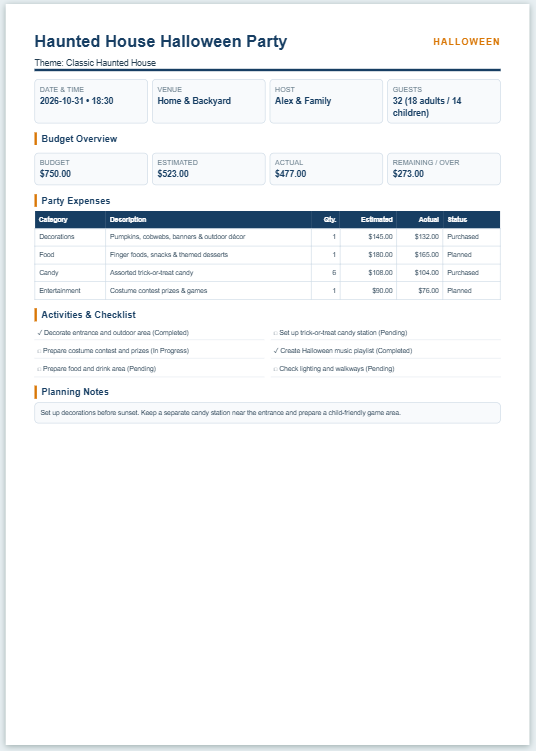
Halloween Party Planner & Budget Calculator
A Halloween Party Planner & Budget Sheet helps you organize a Halloween party and keep its expenses under control. It brings important details such as the party date, theme, venue, guest count, decorations, food, candy, entertainment, and other expenses into one place. It also provides a checklist so you can keep track of the tasks […]
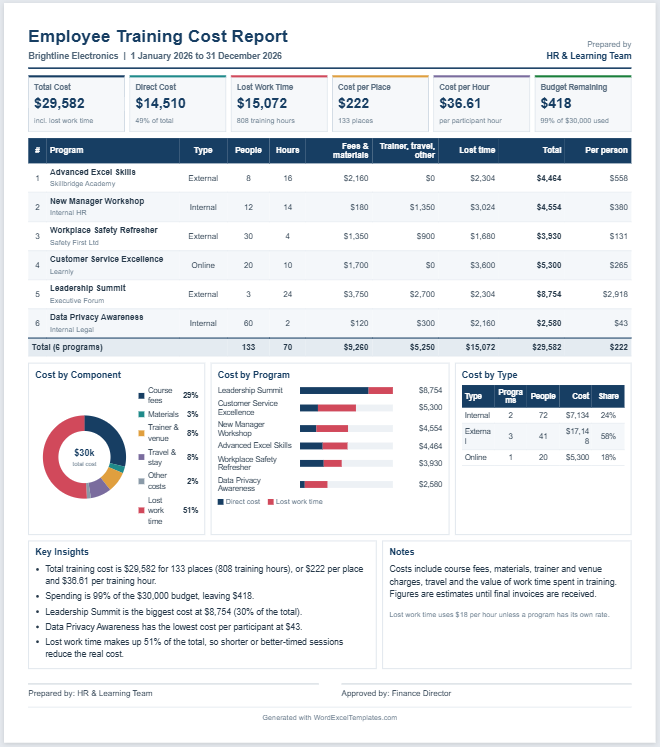
Employee Training Cost Calculator
Employee training involves more than the fee paid to a trainer or course provider. The total cost can also include employee time, training materials, certification fees, venue or platform charges, travel and accommodation, administration, equipment, and other delivery expenses. Estimating these costs together provides a clearer picture of the resources required for a training program. […]
Related Articles
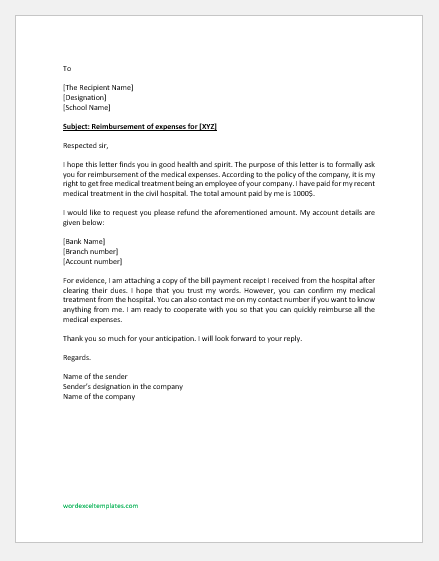
Reimbursement Letter for Expenses
We all have to write a letter to different people when we want to claim a refund. If you are working in a company and you ask your employer to pay you the amount that you have paid from your money for a company’s work, it means you are asking for reimbursement. It is a […]
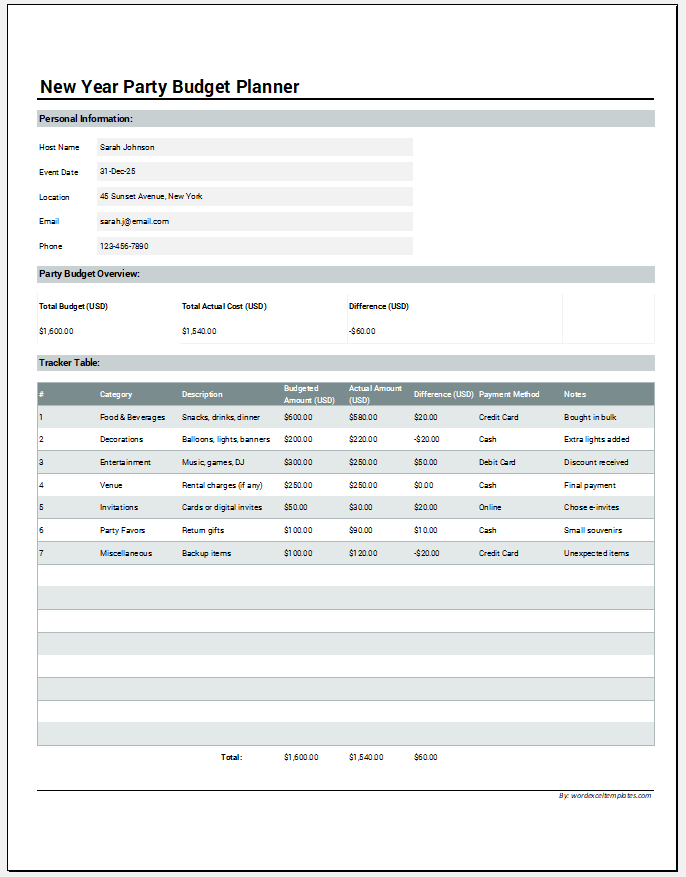
New Year Party Budget Planner
Many people host New Year’s parties. These are to celebrate the year ending whilst anticipating the new year ahead. The party allows one to be with their friends and loved ones or even colleagues and have a good time together. It allows people to socialize and enjoy themselves while connecting with their loved ones. Planning […]
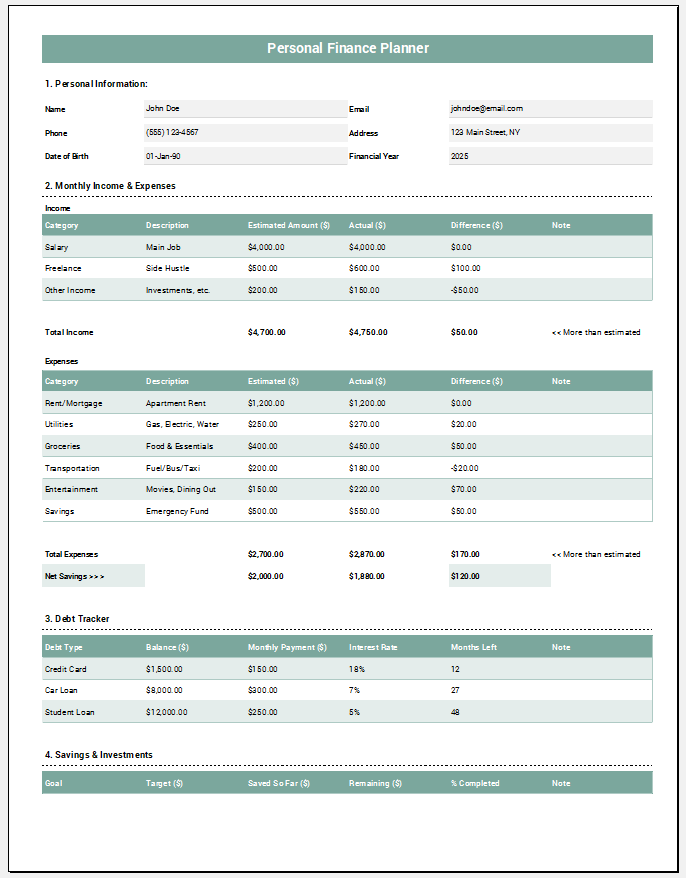
Personal Finance Tracker
Planning personal finances matters if one wants to have financial security and limit stress. If one does not have a plan, it is possible that they will make impulsive decisions that can negatively affect their financial stability. With proper personal finance planning, one will have more discipline to handle their resources in a better way […]

Introduction Letter of New Finance Manager to Client
An introduction letter introducing a new finance manager to a client is written by an organization and addressed to a client or customer. In this letter, the company informs the client that a new finance manager has been hired to replace the previous one. A new finance manager may be appointed for many different reasons, […]