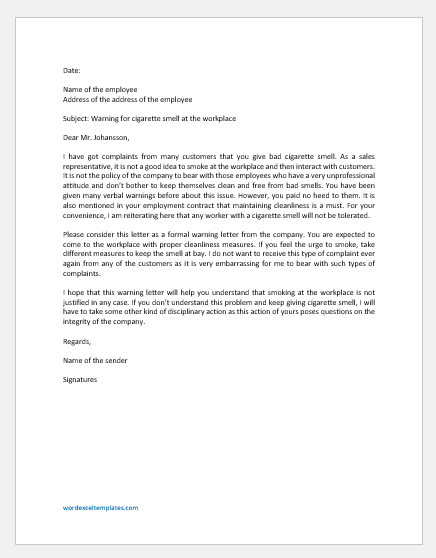
Unprofessional behavior in the workplace can negatively affect employee morale, teamwork, and overall productivity. When an employee repeatedly displays inappropriate conduct toward co-workers, clients, or management, the employer may issue a formal warning letter to address the matter. Such a letter serves as an official record of the employee’s misconduct and informs them about the possible consequences if the behavior continues.
Although verbal warnings are sometimes given initially, a written warning letter provides a more formal record of the concerns. It clearly outlines the issue, expectations for improvement, and disciplinary actions that may follow if corrective measures are not taken. Maintaining professionalism and mutual respect in the workplace is essential for creating a healthy and productive work environment.
What is Considered Bad Behavior in the Workplace?
There are various forms of workplace misconduct that may be considered inappropriate or unacceptable behavior. Some common examples are discussed below.
Insolence and Disrespect
Employees who display disrespectful behavior toward colleagues, supervisors, or clients can create tension and communication problems within the workplace. Acts such as shouting, insulting others, making offensive remarks, or intimidating co-workers can undermine teamwork and workplace efficiency.
Bullying and Harassment
Bullying includes manipulative, insulting, threatening, or condescending behavior directed toward another employee. Such actions can make employees feel uncomfortable, unsafe, or emotionally distressed. Organizations should make clear that harassment and bullying are unacceptable and address reports promptly.
Gossiping and Spreading Rumors
Sharing confidential information without authorization or spreading rumors about fellow employees is also considered inappropriate workplace behavior. Gossiping can damage professional relationships, create misunderstandings, and negatively affect workplace harmony.
Inappropriate Appearance or Conduct
Employees are expected to maintain professional conduct and appearance in accordance with company policies. Dressing inappropriately or behaving in a manner that disrupts the professional environment may also be considered misconduct.
Failure to Perform Duties Responsibly
Negligence in performing assigned duties, intentional refusal to follow instructions, repeatedly missing deadlines, interrupting meetings with inappropriate comments, or undermining co-workers can all be viewed as unacceptable workplace behavior.
Effects of Bad Behavior in the Workplace
Employee misconduct can have serious consequences for both individuals and the organization as a whole. Some of the common negative effects are listed below.
Stress and Emotional Discomfort
Persistent rude or hostile behavior can create stress among employees and negatively affect their emotional well-being. Employees who feel disrespected or undervalued may lose motivation and confidence, which can reduce overall productivity.
Workplace Aggression
Minor conflicts and rude remarks can sometimes escalate into workplace aggression or create a hostile working atmosphere. Managing such situations can become difficult for employers and may affect the mental well-being of employees and their families.
Reduced Productivity
Employees who behave inappropriately often create communication barriers within teams. This can result in delays in completing assignments, poor collaboration, and missed deadlines, ultimately affecting organizational productivity.
Workplace Disruption
A successful workplace depends on cooperation and professionalism among employees. Even one employee displaying unacceptable behavior can disturb workplace harmony and disrupt daily operations.
Ways to Address Workplace Behavioral Issues
Organizations should take proactive steps to prevent and manage inappropriate workplace behavior. Some effective measures include:
- Establishing clear workplace behavior and conduct policies
- Training managers and supervisors to handle behavioral issues professionally
- Educating employees about acceptable workplace conduct
- Encouraging open communication and respectful interactions
- Providing clear channels for employees to report workplace concerns
- Setting positive examples through leadership and management practices
A positive and respectful work culture helps improve employee satisfaction, teamwork, and productivity.
Basic Components of the Letter
A warning letter to an employee for bad behavior should include the following important details:
- Company name
- Warning number (if applicable)
- Employee name and designation
- Employer or manager name and designation
- Date of issuance
- Details of the misconduct or inappropriate behavior
- Reference to incidents or complaints
- Expected corrective actions
- Consequences of failing to improve behavior
- Employer’s signature
Sample Letter to an Employee for Inappropriate Workplace Behavior
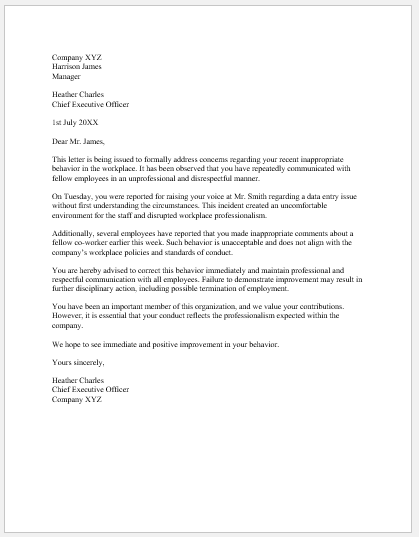
Company XYZ
To: Harrison James, Manager
From: Heather Charles, Chief Executive Officer
1 July 20XX
Subject: Warning Regarding Inappropriate Workplace Behavior
Dear Mr. James,
This letter is being issued to formally address concerns regarding your recent inappropriate behavior in the workplace. It has been observed that you have repeatedly communicated with fellow employees in an unprofessional and disrespectful manner.
On Tuesday, [Date], it was reported that you raised your voice at Mr. Smith regarding a data entry issue without first seeking to understand the circumstances. This incident created an uncomfortable environment for the staff and disrupted the working atmosphere.
Additionally, several employees have reported that you made inappropriate comments about a co-worker earlier this week. Such behavior is unacceptable and does not align with the company’s workplace policies and standards of conduct.
You are hereby instructed to correct this behavior immediately and maintain professional and respectful communication with all employees. Failure to demonstrate improvement may result in further disciplinary action, including possible termination of employment.
You have been an important member of this organization, and we value your contributions. However, it is essential that your conduct reflects the professionalism expected within the company.
We expect immediate and positive improvement in your behavior.
Yours sincerely,
Heather Charles
Chief Executive Officer
Company XYZ