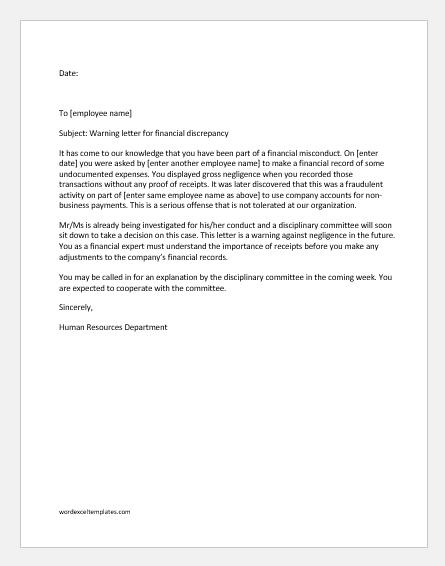
A misconduct letter is written to an employee to address inappropriate or unethical workplace behavior. It may serve as a formal warning or notify the employee of allegations requiring investigation. The appropriate response depends on the circumstances, the findings, and company procedures.
Things to Consider
Documentation: A formal written letter records the concerns raised and communicates their seriousness. It may also be relevant to future reviews or disciplinary decisions.
Explain the Type of Misconduct: Describe the incident clearly, including when and where it occurred. Distinguish reported allegations from established findings, and explain any documented impact on colleagues or operations.
Inform the Employee About the Consequences: Explain any action being taken and the possible consequences of further misconduct, in accordance with company policy.
Mention the Expected Improvement: The letter must clearly state the conduct expected of the employee, the corrective steps required, and the relevant company standards.
State the Warning Period: If a warning is issued, specify how long it will remain active and when the employee’s conduct will be reviewed.
Keep the Letter on Record: Retain the letter in the employee’s personnel file according to the organization’s recordkeeping policy. This provides a documented history if further concerns arise.
Types of Misconduct
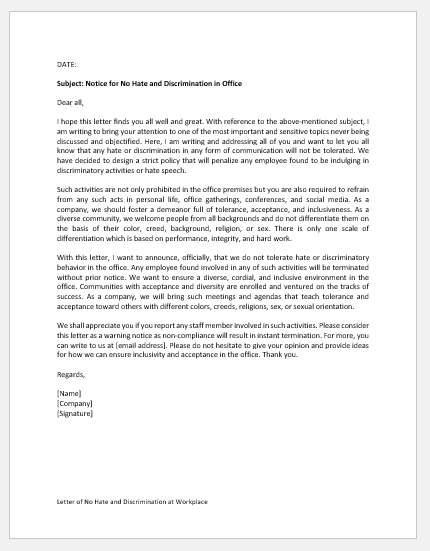
Every employee is expected to help maintain a respectful and professional workplace. Below are some examples of misconduct:
Stealing or Theft: Taking company or personal property without permission. Unauthorized personal use of company property may also breach workplace policies.
Discrimination: Treating people unfairly because of characteristics such as race, sex, age, or religion.
Breaches of Confidentiality: Disclosing confidential company, client, or employee information without authorization.
Harassment and Other Serious Misconduct: Harassment, threats, and physical violence are serious concerns that require prompt investigation. Disciplinary decisions should follow the appropriate review process rather than assume that dismissal is automatic.
Sample Misconduct Letters
#1
3 March 20XX
John Adam
ABC Organization
New York, Street 7890
Subject: Notice Regarding Reported Workplace Misconduct
Dear Mr. Adam,
We have received repeated complaints about your treatment of support staff, including reports of rude remarks and abusive language. These concerns have previously been discussed with you, and verbal warnings have been issued.
A further report states that you slapped Mr. Luther, a member of our support staff, and insulted him in front of others. This allegation is serious and will be referred to HR for investigation.
You are required to attend a meeting on [Date] at [Time] and provide a written account of the incident. You will have an opportunity to respond to the allegations and present any relevant information.
All employees must be treated respectfully, regardless of their role. Physical aggression and abusive language are unacceptable. Do not retaliate against anyone involved in reporting or reviewing this matter.
Any disciplinary action will be determined after the investigation. Please contact [HR Contact] if you have questions about the process.
Regards,
Albert York
[Designation]

#2
3 March 20XX
Mark Stefan
WER Organization
New York, Street 2348
Subject: Notice of Investigation into Harassment and Threatening Conduct
Dear Mr. Stefan,
We have received allegations that you harassed female staff members. Mr. Alexander has reported witnessing an incident. We have also received a report that you threatened to disclose private videos of Ms. Eustacia after she indicated that she wished to make a complaint.
These allegations are serious and have been referred to HR for a formal investigation. No final disciplinary decision has been made at this stage.
You are required to attend an investigation meeting on [Date] at [Time] in [Location]. Please prepare a written response to the allegations and bring any relevant supporting information.
You must not threaten, intimidate, or retaliate against the complainant or any witness. Do not share any private recordings or interfere with evidence relevant to the investigation.
The company expects all employees to maintain respectful conduct and cooperate with the review process. Appropriate action will be determined based on the findings and company policy.
Please contact [HR Representative] at [Contact Details] if you need clarification about the meeting or the investigation procedure.
Regards,
Caprio Lock
[Designation]