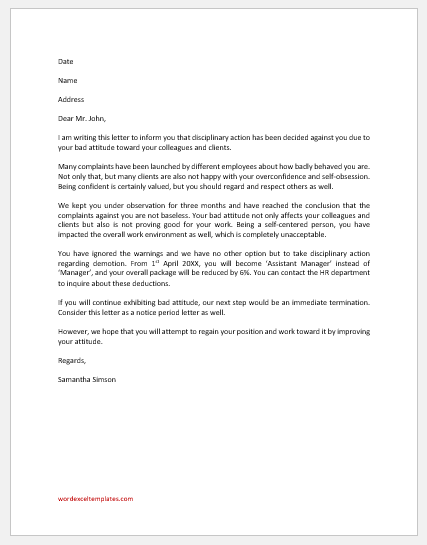
A warning letter is an official form of communication between an employee and their employer. In some cases, a teacher or principal of an educational institution may also issue a written warning to a student. Different situations may require a written warning. One of the most common is when a person fails to maintain discipline and the organization decides to take disciplinary action.
What is a Warning Letter for Disciplinary Action?
This type of warning letter is issued when an employee fails to maintain discipline or violates workplace rules. Through this letter, the employer or supervisor can formally address the matter with the employee, explain the nature of the violation, and communicate what is expected of them in the future.
Why is It Important to Write a Warning Letter?
Organizations may take corrective measures when employees engage in misconduct or fail to follow workplace rules. Not every instance of misconduct requires dismissal. Depending on the seriousness of the issue, an employer may first issue a warning and give the employee an opportunity to correct their behavior.
A written warning helps employees understand the seriousness of the matter and the consequences of repeating the misconduct. It also gives them an opportunity to improve their behavior and comply with workplace policies in the future.
What is the Primary Purpose of Writing the Warning?
When disciplinary issues are not addressed promptly, they can lead to further problems in the workplace. In some cases, a lack of discipline may disrupt the working environment and require management to intervene.
The purpose of a written warning is to formally address the issue, inform the employee that their behavior or actions have violated company policy, and explain what corrective action is expected.
Some companies may initially prefer to issue verbal warnings. However, verbal warnings may not always produce the desired results. If the problem continues, a written warning provides a more formal way to document the issue and communicate the consequences of further violations.
What are the Main Components of a Warning Letter?
The main elements of this letter include:
Employee Details
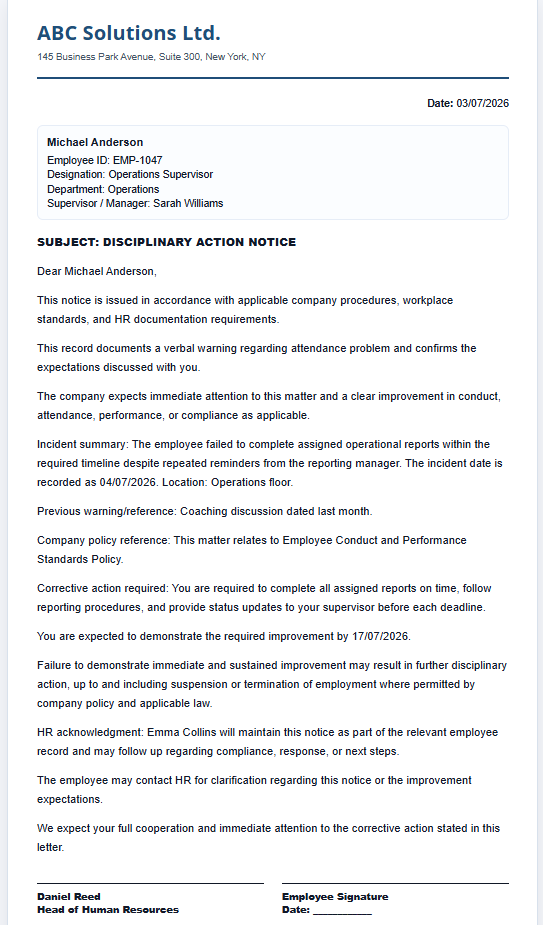
Mention the employee’s name, designation, employee identification number, and other relevant details at the beginning of the letter so there is no confusion about who is being addressed.
Description of the Violation
A disciplinary warning is generally issued in response to a violation of company rules or policies. Therefore, the letter should clearly describe the incident or behavior that resulted in the warning.
The employee may not fully understand the seriousness of the violation. Providing a clear description helps them understand the company’s concerns and why corrective action is necessary.
Corrective Action Plan
Some companies provide employees with guidance on the corrective measures they should take to address the problem. If a corrective action plan has been developed, include its details in the letter along with any deadlines or expectations the employee must meet.
How to Write a Disciplinary Action Warning Letter
An employer should follow some basic guidelines when writing a warning letter. These include:
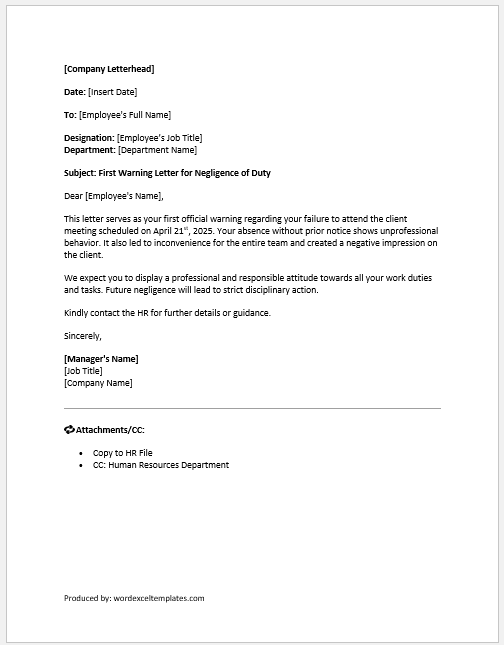
Use Your Company’s Letterhead
An official warning should generally be issued on the company’s letterhead. This helps establish that the communication is formal and has been issued by an authorized person or department.
State the Issue
A warning letter should clearly explain the issue the company has with the employee’s behavior or performance. Since this letter concerns disciplinary action, describe the specific conduct that violated workplace rules or expectations.
If the employee behaved inappropriately or demonstrated unprofessional conduct, mention the relevant incident and provide sufficient details to help them understand the reason for the warning.
Discuss the Consequences
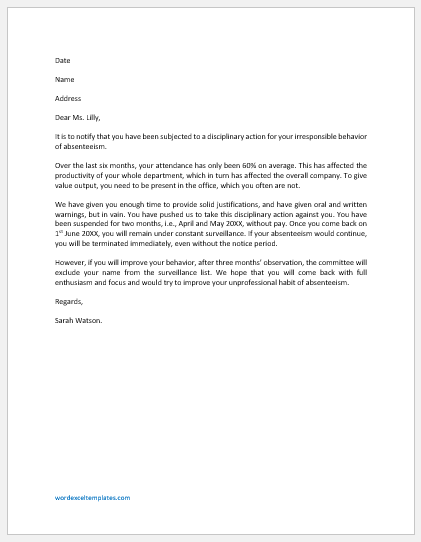
Misconduct may result in different consequences depending on its nature and seriousness. The warning letter should explain what disciplinary action is being taken and, where appropriate, what may happen if the employee repeats the violation.
The consequences should be consistent with the company’s policies and procedures.
Sample Letters
#1
This letter serves as an official warning regarding your repeated unapproved absences from work. Such absences disrupt departmental workflow and increase the workload of your colleagues.
Over the past month, you have been absent from work on three occasions without prior notice or approval. This is a violation of our attendance policy. Employees are required to obtain prior approval for absences except in emergencies.
Therefore, you are required to attend a disciplinary meeting with management on Monday, October 21, at 10:00 a.m.
Please take this matter seriously and ensure that you comply with the company’s attendance policies in the future. Further violations may result in additional disciplinary action.
#2
I am writing to address concerns regarding your behavior during our team meetings. You have repeatedly demonstrated a lack of participation during discussions, and your off-topic comments have caused distractions for other team members.
As a result, management has decided to take disciplinary action. Effective immediately, you will not be required to attend team meetings during the month of November. Instead, you will receive meeting summaries and task assignments by email.
We encourage you to use this time to reflect on the concerns raised and consider how you can improve your focus and participation. If similar behavior continues during future meetings, further disciplinary action may be taken in accordance with company policy.
Please take this warning seriously and make the necessary improvements to your participation and professional conduct.
#3
This letter serves as a formal warning regarding your failure to follow workplace instructions. You have demonstrated an uncooperative attitude toward your team and have repeatedly refused to follow instructions provided by your team leader. This behavior is a violation of company policy.
After careful consideration, management has decided to suspend you for three days, from October 13 to October 15. In addition, you will be required to attend a mandatory behavioral training program upon your return to work.
Any further instances of insubordination or unprofessional conduct may result in additional disciplinary action, including possible termination of employment. Therefore, you are advised to take this warning seriously and make immediate improvements to your workplace conduct.
Thank you for your attention to this matter.
#4
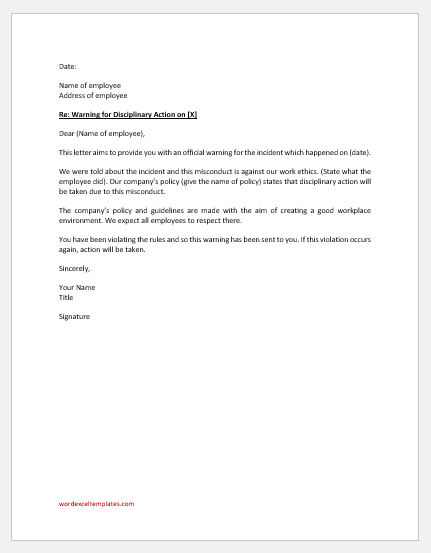
Date:
Employee Name:
Employee Address:
Subject: Warning Regarding Disciplinary Action for [Issue]
Dear (Employee Name),
This letter serves as an official warning regarding the incident that occurred on (date).
Management was informed of the incident, and the reported conduct is inconsistent with our workplace standards. (Describe what the employee did.) The company’s (name of policy) states that disciplinary action may be taken in response to such conduct.
The company’s policies and guidelines are intended to maintain a safe, respectful, and professional working environment, and all employees are expected to comply with them.
This warning is being issued because of the violation described above. You are expected to correct your behavior and comply with company policies going forward. Any further violation may result in additional disciplinary action in accordance with company policy.
Sincerely,
Your Name
Title
Signature
File: Word (.docx) 2007+ and iPad
Size 12 KB