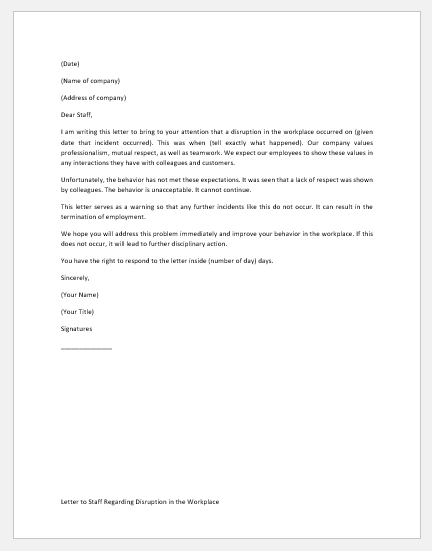
An employer should always prioritize hiring over firing; however, in business operations, it sometimes becomes necessary to terminate an employee. Termination is a part of organizational policy and may also occur voluntarily at the employee’s request.
An employment termination letter is issued by an employer to formally dismiss an employee from an organization due to reasons such as poor performance or failure to meet required standards. It is also commonly referred to as a “pink slip” or termination notice.
A termination letter must clearly explain the reason, outline, and details of the employee’s dismissal. A copy of this letter should be placed in the employee’s personnel file and maintained in HR records to prevent future disputes regarding the termination.
Types of Termination
Employees may be separated from an organization for the following reasons:
Dismissal from Employment
Involuntary Termination:
Involuntary termination occurs when an employer ends the employment of an individual against their will. It is generally due to employee performance issues or violations of company policies. Employees terminated for such reasons usually have no option to continue working in the same organization.
Voluntary Separation:
Voluntary separation occurs when an employee chooses to leave the organization due to dissatisfaction, personal reasons, excessive workload, or other circumstances in their personal life.
Firing:
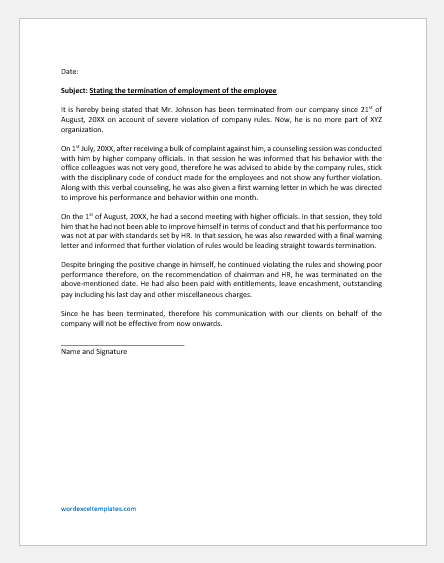
Firing occurs when an employee is removed from the organization due to unsatisfactory performance or violation of company rules. Typically, the employee is given warnings before termination. If there is no improvement after repeated warnings, the employment may be ended without further notice.
Layoff
A layoff is usually related to business needs rather than employee performance. It may occur due to financial difficulties, organizational restructuring, or reduced workload. Layoffs can be temporary or permanent and are not considered a result of employee misconduct or poor performance.
Resignation
Forced Resignation:
Forced resignation occurs when an employee is pressured to resign or face termination. This type of resignation may negatively impact the employee’s employment record.
Voluntary Resignation:
Voluntary resignation occurs when an employee decides to leave the organization due to personal reasons, career change, relocation, or other opportunities. Employees are generally expected to provide notice, usually two to three weeks in advance, depending on company policy.
Contract Expiry / Appointment End
This type of termination occurs when an employee’s fixed-term contract or temporary appointment comes to an end naturally.
Retirement
Retirement occurs when an employee reaches the retirement age defined by company policy or applicable laws, typically 65 years or older. In some cases, retired employees may be offered part-time or advisory roles.
How to Write a Termination Letter
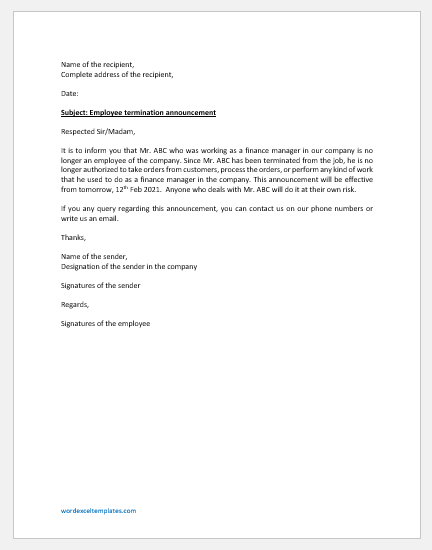
Terminating an employee can be difficult, especially in cases such as layoffs or performance-related dismissals. However, the letter should remain professional, clear, and concise, explaining the reason for termination. The following elements should be included:
Employee Information
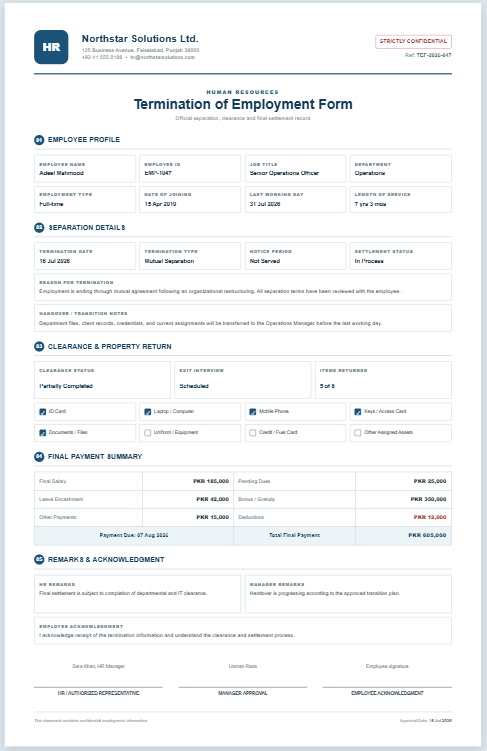
Include the employee’s full name, designation, department, and relevant identification details. Clearly mention the issue date and termination date if different.
Reason for Termination
Provide a brief and clear explanation for the termination. In cases of layoffs, mention organizational reasons. For performance or misconduct issues, clearly state the concerns and relevant details.
Warnings and Documentation
Mention any prior warnings, counseling sessions, or written notices given to the employee regarding their performance or behavior.
Company Property
Request the return of any company-owned items such as laptops, keys, ID cards, vehicles, or other assets provided during employment.
Final Payment
Clearly state the details of the final paycheck, including payment date, method, and any outstanding dues. Ensure all payments are settled promptly to formally close the employment relationship.
Company Benefits
Explain the status of employee benefits such as health insurance, retirement plans, or other entitlements, and guide the employee on how to access or manage them after termination.
Sample Employment Termination Letter
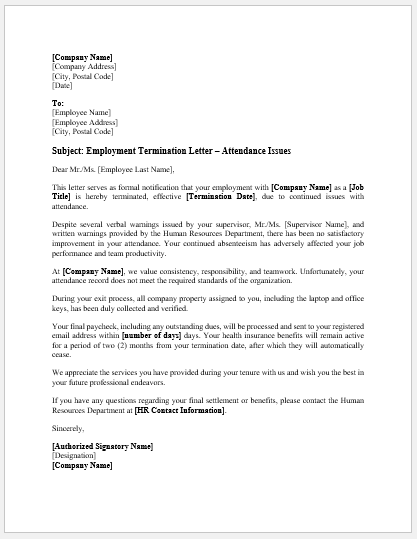
Subject: Employment Termination Letter – Attendance Issues
Dear [Name],
This letter is to formally inform you that the company has decided to terminate your employment as a [Manager] at [Company Name] due to poor attendance.
Despite multiple verbal warnings from Mr. [Name] and written notices issued by the HR department, there has been no significant improvement in your attendance, which has affected your job performance and team productivity.
The company relies on consistency and teamwork for smooth operations; however, your irregular attendance has negatively impacted overall team performance.
During the termination meeting, you have already returned company property, including the laptop and office keys.
Your final paycheck will be sent to your registered email address. Your health insurance benefits will remain active for two months following your termination.
We thank you for your services and wish you success in your future endeavors.
Sincerely,
[Company Name / Authorized Person]
Use Online Editor
- Character Reference Letter Generator
- Hospital HR Letter Writer/Generator
- AI HR Letter Writer/Generator
- Recommendation Letter Generator
- Job Application Cover Letter
- First Warning Letter for Negligence of Duty
- Ramadan Schedule Notification for Staff
- One Day Absent Note to Boss
- Request Letter to Staff for Voluntary Deduction from Salary
- Holiday Closing Messages
- Letter Requesting Transfer to another Department
- Letter Requesting Promotion Consideration
- Umrah Leave Request Letter to Boss
- Ramadan Office Schedule Announcement Letters/Emails
- Letter to Friend Expressing Support