It is a good idea to prepare a financial summary at the end of the year because it helps you understand where you stand financially. You can use this information to plan strategically for the year ahead and make informed decisions.
A company or individual may create a financial summary to assess their financial health. A year-end financial summary template provides a structured way to organize this information.
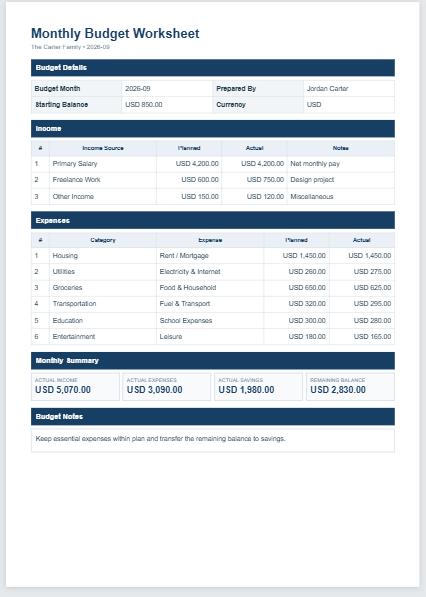
This document helps a company or individual review how much they have earned and spent during the year, as well as their remaining balances. They can also identify their income sources and assess the value of their assets.
What is a Year-End Financial Summary Sheet?
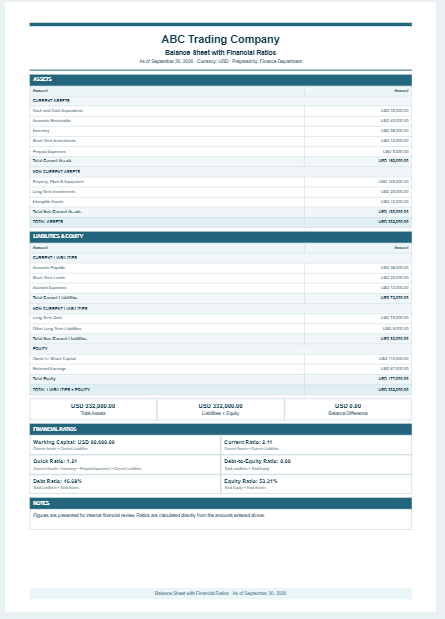
This is a document used to organize a company’s or individual’s financial details for a specific fiscal year. It can include sections for assets, liabilities, equity, income, and expenses.
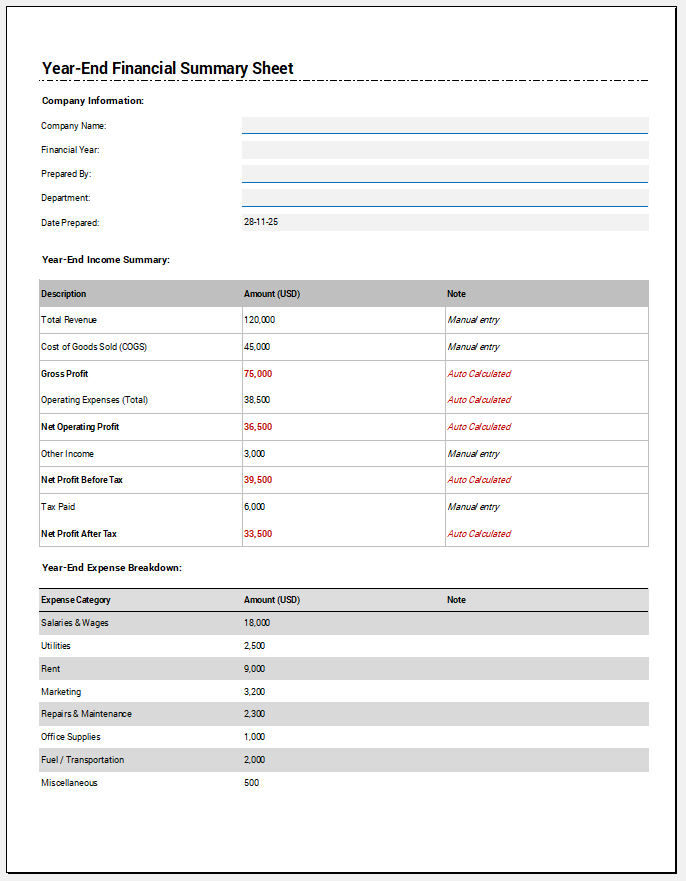
(Create your year-end financial summary using our online generator, or download an editable Excel template below to work offline. Organize your income, expenses, assets, and liabilities to review your financial position and plan for the year ahead.)
[year_end_financial_summary]
The template helps an individual or company understand their financial position. It therefore includes relevant information, such as assets and liabilities, to show what they own and owe.
Revenue and expenses are also included to determine whether a business made a profit or incurred a loss, or whether an individual’s income exceeded their expenses. The template can also show how cash was received and used during the year.
Benefits of the Template
The following are some advantages of a year-end financial summary template:
- It provides a structured format for organizing financial data for the year in one place.
- It helps users review their financial activities and check the accuracy of their records.
- The summary provides an overview of assets, liabilities, income, and expenses.
Tips to Make a Good Summary Template
If you need to create this template, it should have a professional format and be easy to complete and use. Consider the following tips:
Choose an application:
The template can be created in an application like Microsoft Excel.
- It allows you to perform calculations quickly.
- Formulas can calculate totals automatically when the data and formulas are entered correctly.
- Excel helps you organize data in a clear and efficient way.
Professional format:
The template should have a professional and easy-to-understand format that allows you to enter information accurately. The heading can be “Year-End Financial Summary.”
You may include:
- The name of the individual or company for whom the summary is prepared.
- The financial year being covered.
- Clear sections or categories for relevant information, such as income, expenses, assets, and liabilities.
Include only the information needed for the summary. Unnecessary details can make the template confusing and difficult to use. Keep the sheet simple so users can easily enter information and assess their financial position.
- Add only necessary information.
- Keep the sheet clear and easy to complete.
- Enter each detail carefully.
- Check entries and formulas, as errors can produce an inaccurate financial summary.
Create categories:
Include an assets section with a table listing current assets, fixed assets, and other assets. Record the value of each asset and calculate the total. Another section can include liabilities and equity. Here, you can list current liabilities, long-term liabilities, and the owner’s equity.
Calculate the totals for each category separately. Include another section showing revenue, expenses, and net income or loss for the fiscal year. Group similar financial details together to make the summary easier to read.
Creating a year-end financial summary helps individuals and companies understand their financial position. It provides insight into:
- Whether a business made a profit or incurred a loss, or whether an individual spent more than they earned.
- Areas where expenses can be controlled or reduced.
- How to plan for future financial needs and manage debt.
You can then make informed financial decisions and set realistic goals for the year ahead. Idebntifying excessive spending or areas of loss can help you decide where changes are needed.
File Size: 263 KB