Designing a kitchen for a small family can be fun and exciting. However, it can also feel overwhelming without proper planning. It is important to plan the design carefully so that nothing important is left out. A small family kitchen design planning sheet can help organize this process.
The sheet helps you consider how to use the available space efficiently and identify the features your family needs. This can help you develop a practical kitchen design that suits the people who use it.
What is a Small Family Kitchen Design Planning Sheet?
This is a worksheet used to plan a kitchen’s layout and features for a small family. It can include details about the appliances, storage, and work areas needed, along with their proposed locations. This helps you organize essential items without overcrowding the space.
(Create a sample sheet here with this online tool.)
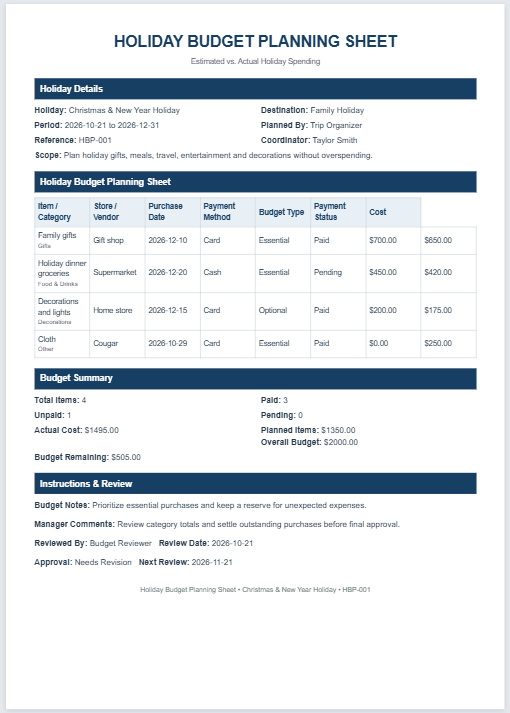
Small Family Kitchen Design Planning Sheet
Plan layout, storage, appliances, and renovation costs for a family kitchen.
Kitchen & Household
Design Items & Estimated Costs
Expand a record to edit quantity, cost, and priority.
Layout & Family Needs
Review & Approval
Why Use a Small Family Kitchen Design Planning Sheet?
The sheet helps you develop a layout that makes good use of the available space and allows people to move around comfortably. A thoughtfully designed kitchen can make cooking easier and more enjoyable.
Planning appliance locations, storage, and work surfaces together helps you assess what is needed and what can be left out. It also allows you to compare materials and appliances against your budget.
A detailed plan can make discussions with professional designers more productive by clearly communicating your needs and preferences.
Guide to Creating the Planning Sheet
Consider the following points when preparing your sheet:
Plan carefully:
Start by identifying your goals for the project. Separate essential features from optional preferences, and consider how your family will use the kitchen. You may want a space used mainly for cooking, or you may prefer to include a seating area for family meals. Decide which styles, colors, and finishes you prefer.
You may want a modern design or a more traditional look. List the appliances and cabinetry you need, such as a refrigerator, cooking range, sink, and dishwasher, where appropriate. Then consider smaller appliances, such as a microwave or food processor, and the storage or counter space they require.
Arrange frequently used items so they are convenient to reach and use.
Create a budget:
Set a realistic budget and divide it among major costs, such as cabinetry, appliances, materials, and installation. Include a contingency allowance for unexpected expenses, and review your choices as estimates become available.
Record measurements:
Accurate measurements help you understand the space available. Draw a floor plan showing the room’s dimensions and the existing locations of doors, windows, and service connections. Mark the proposed positions of appliances, cabinets, and other features.
Consider which layout suits the room, such as a U-shaped, L-shaped, or single-wall arrangement. An island may be an option if sufficient space is available. Allow room for movement and for appliance doors, drawers, and cabinets to open comfortably.
Designing a kitchen for your family can be fun, but poor planning can lead to stress, unexpected costs, and an awkward layout.
Taking time to complete a small family kitchen design planning sheet helps you organize your priorities, compare options, and review costs before committing to the design. Update the sheet as plans develop so the finished kitchen reflects your family’s needs and available budget.
Here is the template for MS Excel:
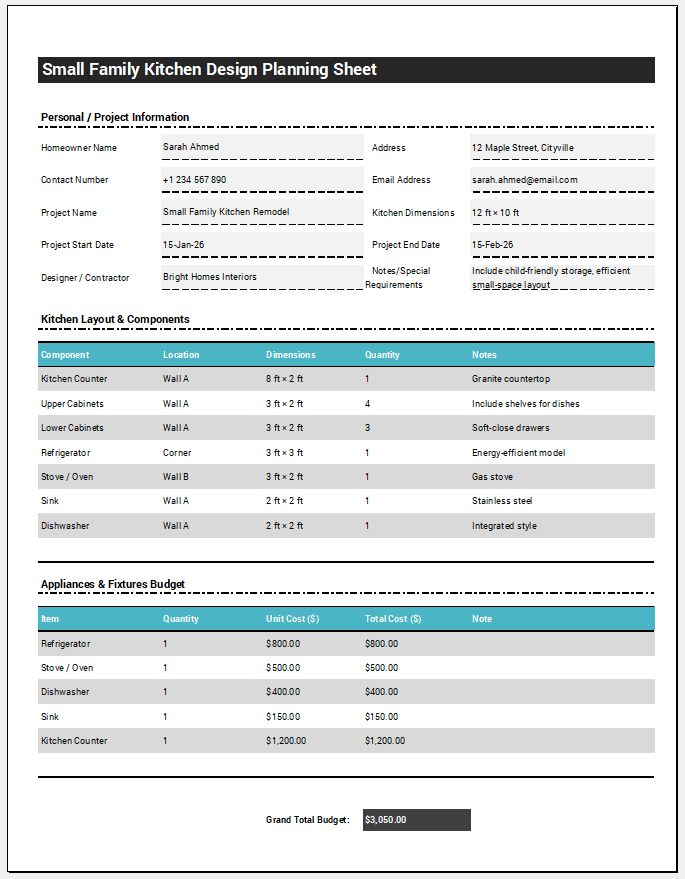
Key features:
1- Tracks all kitchen components, appliances, and materials, including dimensions, locations, and special requirements.
2- Automatically calculates total costs for appliances, materials, and project expenses.
3- Organize tasks into phases with start and end dates.