Paying employees is an integral part of running an organization. Employees should receive accurate, timely payment based on their agreed terms of employment. Businesses need to calculate pay carefully and maintain clear records of earnings, deductions, and payments. A payroll register and salary sheet can help organize this information.
These records help employers review payroll calculations, identify discrepancies, and track the amounts payable to each employee.
What is a Payroll Register & Salary Sheet?
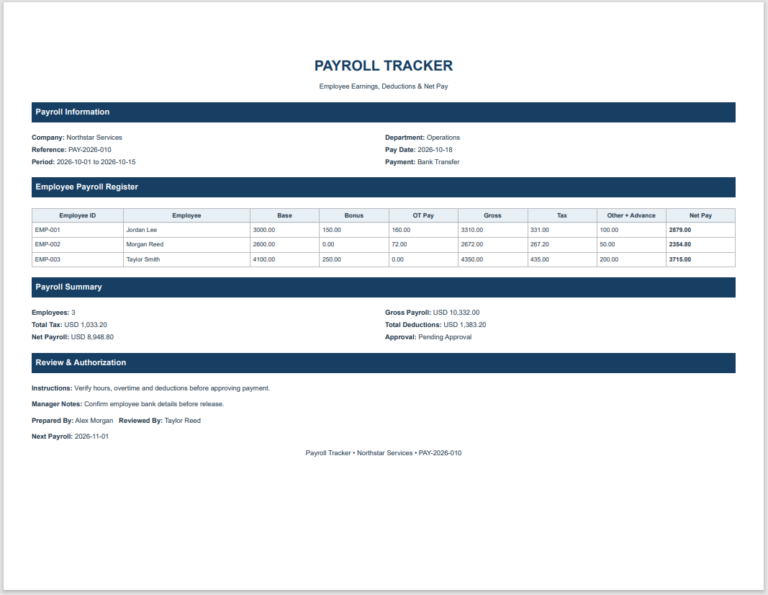
A payroll register records employee earnings, deductions, and net pay for a specified pay period. A salary sheet summarizes these details in a structured format, often with one row for each employee.
The document typically shows basic pay, additional earnings, total gross pay, applicable deductions, and the resulting net pay.
Payroll Register & Salary Sheet
Prepare employee salary records, overtime, allowances, deductions, and net pay for each pay period.
Payroll Details
Employee Salary Register
Expand a salary record to edit base pay, allowances, overtime, withholding, and advances.
Payment & Payroll Policy
Payroll Review & Authorization
Why Use a Payroll Register & Salary Sheet?
This document helps a business organize and review its payroll data. It provides a clear breakdown of how each employee’s pay has been calculated and supports payroll reporting and record-keeping. Accurate results depend on using correct information, formulas, and applicable deduction rules.
Benefits of Using the Sheet
The following are some advantages of a payroll register and salary sheet:
- It shows the gross and net amounts payable to each employee.
- It brings earnings and deductions together in one organized record.
- It helps payroll staff identify missing entries or calculation discrepancies before payments are processed.
- It provides a reference when reviewing employee questions about pay.
- It helps businesses track total payroll costs for each pay period.
Key Parts of the Sheet
Include the pay period, payment date, and the following sections:
Employee Information
Record the employee’s name, employee ID, department, and job title. Include hours worked, days worked, or pay rates where relevant to the calculation.
Earnings
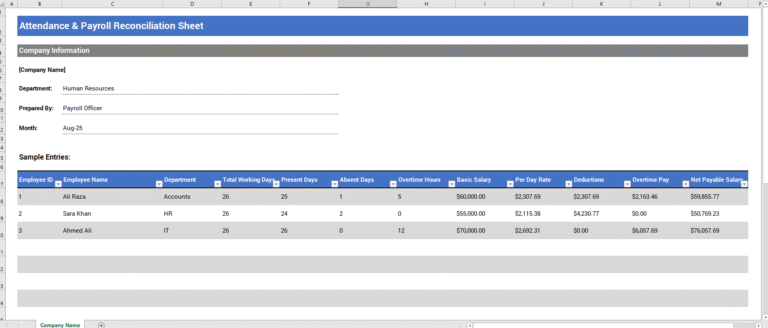
List basic pay and any additional earnings, such as allowances, overtime, bonuses, or commissions. Add these amounts to calculate gross pay.
Taxes and Other Deductions
Record applicable tax deductions and other authorized deductions separately. These may include insurance contributions or loan repayments, depending on the employee’s circumstances and payroll arrangements.
Net Pay
Calculate net pay by subtracting total employee deductions from gross pay:
Net Pay = Gross Pay − Total Deductions
Record payment status or a payment reference if the sheet is also used to track completed payments.
Tips for Creating an Effective Payroll Sheet
A clear layout and careful checks make the sheet easier to maintain and review. Consider the following tips:
Choose an Application
- Use spreadsheet software, such as Microsoft Excel, to organize payroll data and perform calculations.
- Set up formulas for gross pay, total deductions, net pay, and payroll totals.
- Clearly distinguish data-entry cells from formula cells.
- Check formulas and calculated results before processing payments.
Organize Details Clearly
Use a table with consistent headings and group related information together. For example, place earnings columns together, followed by deduction columns and net pay. Keep the layout readable so users can find the information they need quickly.
Check Entries and Calculations
Verify employee details, pay rates, attendance information, additional earnings, and deductions against the relevant records. Review totals and investigate unexpected differences before finalizing payroll. Correct errors promptly and keep a record of adjustments.
Conclusion
A payroll register and salary sheet provides a detailed record of employee pay for a particular period. It helps businesses calculate amounts payable, review payroll costs, and respond to questions about earnings or deductions.
Keep completed records secure and limit access to authorized staff. Maintaining accurate payroll documentation supports reporting and review, while regular checks help ensure employees receive the correct payments.