Reviewed & updated by M. Hameez·
Updated
Originally published
The success of every organization relies on the efforts of its employees. Their regular attendance at work is, therefore, crucial. Companies recognize the need for vacations and leave. Employees may be granted a certain number of days of sick and casual leave, along with annual leave, depending on their employment terms and company policies.
These benefits are typically outlined in the employment contract. However, it is important to track each employee’s leave individually. An accurate record helps ensure that leave policies are applied consistently. Each day of absence is recorded in the employee absence schedule. As a result, organizations can plan staffing and maintain smooth operations.
What is an employee absence schedule?
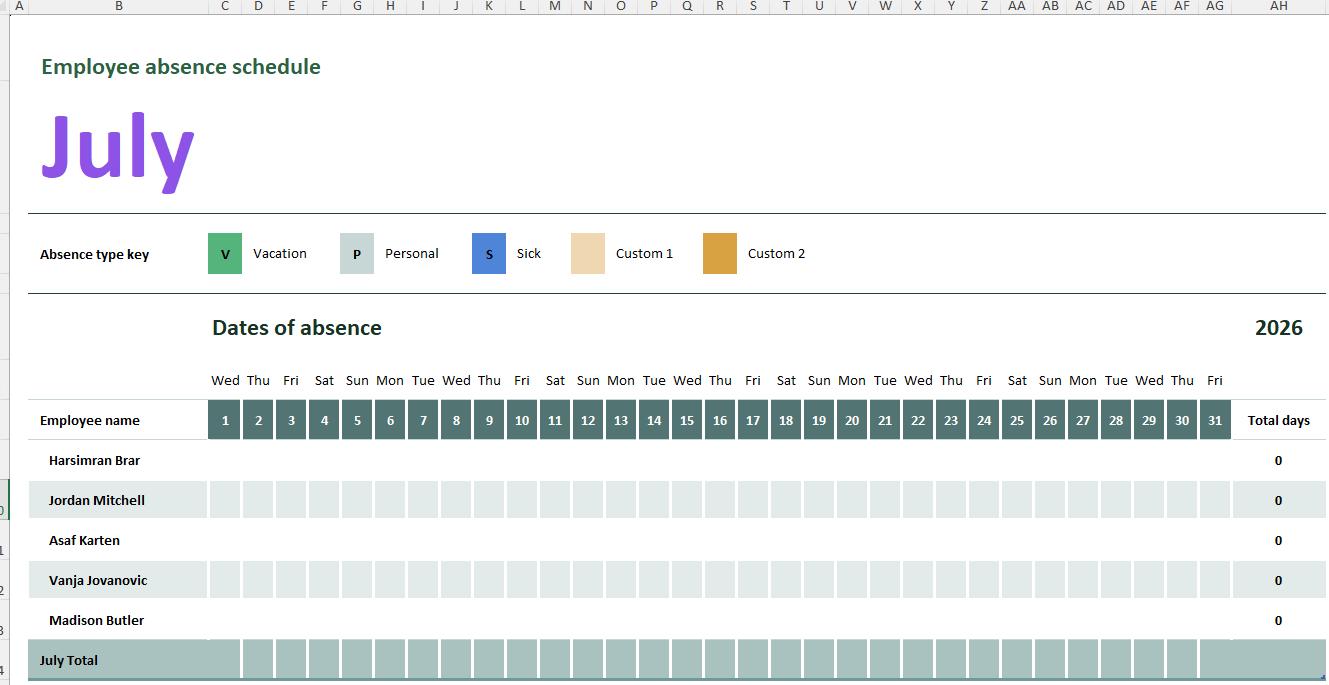
An employee absence schedule is used to track employees’ absences during a particular month or year. Without coordinating planned leave, an organization may experience staffing shortages.
By scheduling each employee’s planned absence, the organization ensures that enough people are available to work, even when multiple employees are away at the same time. The schedule enables the employer to plan staffing coverage and identify any payroll adjustments required under the applicable leave policy.
Maintaining this absence record offers several other benefits as well. Most importantly, it helps track paid leave and any additional time off. This information can be used to calculate each employee’s weekly or monthly pay, with any applicable adjustments made accordingly.
Employees can also refer to this record to monitor their remaining leave allowance. Understanding how additional leave may affect their pay helps them plan time off and follow the company’s leave procedures.
(Create your employee absence schedule with the help of tool given below.)
Employee Absence Schedule
Schedule Details
Employee Absence Records
Coverage & Scheduling Notes
Schedule Snapshot
Employee Absence Schedule
DEPARTMENT
SCHEDULE PERIOD
MANAGER
WORKING DAYS
Employees Absent
Total Absence Days
Approved
Pending
Absence Schedule
Employee
Type
From
To
Days
Paid?
Status
Coverage
Absence Timeline
Employee
Start
End
Duration
Department
Coverage & Notes
GENERAL COVERAGE PLAN
SCHEDULING / OVERLAP NOTES
MANAGER NOTES
Prepared by • Employee Absence Schedule
What is the purpose of using an employee absence schedule?
When an employer needs to review the dates on which employees were absent from work, they can refer to the absence schedule. Its purpose extends beyond planning absences: it also serves as a record of employees’ time away from work.
Depending on company policy and employment terms, leave taken beyond an employee’s paid allowance may be treated as unpaid leave and may affect their salary.
In some cases, an organization may be unable to approve a leave request because of staffing requirements. An absence schedule helps the employer review existing leave arrangements before making this decision.
The schedule also helps employers identify attendance patterns and address any concerns. However, attendance records should be considered alongside the reasons for absences, approved leave arrangements, and other relevant information when reviewing employee performance. Regular attendance alone does not provide a complete measure of an employee’s motivation or contribution.
The points discussed above highlight the value of maintaining an employee absence schedule. Leave arrangements may differ for employees in different roles, so each employee should have an individual absence record. Online templates are available to help create these records quickly. Simply download a suitable template and customize it to fit your organization’s requirements.
Importance of an employee absence schedule
Every employee in an organization has a specific role to play. Organizations provide benefits, including leave allowances, as part of their employment arrangements. Maintaining an absence schedule helps both employers and employees track the use of these benefits.
It is beneficial for an organization to create and maintain an absence schedule for all employees. Employers can use this schedule to review leave dates, reasons for absence, and staffing needs. There can be many reasons for an employee to be absent from work. When a leave request is approved, the organization can record it in the schedule and arrange appropriate coverage.
What should be included in an employee absence schedule?
School staff ID cards are an important part of creating a safe, organized, and professional educational environment. They help identify teachers, administrators, counselors, librarians, and other school employees while enhancing campus security and improving day-to-day operations. A well-designed staff ID card not only serves as an identification tool but also reflects the professionalism and branding […]
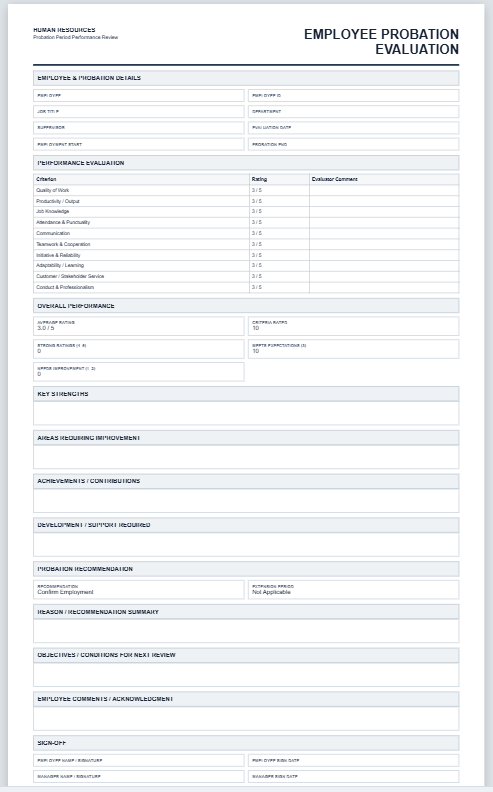
An employee probation evaluation provides a structured way to review an employee’s performance during the probationary period. It helps managers document performance across areas such as quality of work, productivity, job knowledge, attendance, communication, teamwork, initiative, adaptability, service, and professionalism, while also recording strengths, improvement areas, achievements, and development needs. Use the Employee Probation Evaluation […]
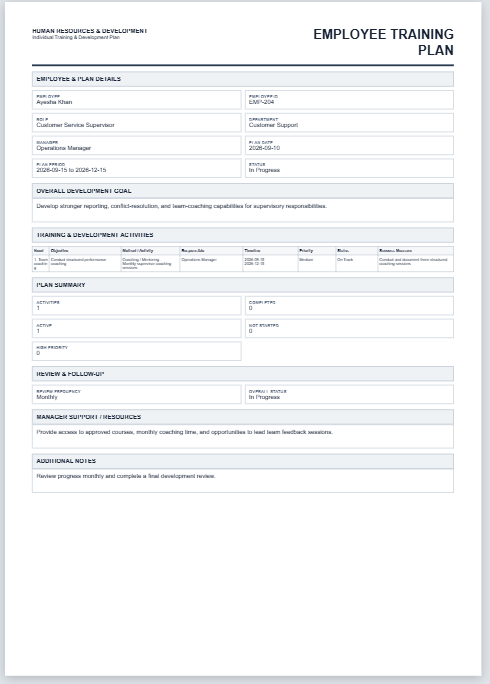
An employee training plan provides a structured way to identify development needs, set training objectives, assign learning activities, and monitor progress over a defined period. It can be used for individual skill development, preparation for new responsibilities, performance improvement, or ongoing professional development. Use the Employee Training Plan Generator below to create an individual plan […]
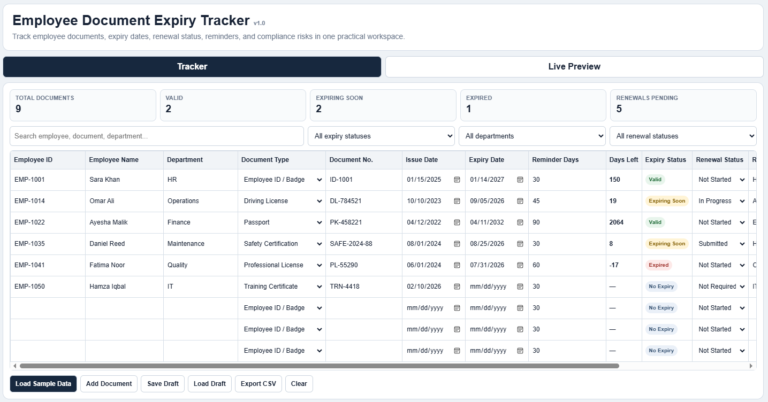
Keeping employee documents current can be difficult when an organization manages multiple IDs, licenses, permits, certificates, contracts, and other time-sensitive records. Missing an expiry or renewal date can lead to administrative delays and compliance problems. The Employee Document Expiry Tracker helps HR teams, administrators, and managers maintain these records in one organized register. Add employee […]
Managing employee benefits involves much more than simply recording health insurance or retirement plans. HR departments often need to organize enrollment details, reimbursement claims, allowances, insurance records, approvals, benefit changes, wellness programs, retirement contributions, and many other employee benefit documents. Keeping these records accurate and well organized helps businesses improve compliance, simplify administration, and provide […]
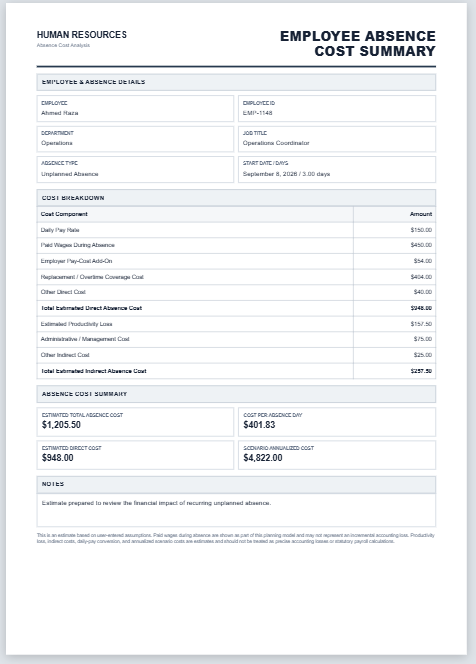
Employee absence can create costs beyond the employee’s regular pay. Depending on the situation, an employer may incur paid wages during the absence, replacement or temporary staffing costs, overtime coverage, administrative costs, and productivity-related impacts. The Employee Absence Cost Calculator below helps estimate these costs for a specific absence scenario. Enter the employee’s pay information, […]
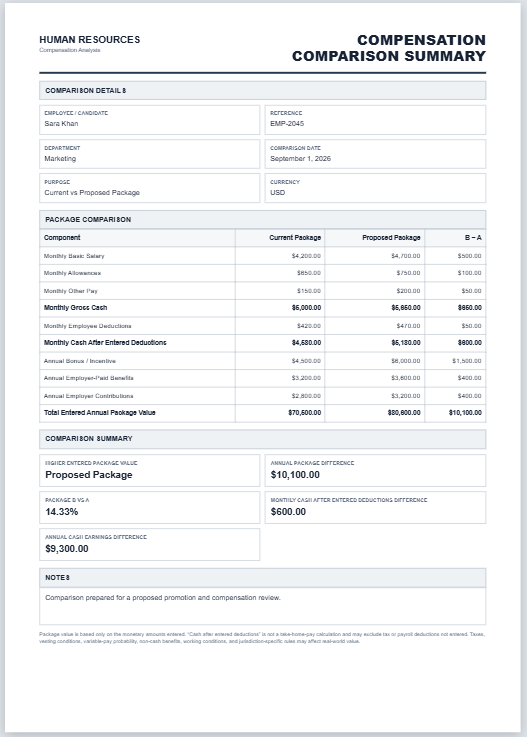
Employee compensation can include more than basic salary. Allowances, other regular pay, bonuses or incentives, employer-paid benefits, employer contributions, and employee deductions can all affect how two compensation packages compare. The Employee Compensation Comparison Calculator below lets you enter two packages side by side and compare their annual cash earnings, cash after the deductions you […]
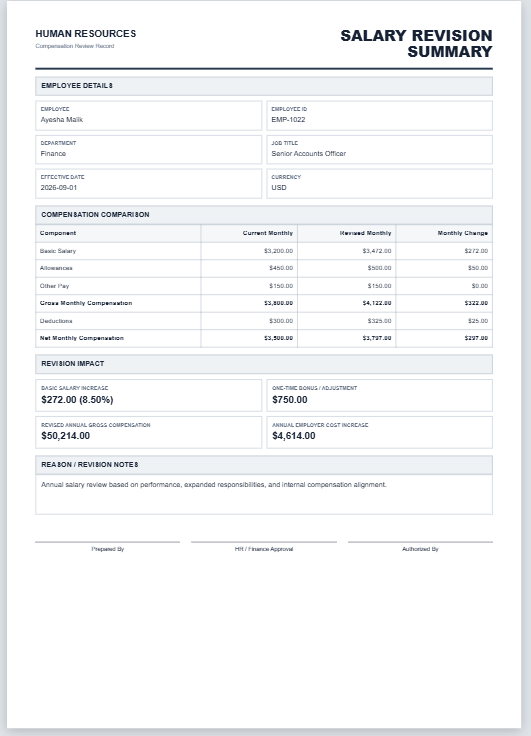
Use the Employee Salary Revision & Increment Calculator to compare an employee’s current and revised compensation after a salary review, promotion, performance-based increment, or other approved pay adjustment. Enter the current basic salary and compensation components, choose how the basic salary will be revised, and review the calculated changes in the live summary. The calculator […]
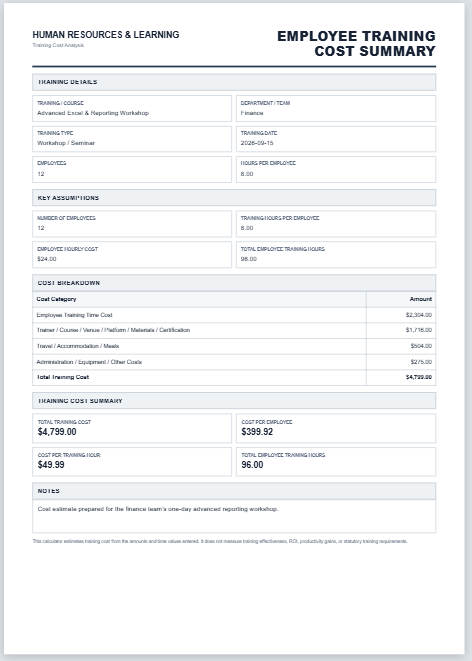
Employee training involves more than the fee paid to a trainer or course provider. The total cost can also include employee time, training materials, certification fees, venue or platform charges, travel and accommodation, administration, equipment, and other delivery expenses. Estimating these costs together provides a clearer picture of the resources required for a training program. […]
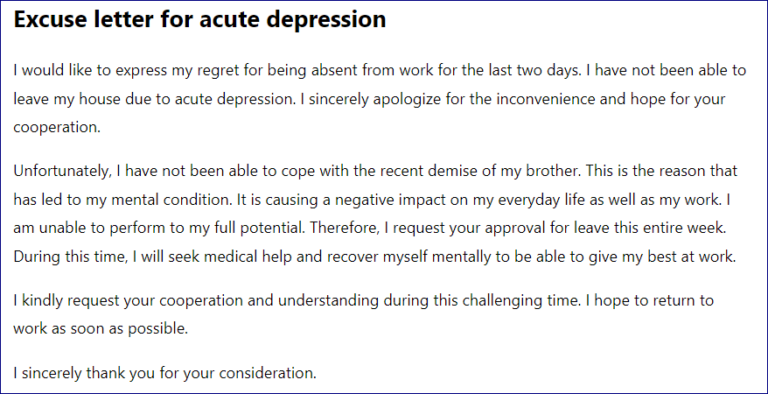
Medical appointments, health concerns, and unexpected childcare needs may require time away from work. An absence excuse letter helps explain the situation, specify the dates, and outline any arrangements for urgent tasks. The following samples can be adapted to communicate your circumstances briefly and professionally. Excuse Letter for a Medical Checkup I am writing to […]
Missing a class due to illness can be stressful, especially when you need to notify your professor professionally and respectfully. A well-written sick absence message explains your situation clearly, demonstrates responsibility, and helps maintain effective communication with your instructor. Whether you are experiencing a minor illness, recovering from an injury, attending a medical appointment, or […]
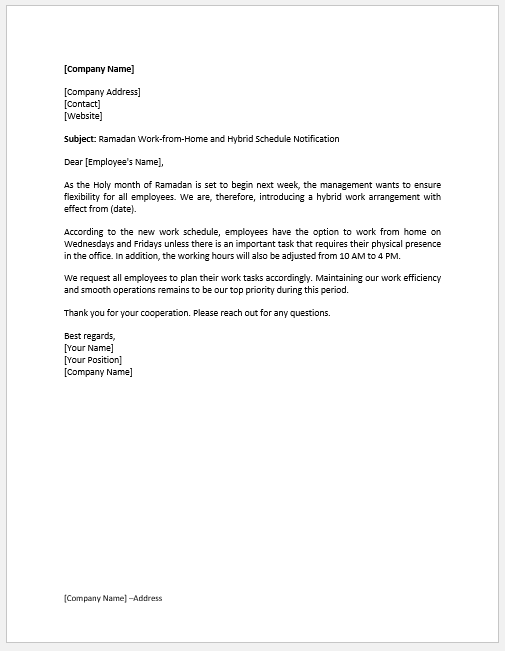
Ramadan schedule notification is a formal communication sent to staff outlining remote work options, flexible schedules, and hybrid work arrangements during Ramadan to accommodate fasting employees while ensuring productivity. Consider the following samples to take help from. We expect it will help you to write the one you were looking for. #1 This is to […]
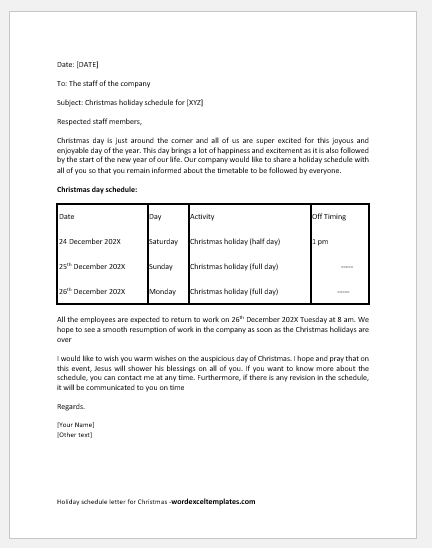
A holiday schedule describes the number of holidays people working in an organization will get and in some cases; the activities to be performed are also shared in the holiday schedule. A holiday schedule is a modified timetable followed in an organization due to the Christmas event. It also means describing the number of holidays. […]