The human body is made up of cells that come together to form tissues and organs that perform specific functions. Over time, these cells become worn out and are replaced with new ones to maintain the body’s normal functioning. The internal environment of the body is maintained at a stable state known as Homeostasis, where important physical and chemical factors remain within a normal range. These factors include body temperature, pH level, oxygen concentration, and other vital parameters.
Maintaining these factors within a narrow range is essential because if they move outside their normal limits for a prolonged period, the cells may stop functioning properly, and the body’s systems can become compromised. Changes in body temperature are often an early indicator of abnormalities or infections that the body may be experiencing, and such changes should be monitored carefully.
It is very common for people to experience illnesses such as the Common Cold or Fever, sometimes occurring together. In fact, many people experience symptoms of the common cold at different times of the year, often without realizing it.
When treating conditions such as the common cold or fever, it is important to keep a record of body temperature. Regular temperature monitoring helps ensure that the body temperature remains within a safe range and allows caregivers or individuals to track changes over time. A Body Temperature Tracker Template can help organize these records in a clear and consistent manner, making it easier to observe patterns, monitor recovery, and share accurate information with healthcare professionals.
What is a body temperature tracker?
A body temperature tracker is a tool used to record and monitor an individual’s body temperature over time. It helps track changes in temperature and provides a clear record of readings taken at different times of the day.
An increase in body temperature is often an indicator of inflammation or infection that the body may be experiencing. In many cases, a mild rise in temperature may last for a day or two and can be managed with medication and rest. However, if the temperature remains high or is caused by a severe infection, medical specialists may need to be consulted, and a complete course of antibiotics or other treatments may be prescribed.
Enzymes, organs, and proteins function best within a specific temperature range; therefore, maintaining a stable internal body temperature is essential for proper body function. A body temperature tracker helps individuals monitor their temperature regularly and alerts them to any unusual changes that may require attention.
Types of Body Temperature Trackers and Their Uses
There are many types of temperature trackers or thermometers available in the market. Each type has its own advantages and limitations. Some commonly used thermometers include:
Digital Thermometer: A digital thermometer is battery-operated and very easy to use. It detects body temperature through the ear or forehead and displays the reading on a screen. It is inexpensive and is a convenient tool for measuring the body temperature of children.
Manual (Mercury) Thermometer: A manual thermometer is made of glass and contains mercury. It is relatively costly and requires careful handling to ensure safety. This thermometer is placed either in the armpit or mouth to measure temperature manually. The reading must be observed directly, which can be challenging for some users.
Electronic Devices and Mobile Apps: Many mobile applications can estimate body temperature. While these apps provide a general idea of fever or inflammation, they may not always be fully accurate. Similarly, some wearable electronic devices, such as digital watches, monitor body temperature along with heart rate and oxygen levels. These devices can offer helpful trends but should not be relied upon for precise medical measurements.
Why Body Temperature Trackers are Essential for Home Health Monitoring
Body temperature trackers are important for several reasons:
- These trackers can be kept at home for easy and regular temperature monitoring.
- Digital thermometers are affordable and user-friendly. They provide quick and accurate readings and can be safely used for children as well.
- Temperature trackers can help detect early signs of fever or inflammation, allowing prompt action before conditions worsen.
- Some advanced trackers also monitor additional vital signs, such as heart rate and oxygen saturation, providing valuable health information.
How to Use a Body Temperature Tracker Effectively
A body temperature tracker helps document body temperature throughout the day. It can also be used to monitor changes during the course of medication prescribed by a doctor.
For example, if a prescribed course lasts five days, a separate daily body temperature tracker should be maintained to provide the doctor with a clear chart of your temperature trends.
The tracker should include the time each temperature reading was taken along with the actual temperature. Each reading should have a dedicated section for notes, such as whether the patient felt dizzy, nauseous, or experienced any other symptoms. Additionally, record any medication taken before or after the temperature reading, along with the time it was taken.
Maintaining a detailed body temperature chart helps physicians make more informed decisions and accurate diagnoses. Always ensure your records are specific and precise.
Here we have various templates:
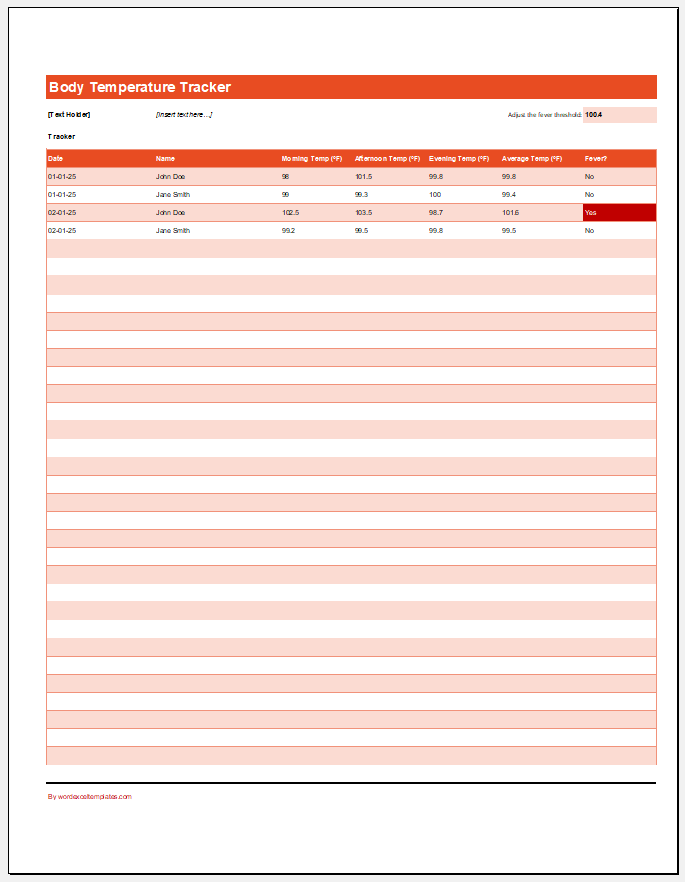
1- Track temperatures during illness or recovery.
2- Monitor temperatures for multiple individuals.
3- Maintain records for patients in healthcare settings.
4- Can be served as a family temperature log
Format: MS Excel Sheet
Elderly Temperature Monitoring Log
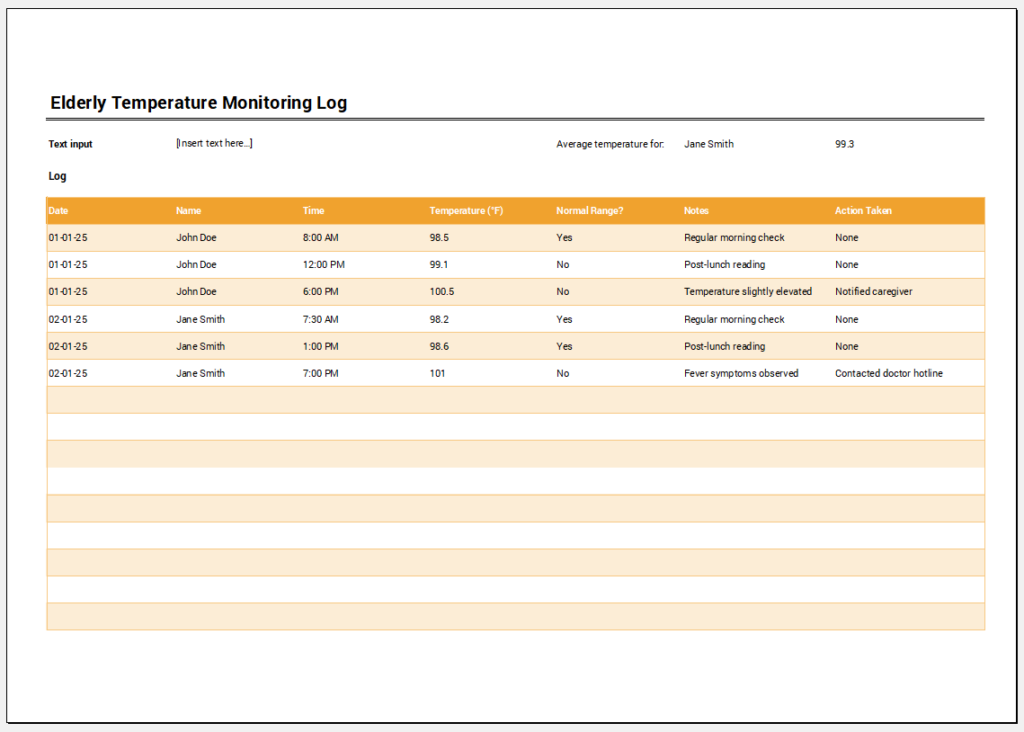
1- Track temperatures throughout the day for elderly individuals.
2- Identify patterns of fever or consistently abnormal temperatures.
3- Share log entries with family members or healthcare providers.
Format: MS Excel Sheet

Key features:
- Track health during illness or recovery.
- Identify patterns in heart rate and temperature for long-term conditions.
- Reimbursement Management Forms
- Financial and Assistance Benefits Forms
- Forms Used for Workplace Ethics and Policies
- Forms used for Operations in an Organization
- Procurement/Supply Chain Forms
- Downloadable Forms for Unprofessional Behavior
- Commonly Downloaded Office Forms
- Employee Dispute & Grievance Forms
- Insurance & Protection Benefit Forms
- Employee Retirement & Pension Forms
- Employee Service & Tenure Forms
- Employee Health & Well-being Forms
- Employee Scrutiny & Evaluation Forms
- Employee Training and Development Forms
- Customer Service and Support Form Generator
- Commonly Used Forms for Payroll Correction
- Employee Exit Forms -Generate Online
- Employee Orientation Forms