If your business depends on tools, they need to be available and in good working condition. When a client needs a job done, missing or faulty tools can cause delays and frustration. This is why it is important to have a proper tool inventory system to keep your equipment organized.
Keeping an up-to-date record of your tools, their locations, and their condition helps you identify what is available and what needs attention. A tool inventory sheet can support this process.
What is a tool inventory sheet?
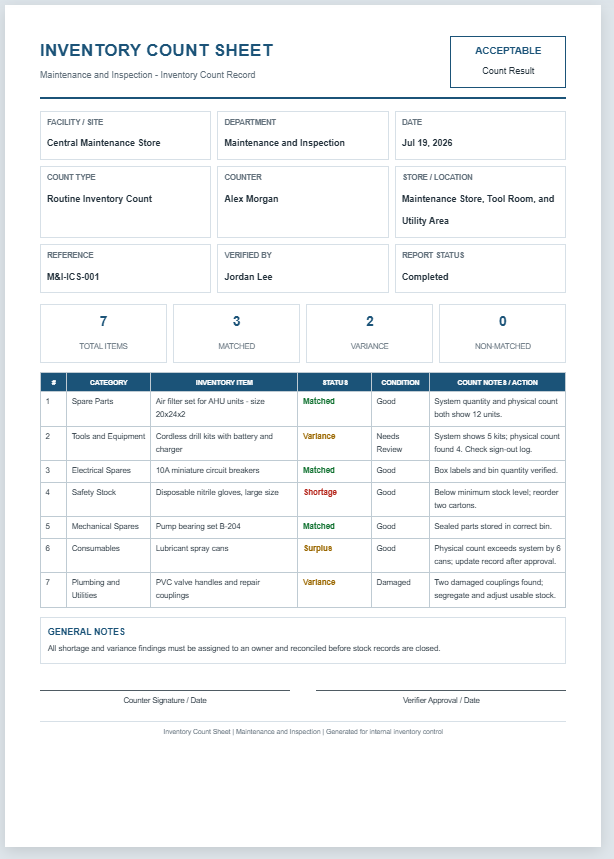
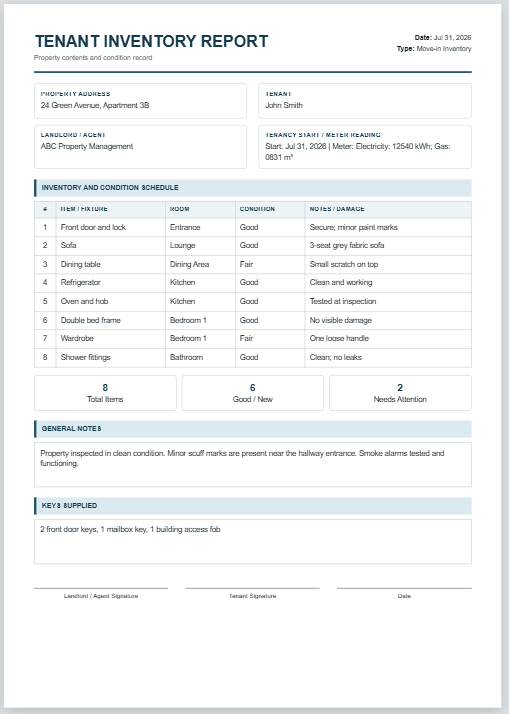
A tool inventory sheet records information about the tools, machinery, and equipment a business owns or manages. It provides a reference for checking quantities, locations, availability, and recorded condition.
(Create your sheet below.)
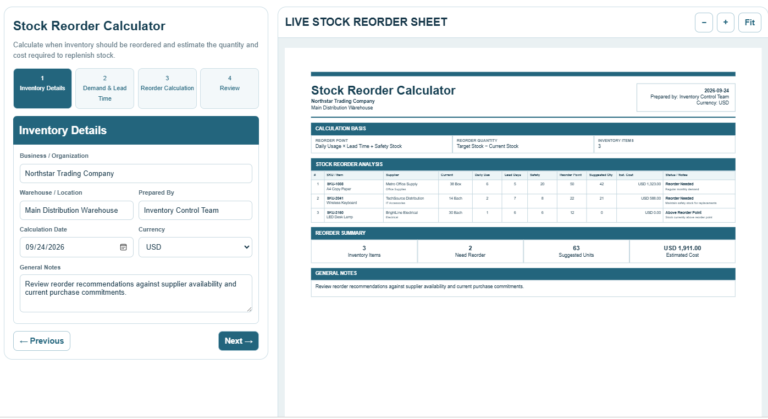
Tool Inventory Sheet
Record tool quantities, locations, custodians, condition and inventory value.
Inventory Details
Tool Records
Expand an item to edit its quantities, condition, location and assigned custodian.
Inventory Settings
Review & Approval
What does a tool inventory sheet do?
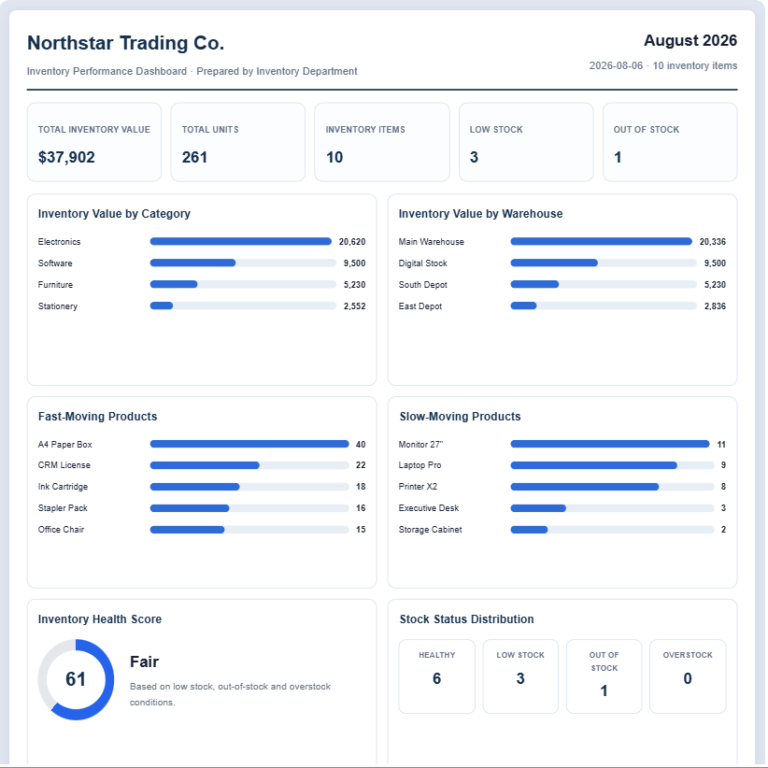
The sheet records key details about the company’s equipment. It can show whether an item is available, assigned to an employee, awaiting maintenance, or no longer in service. Reviewing these records can also help identify replacement or purchasing needs.
Creating a Tool Inventory Sheet
Consider the following points when preparing your sheet:
Format the sheet:
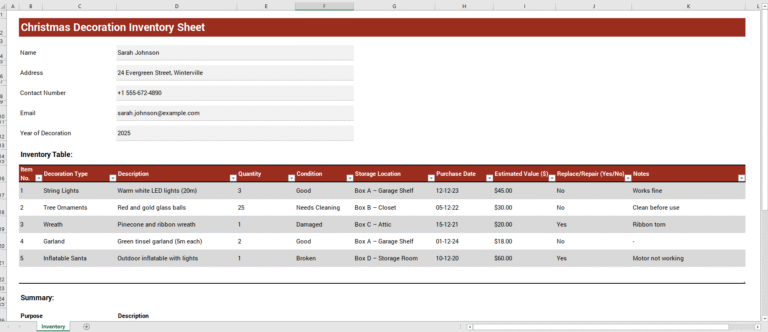
Use a heading such as “Tool Inventory Sheet.” Arrange the relevant information in a clearly labeled table.
Company details:
Include the company’s name and any relevant contact information, such as its phone number, email address, and location.
Inventory details:
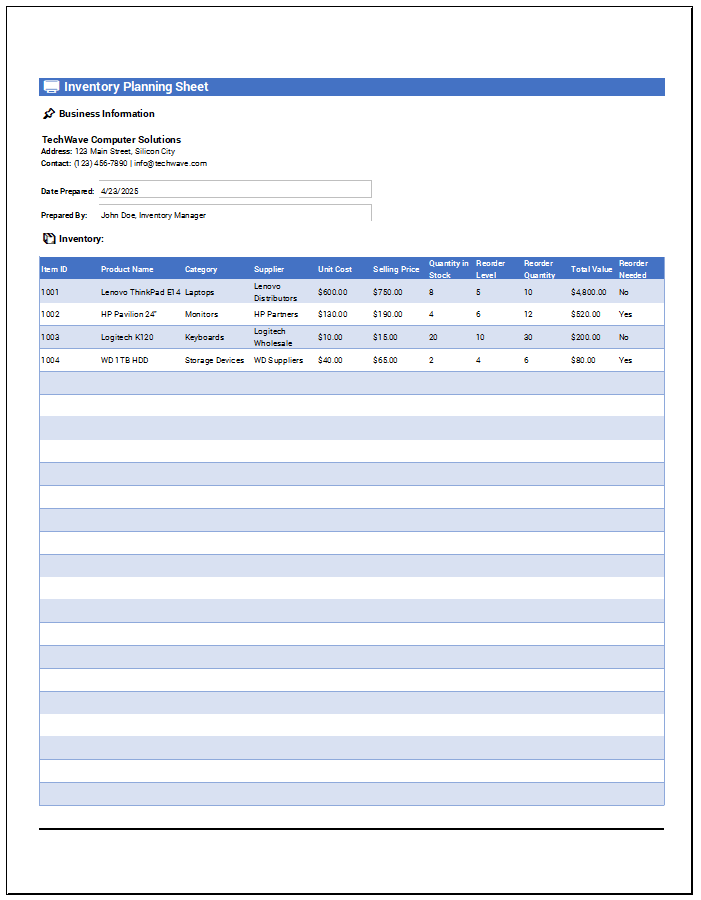
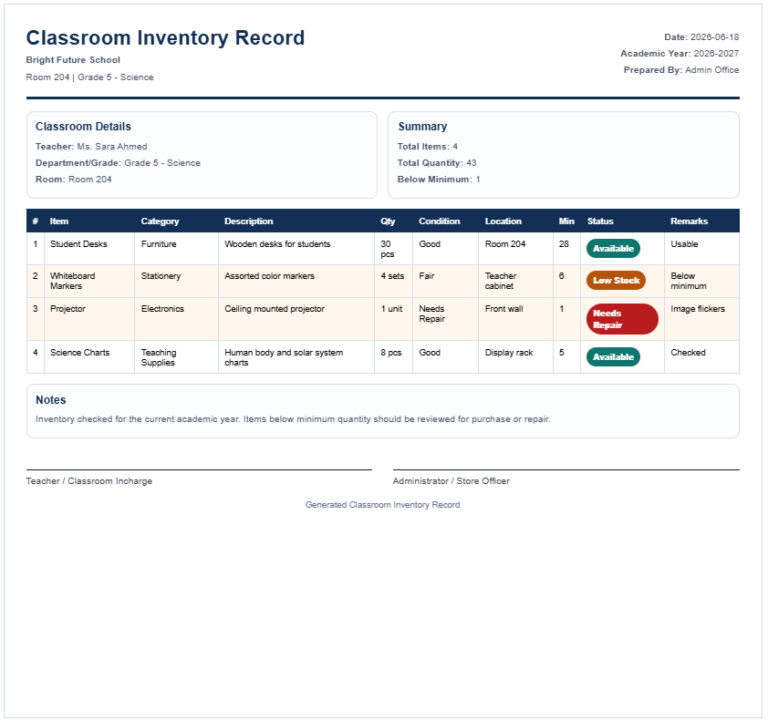
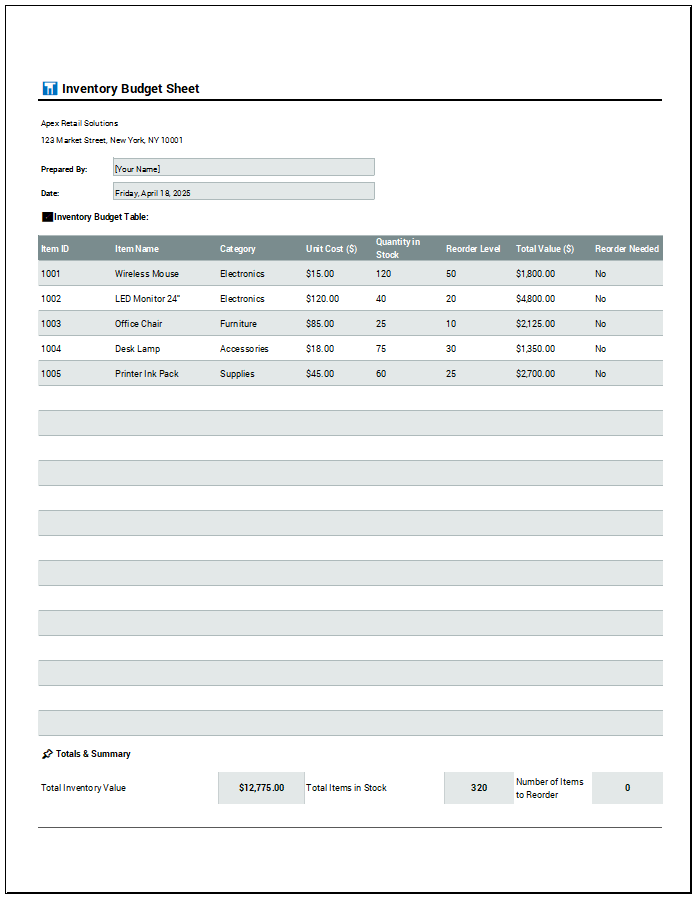
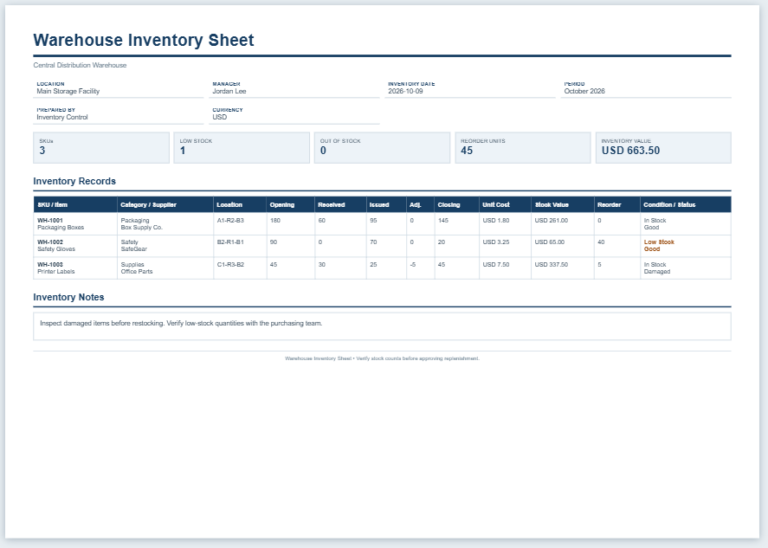
Use a separate row for each tool or equipment item. Useful column headings include:
- Tool or equipment name
- Asset ID or serial number
- Description and intended use
- Purchase date and cost
- Quantity
- Storage location
- Assigned employee or custodian
- Condition and availability
- Warranty details
- Last inspection or maintenance date
- Next maintenance due date, where applicable
- Comments
Choose fields that suit the equipment being tracked. Individually identifiable tools may need separate entries, while identical low-value items may be grouped by quantity.
Keep entries relevant:
Include only information needed to identify, locate, and manage the tools. Clear headings and consistent descriptions make the sheet easier to complete and review.
Keep comments brief and specific. For example, note the fault observed, any restrictions on use, or the maintenance action required.
Benefits of Keeping a Tool Inventory Sheet
This sheet helps a company review which tools it has, where they are stored, and their recorded condition. Staff can use it to check availability before scheduling work or assigning equipment.
Accurate records support planning, but the sheet does not replace physical inspections or maintenance. Keeping condition and service information current helps staff identify tools that need attention before use.
Update the sheet when tools are purchased, moved, assigned, returned, repaired, or removed from service. A consistent recording process helps the business stay organized and reduces time spent searching for equipment.

Excel Template File: 87 KB