Keeping animals as pets and enjoying their company is an important part of many people’s lives. Pets offer companionship and comfort, but caring for them also involves responsibilities. Dogs and cats are popular choices, and both need regular attention to their health and well-being. Vaccination, grooming, exercise, and veterinary care are important parts of responsible pet ownership.
A dog vaccination chart records the vaccines a dog has received and when further doses are due. Vaccination helps protect dogs against certain infectious diseases. Some vaccines, such as the rabies vaccine, also help protect people by reducing the risk of transmission from infected animals.
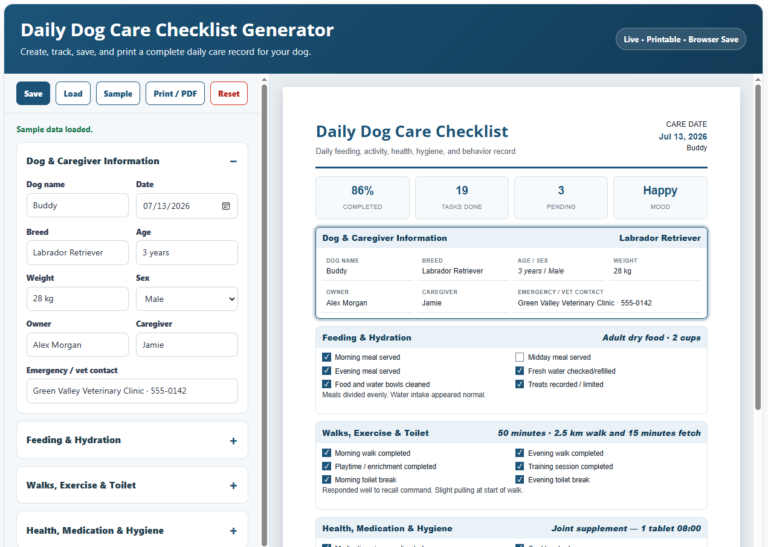
(You can create a sample chart for your personal use using the tool below.)
Dog Vaccination Chart
Record administered vaccines, track due dates, and maintain a printable vaccination history.
Dog & Owner Information
Vaccination Records
Enter administered vaccinations and future appointments. Due dates and schedules should follow your veterinarian's advice.
Veterinarian & Care Notes
Review Vaccination Chart
Review dates, recorded doses, and planned appointments. This chart is for recordkeeping and does not determine a medically appropriate vaccination schedule.
Maintaining an accurate vaccination chart is useful for the following reasons:
- Disease prevention: Vaccinations help protect dogs against potentially serious illnesses, including rabies, parvovirus, and canine distemper. A chart helps owners and veterinarians keep track of the doses needed to maintain protection.
- Grooming and boarding: Grooming salons, boarding facilities, training centers, and dog daycare providers may require vaccination records before accepting a dog. Keeping these records available makes it easier to meet their requirements.
- Traveling: When traveling with a dog, owners may need to provide vaccination records or other health documents. Requirements vary by destination and transport provider, so they should be checked before departure.
- Legal requirements: Some vaccinations, particularly rabies vaccination, may be required under local rules. An up-to-date chart helps owners document their dog’s vaccination history.
Common dog vaccines include the following:
- Rabies vaccine: Rabies is a deadly disease that can spread to humans through the saliva of an infected animal, commonly through a bite. Vaccinating dogs helps protect both animal and public health.
- Parvovirus vaccine: Canine parvovirus is a highly contagious disease that can cause severe illness, particularly in puppies. Vaccination is an important part of protecting dogs against it.
- Distemper vaccine: Canine distemper is a highly contagious disease that can affect several body systems, including the respiratory and nervous systems. Vaccination helps protect dogs against this serious illness.
A dog’s vaccination schedule should be determined with a veterinarian. It generally includes an initial series of vaccinations followed by booster doses when needed.
- Puppy vaccinations: Vaccination usually begins during puppyhood, with additional doses scheduled to build protection. The timing depends on the vaccine, the puppy’s age and health, and applicable requirements.
- Booster doses: Booster schedules vary by vaccine and the dog’s circumstances. Not every vaccine requires an annual booster, so owners should follow their veterinarian’s recommendations and record the next due dates.
Depending on the dog’s health, lifestyle, location, and exposure risks, a veterinarian may recommend additional vaccines. Keeping the chart updated provides a clear record for future veterinary visits, boarding arrangements, and travel.

The File: 98 KB