A Value Added Tax (VAT) is an indirect tax imposed on the consumption of goods and services. It is applied at each stage of the supply chain where value is added to a product or service. Businesses charge VAT on their sales and can also reclaim the VAT they have already paid on their purchases, which helps avoid double taxation.
In simple terms, VAT is collected by businesses on behalf of the government. Any organization that sells taxable goods or provides taxable services may be required to register for VAT and comply with its reporting requirements.
To manage this efficiently, a VAT Log is a useful tool that helps businesses record, organize, and track all VAT-related transactions in one place.
What is a VAT Log?
A VAT Log is a structured record-keeping document used to track VAT charged on sales and VAT paid on purchases. It helps businesses maintain accurate financial records and ensures compliance with tax regulations.
This log provides a clear overview of taxable transactions, making it easier to calculate how much VAT is payable to or refundable from tax authorities.
A VAT log typically includes details of both cash and credit transactions, along with the applicable VAT amounts. It helps businesses distinguish between net amounts and VAT components for accurate reporting.
Importance of a VAT Log
A VAT log plays a vital role in financial management and tax compliance. Its key importance includes:
- Helps businesses accurately calculate VAT payable and receivable
- Ensures proper record-keeping of taxable transactions
- Improves transparency in tax reporting
- Assists in preparing VAT returns efficiently
- Reduces the chances of errors in tax calculations
- Supports compliance with legal and regulatory requirements
Limitations of a VAT Log
While a VAT log is highly useful, it may also present some challenges:
- Maintaining detailed records can be time-consuming
- Incomplete or incorrect entries may lead to reporting errors
- Poorly designed logs can be confusing and difficult to use
- Requires consistent updating to remain accurate and useful
How to Create a VAT Log
When designing a VAT log, it is important to use a clear and professional format. Below are the key steps:
1. Professional Layout: Start with a proper heading such as “VAT Log”. Include the business name, contact details, and the reporting period (e.g., monthly or quarterly).
2. Create a Structured Table: Design the log in a table format for easy data entry and calculation. Common columns include:
- Date of transaction
- Invoice number
- Description of goods/services
- Quantity
- Unit price
- Total value (excluding VAT)
- VAT rate (%)
- VAT amount
- Total amount (including VAT)
- Type of VAT (standard, reduced, or exempt if applicable)
3. Calculation Section: At the bottom of the table, include totals for:
- Total taxable amount
- Total VAT collected
- Total VAT paid
- Net VAT payable or refundable
4. Keep It Simple and Clear: Avoid unnecessary complexity. A VAT log should be easy to understand, regularly updated, and consistent in structure.
A VAT log is an essential financial tool that helps businesses track and manage VAT-related transactions efficiently. It ensures transparency, improves accuracy in tax reporting, and supports smooth compliance with tax regulations. By maintaining a well-organized VAT log, businesses can reduce stress during tax filing and make better financial decisions.
About Our Template
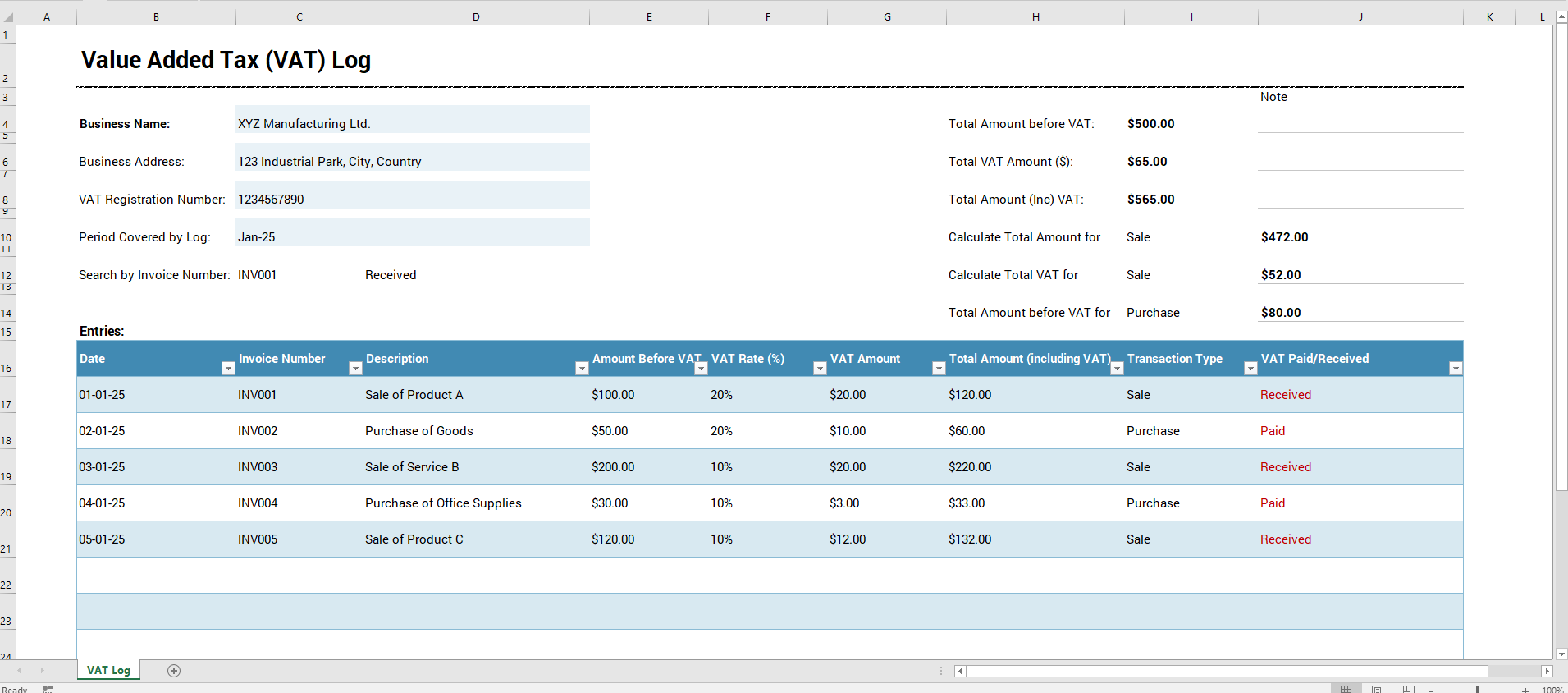
Our VAT Log Template is designed to make VAT tracking simple, accurate, and efficient for businesses of all sizes. It provides a ready-to-use format that allows you to record sales, purchases, VAT rates, and total tax amounts without any confusion.
The template is fully editable in Excel, making it easy to customize according to your business needs. Whether you are a small business owner or managing a large organization, this template helps you stay organized, save time, and ensure compliance with VAT reporting requirements.
- Corporate Employee Photo ID Cards
- Reimbursement Management Forms
- Financial and Assistance Benefits Forms
- Forms Used for Workplace Ethics and Policies
- Summer Vacation Planner
- Outlet Mall Shopping Planner
- Customer Information and Ranking Sheet
- Small Family Kitchen Design Planning Sheet
- Summer Party Budget Sheet
- Payroll Register & Salary Sheet
- Forms used for Operations in an Organization
- Procurement/Supply Chain Forms
- Employee Skill Development Tracker
- HR Budget & Expense Tracker
- Leave & Vacation Tracker Template