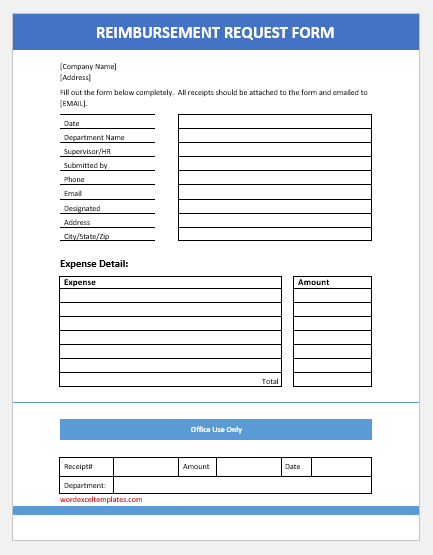
When an employee pays for a business-related expense using personal funds, the organization later compensates that amount. This process is known as reimbursement. It is a common practice in workplaces where employees may need to purchase supplies, travel for work, or cover operational costs on behalf of the company.
Reimbursement is not only a financial process but also an important element of workplace trust and transparency. When handled properly, it ensures that employees are not financially burdened for company-related expenses and that organizations maintain accurate financial records.
To simplify and standardize this process, many companies use Reimbursement Request Forms instead of written letters or informal requests.
What is a Reimbursement Request Form?
A Reimbursement Request Form is a structured document used by employees to formally request repayment for expenses incurred during official duties. Instead of writing a detailed letter each time, employees fill out predefined fields in a form.
This form helps organizations collect all necessary information in a consistent format, making it easier for accounting and management teams to review, verify, and process claims efficiently.
These forms are commonly available in Excel, Word, PDF, or online digital formats, depending on the company’s system.
Why Companies Use Reimbursement Forms
Reimbursement forms are widely preferred over manual request letters because they offer several advantages:
- Standardization: Every employee submits information in the same format, reducing confusion.
- Time Efficiency: Managers and finance teams can quickly review claims without needing to interpret written letters.
- Accuracy: Structured fields reduce the chances of missing or incomplete information.
- Faster Processing: Clear data speeds up approval and payment workflows.
- Record Keeping: Forms can be easily stored and retrieved for audits and financial reporting.
Unlike traditional written requests, reimbursement forms minimize errors and ensure a smooth approval process.
How the Reimbursement Process Works
Although the process may vary slightly between organizations, it generally follows these steps:
- Employee Incurred Expense: The employee pays for a work-related expense using personal funds.
- Form Submission: The employee fills out the reimbursement request form with all required details.
- Manager Approval: The relevant supervisor or budget approver reviews and verifies the expense.
- Finance Review: The finance department checks supporting documents such as receipts and invoices.
- Reimbursement Payment: Once approved, the company processes the payment to the employee.
This structured workflow ensures transparency and accountability at every stage.
Key Information Included in a Reimbursement Form
A well-designed reimbursement request form typically collects the following details:
1. Employee Information: This section identifies the requester and may include:
- Full name
- Employee ID
- Department
- Job title
- Contact details
This helps the company link the claim to the correct employee record.
2. Expense Details: This is the most important section of the form. It includes:
- Date of expense
- Category of expense (travel, meals, supplies, etc.)
- Description of purchase or service
- Amount spent
- Currency (if applicable)
- Payment method used
Employees may also be required to attach receipts or proof of payment for verification.
3. Business Purpose: Employees must explain why the expense was necessary for work. This may include:
- Project name
- Client meeting details
- Travel purpose
- Operational requirement
This ensures the expense is legitimate and business-related.
4. Approver Information: Most companies require approval before reimbursement. This section includes:
- Name of supervisor or manager
- Department head approval
- Signature or digital approval
- Approval date
This step ensures that expenses are authorized before reimbursement is processed.
5. Supporting Documents: Many organizations require attachments such as:
- Receipts
- Invoices
- Travel tickets
- Hotel bills
- Purchase slips
These documents act as proof and help prevent fraudulent claims.
Where to Get a Reimbursement Form: Reimbursement request forms are typically provided by the organization itself. Employees can usually find them:
- On the company’s internal HR or finance portal
- Through email or internal communication systems
- As downloadable Excel or PDF templates
- Within automated expense management software
Some companies also provide printed versions, especially in environments where digital systems are not widely used.
Benefits of Using a Reimbursement Request Form
Using a structured form offers multiple advantages for both employees and employers:
- Reduces administrative confusion
- Ensures faster approvals
- Prevents incomplete or incorrect submissions
- Improves financial transparency
- Strengthens internal control systems
- Creates an audit-ready documentation trail
For employees, it simplifies the submission process. For companies, it improves financial accuracy and accountability.
A Reimbursement Request Form is an essential tool for modern organizations. It simplifies the process of claiming work-related expenses, ensures consistency in documentation, and improves communication between employees and the finance department.
By replacing informal letters with structured forms, companies can significantly reduce errors, speed up processing time, and maintain better financial control. Whether in Excel, PDF, or digital format, a well-designed reimbursement form is a key part of efficient workplace expense management.
Top 7 Reimbursement Forms Designed for Global Use
We have designed a collection of the Top 7 most widely used reimbursement forms worldwide, covering the most common expense categories in organizations. These templates are designed to simplify the reimbursement process, ensure accurate documentation, and speed up approvals. Whether it is travel expenses, office supplies, medical claims, or mileage tracking, our forms provide a clear and standardized format that helps both employees and employers manage expense claims efficiently and transparently.
#1 Employee Expense Reimbursement Form
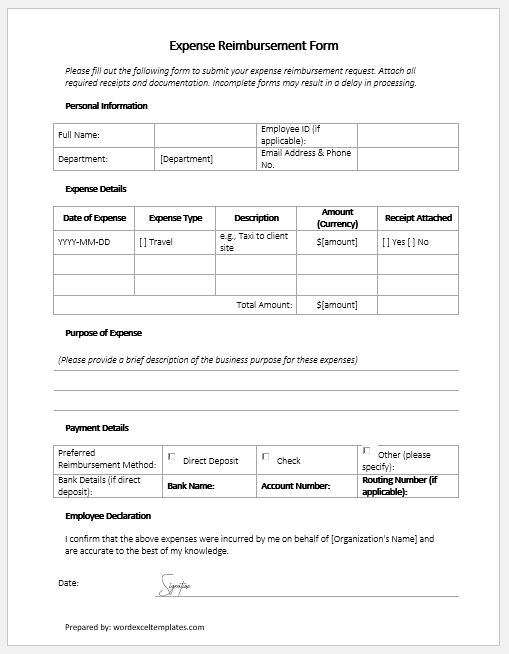
MS Word File Format: 98 KB
#2 Travel Expense Reimbursement Form
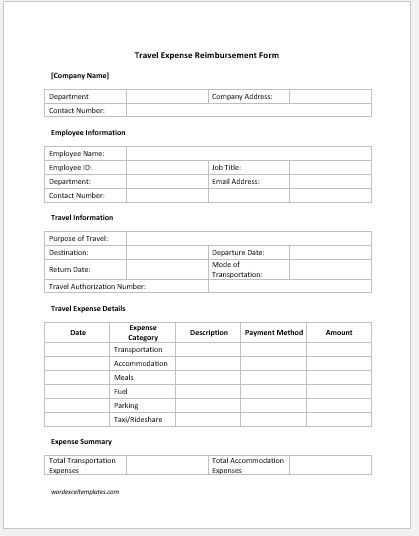
MS Word File Format: 98 KB
#3 Mileage Reimbursement Form (Vehicle Usage Form)
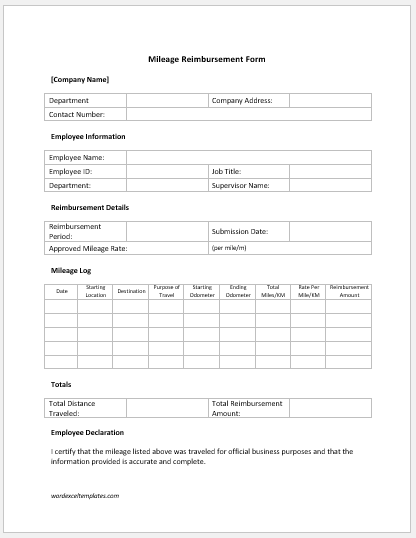
MS Word File Format: 98 KB
#4 Meal and Entertainment Reimbursement Form
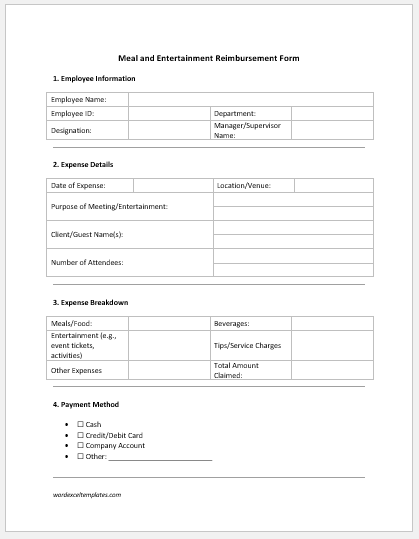
MS Word File Format: 98 KB
#5 Medical Expense Reimbursement Form
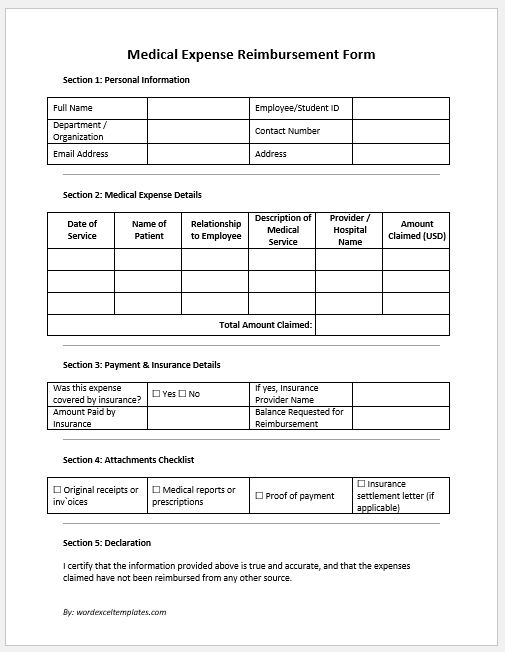
MS Word File Format: 98 KB
#6 Office Supplies Reimbursement Form
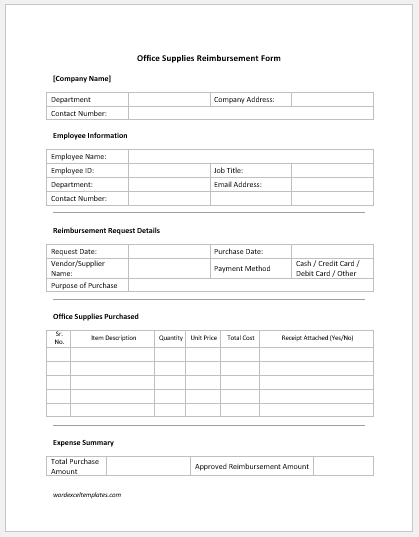
MS Word File Format: 98 KB
#7 Client Meeting Expense Reimbursement Form
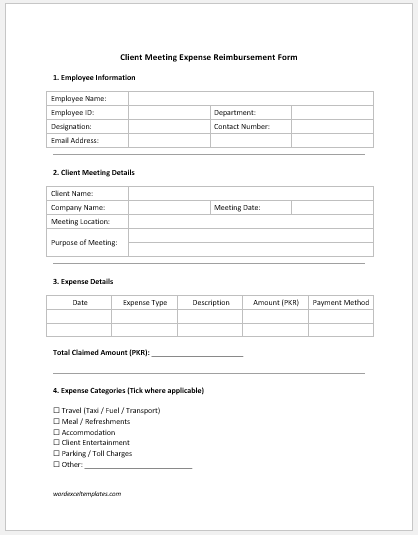
MS Word File Format: 98 KB
- Reimbursement Management Forms
- Financial and Assistance Benefits Forms
- Forms Used for Workplace Ethics and Policies
- Forms used for Operations in an Organization
- Procurement/Supply Chain Forms
- Downloadable Forms for Unprofessional Behavior
- Commonly Downloaded Office Forms
- Leave Application–Related Forms
- Employee Dispute & Grievance Forms
- Insurance & Protection Benefit Forms
- Employee Retirement & Pension Forms
- Employee Service & Tenure Forms
- Employee Health & Well-being Forms
- Employee Scrutiny & Evaluation Forms
- Employee Training and Development Forms