One of the biggest challenges faced by project managers in construction is dealing with limited resources. Among these, time is the most critical resource. If time is not properly planned and managed, it can result in project delays, increased costs, inefficient resource use, and in severe cases, project failure or termination. This is why effective time planning through a structured timeline is essential for every construction project.
What is a Construction Project Timeline?
A construction project timeline is a structured schedule that outlines the entire lifecycle of a project from initiation to completion. It divides the project into manageable phases based on key milestones, tasks, and deliverables that need to be achieved within specific timeframes.
Each phase of the project is assigned a clear start and end date. These time blocks help teams monitor progress and ensure that work is completed in a systematic and organized manner. In simple terms, a construction timeline acts as a roadmap that guides the project from beginning to end while keeping all activities aligned with deadlines.
The success of a construction project largely depends on how effectively this timeline is designed and followed.
Importance of a Construction Project Timeline
Even experienced construction teams may have the technical skills to execute projects without a formal timeline. However, without a structured schedule, it becomes difficult to accurately estimate the total project duration, track progress, and manage overlapping tasks.
A timeline provides clarity and direction by defining what needs to be done, when it needs to be done, and who is responsible for each task. It improves coordination among team members and ensures that everyone is working toward the same goals within the same timeframe.
More importantly, it reduces uncertainty in project execution and helps project managers make informed decisions at every stage.
Key Benefits of Using a Construction Project Schedule
A well-prepared construction project schedule is an essential tool in modern project management. It is difficult to find a successful construction project that does not rely on some form of structured timeline.
Below are some key benefits:
1. Improved Project Management
Large construction projects can often feel overwhelming due to their complexity. A timeline breaks the project into smaller, manageable tasks and phases. This makes it easier for teams to focus on one stage at a time and execute work more efficiently.
2. Better Resource Management
Construction projects require careful coordination of materials, labor, and equipment. A timeline helps project managers plan resource allocation in advance, ensuring that the right resources are available at the right time. This reduces delays caused by shortages or mismanagement.
3. Enhanced Time Tracking and Control
A timeline allows project teams to monitor how much time has been spent on each milestone and how much remains. This visibility helps identify delays early and adjust plans accordingly, improving the likelihood of on-time project completion.
4. Increased Team Productivity and Focus
When teams clearly understand deadlines and expectations, they tend to stay more focused and motivated. A timeline creates a sense of urgency and accountability, encouraging consistent progress throughout the project lifecycle.
How to Create an Effective Construction Project Timeline
Creating a reliable construction timeline requires proper planning and understanding of the project scope. The following steps are essential:
1. Understand the Project Scope
Before creating a timeline, it is important to clearly understand the project requirements, objectives, and limitations. A strong understanding of the scope helps in building a realistic and practical schedule.
2. Identify All Tasks and Activities
Every project consists of multiple tasks, both large and small. Identifying all tasks in advance ensures that nothing is missed during planning or execution. Each task should be clearly defined and assigned to the relevant team members.
3. Define Milestones and Deadlines
Milestones represent key stages of progress in a construction project. Listing all milestone dates helps track overall progress effectively. Each milestone should include a defined start date and end date to indicate its duration and completion target.
These milestones also help project managers evaluate performance and predict future progress more accurately.
Our Template
Take a look at our ready-to-use Construction Project Timeline Template.
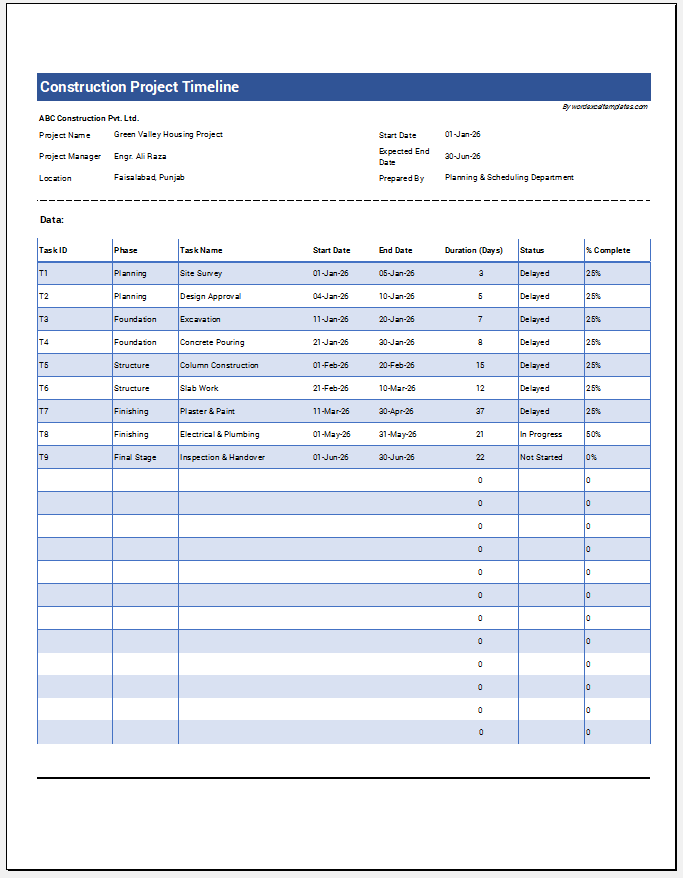
MS Excel Worksheet -124 KB
- Summer Vacation Planner
- Outlet Mall Shopping Planner
- Customer Information and Ranking Sheet
- Small Family Kitchen Design Planning Sheet
- Summer Party Budget Sheet
- Payroll Register & Salary Sheet
- Employee Skill Development Tracker
- HR Budget & Expense Tracker
- Leave & Vacation Tracker Template
- Exit/Off-boarding Checklist
- Performance Evaluation Sheet
- New Year Goal Setting Worksheet
- Workforce Planning & Headcount Forecast Sheet
- Christmas Countdown Calendar
- Year-End Financial Summary Template