Reviewed & updated by M. Hameez·
Updated
Originally published
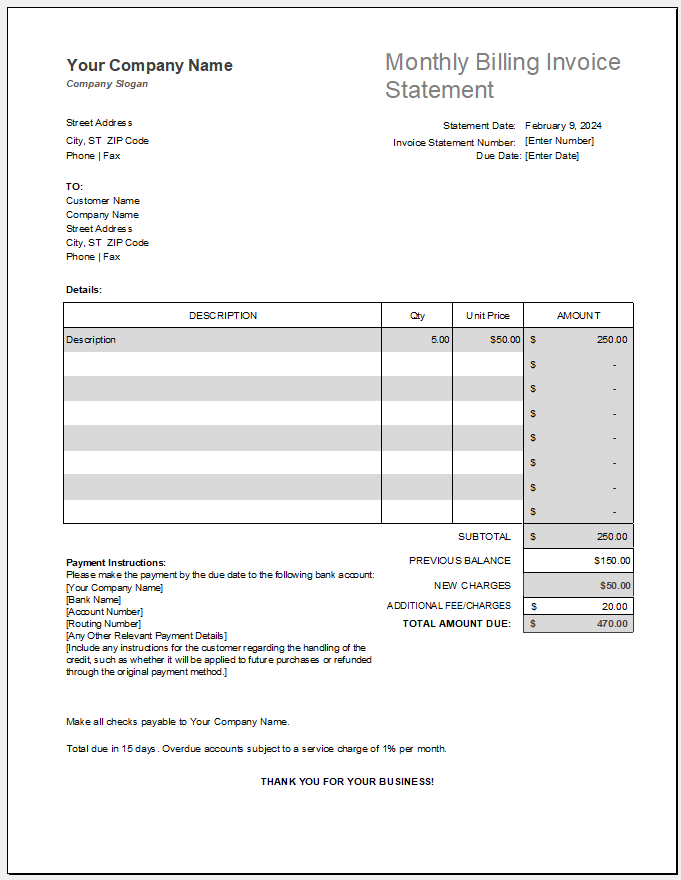
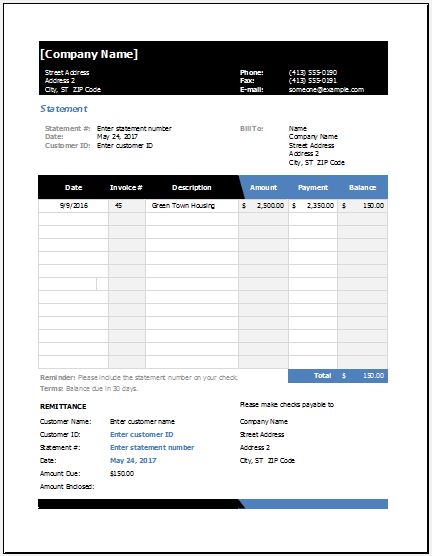
A monthly billing invoice statement is used to record all the purchases made and invoices issued during a month. It includes previous balances, amounts due, aging information, and a remittance section. You can record all the details about your customer’s invoices for the month in this invoice statement.
This invoice statement is a document that is used to list each amount that is due, indicate whether any previous payments have been made, and then calculate the outstanding balance.
The remittance section of this statement is for use by customers to indicate the amount they have paid. The statement is used as a notification sent to a specific customer who has received an invoice but whose payment is still outstanding. This customer has ongoing transactions with the business, including purchases and payments.
Using the statement
The monthly billing invoice statement provides a summary of the customer’s balance and is used as a request for payment of the outstanding balance. The statement should be sent to the customer a few days after the invoice is sent and before the end of the first billing cycle agreed upon with the customer.
If payment is not received by the end of the second billing cycle, another billing invoice statement should be sent to the customer. This second statement will be a step in the collection process.
Business & Statement Details
Customer Details
Opening Balance & Adjustments
Remittance & Payment Instructions
Statement SummaryFinal Review
MONTHLY BILLING STATEMENT
BILL FROM
BILL TO
ACCOUNT
PAYMENT TERMS
Invoice Activity
Date
Invoice #
Description
Charges
Payments / Credits
Balance
Previous Balance
New Charges
Payments / Credits
Adjustments
AMOUNT DUE
Aging Summary
Payment Information
REMITTANCE SECTION
REMIT PAYMENT TO
CUSTOMER PAYMENT
Account:
Statement:
Amount Due:
Amount Paid: __________________
What is the purpose of a monthly billing invoice statement?
The invoice statement is issued to a specific person to let them know how much they have to pay by the due date. The total amount to be paid after the due date is also mentioned in the billing invoice.
The invoice contains the total balance as well as the total amount of purchases. Generally, the statement is issued after services have been provided. For example, when a patient is discharged from the hospital, a billing statement is issued to them. Details of previous and current balances are also mentioned in the invoice.
What is the common information mentioned in the statement?
Monthly billing statements are commonly used by credit card companies to document all purchases customers have made using their credit cards. The statement includes the following details:
The total amount the customer owes
Details of all the purchases made by the customer
Cash withdrawal details
The minimum payment required
The payment due date
Details of the credit limit
The terms and conditions of the company issuing the invoice statement
The aforementioned details are commonly included, but the information may vary from one statement to another. You can add more details specific to your billing statement.
The customer should read the monthly statement carefully to keep track of their purchases. They can compare the transaction history listed in the statement with their records. It is advisable to make the payment as soon as you receive the billing invoice statement to avoid additional charges for paying after the due date.
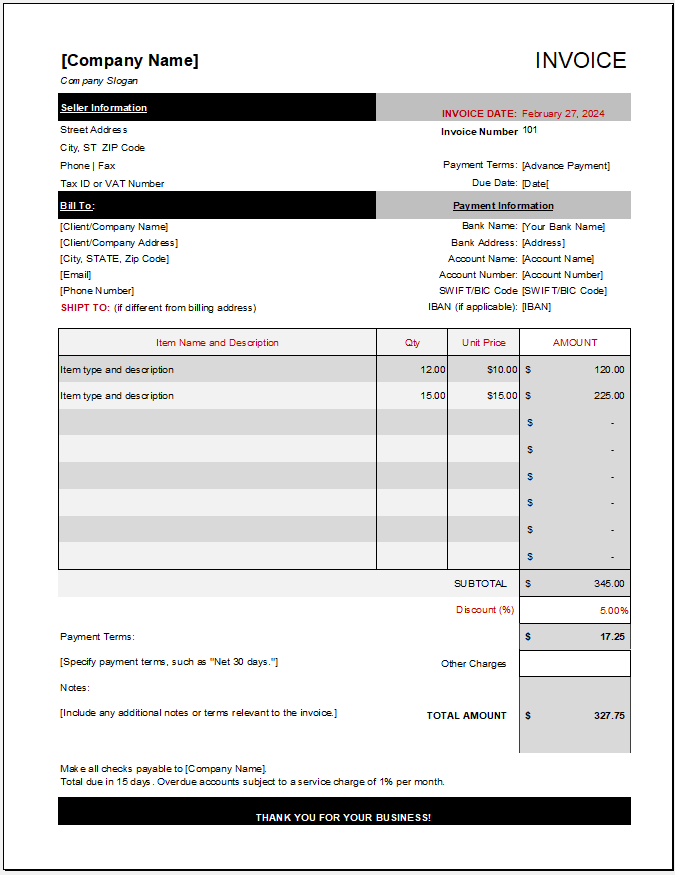
An invoice is a financial document used to indicate the payment that a customer or client needs to make for goods or services received. It provides a detailed breakdown of the purchased items along with the total amount due. In most standard cases, invoices include items that share the same due date, making the payment […]
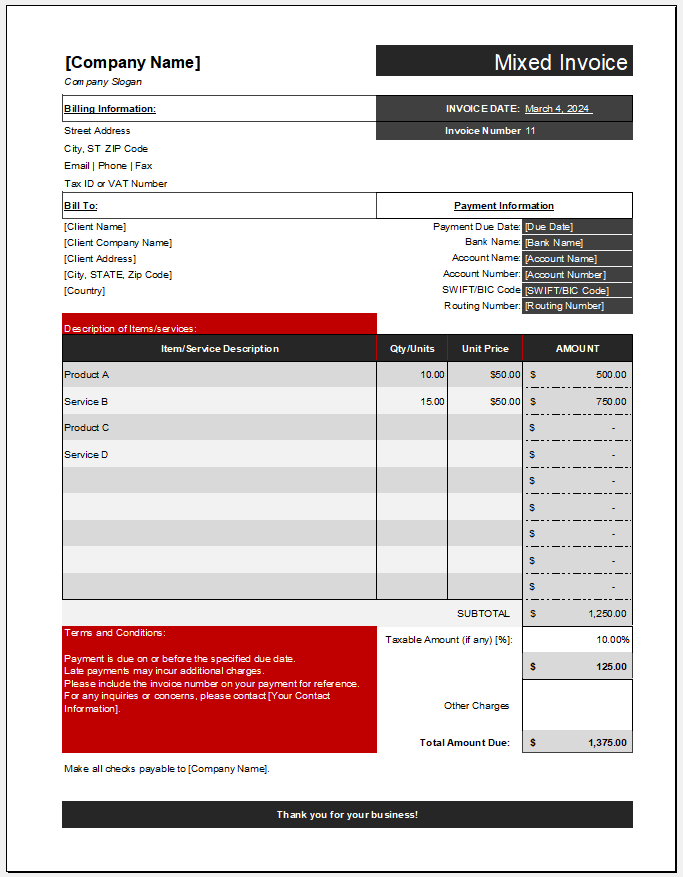
Almost every organization uses an invoice to provide billing information to customers and clients. All those people who are selling products and services always need to use an invoice. The invoice has nothing to do with the payment method being used by a service provider. In plain and simple words, the invoice is a critical […]
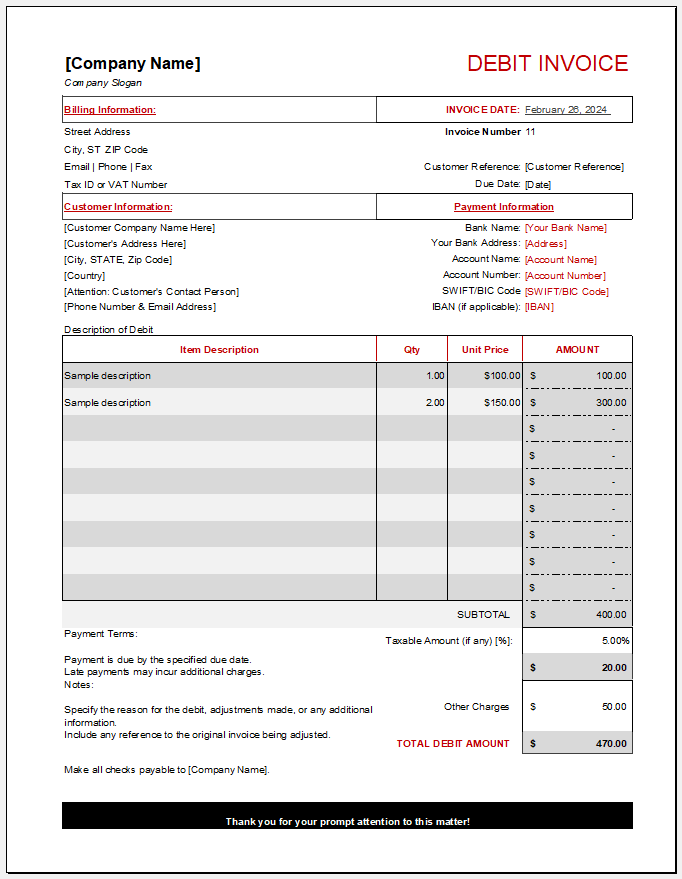
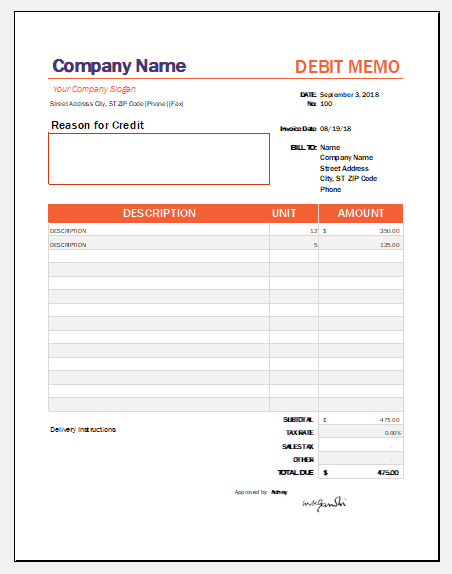
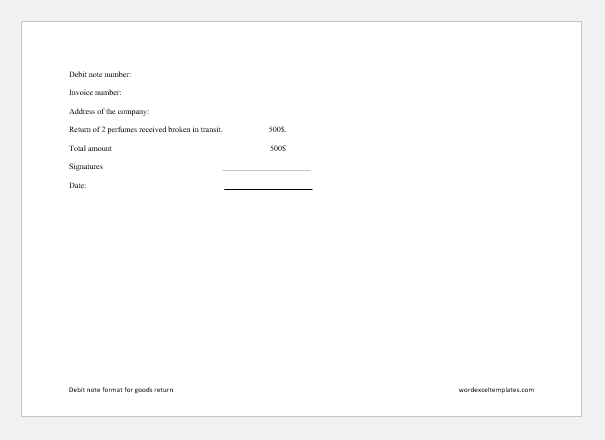
Debit invoices are also being used in businesses extensively as they perform the same job as the conventional invoice. However, there are some differences. Invoices are used to show the total amount that the customer has to pay. On the other hand, the debit note tells how much return or exchange needs to be adjusted […]
Every business engages in buying and selling. As a result, they are constantly receiving bills or sending bills. Sometimes, these bills may need adjustment, which is done through memos. What is a debit memo? A debit memo is a document used to adjust accounting records, particularly when a business sends back goods with a complaint […]
A rental billing statement provides an itemized record of rent and other charges billed to a tenant for a particular period. It can show the current rent, additional charges, previous balances, payments received, adjustments, and the remaining amount due. The Rental Billing Statement Generator below helps landlords and property managers prepare this information in a […]
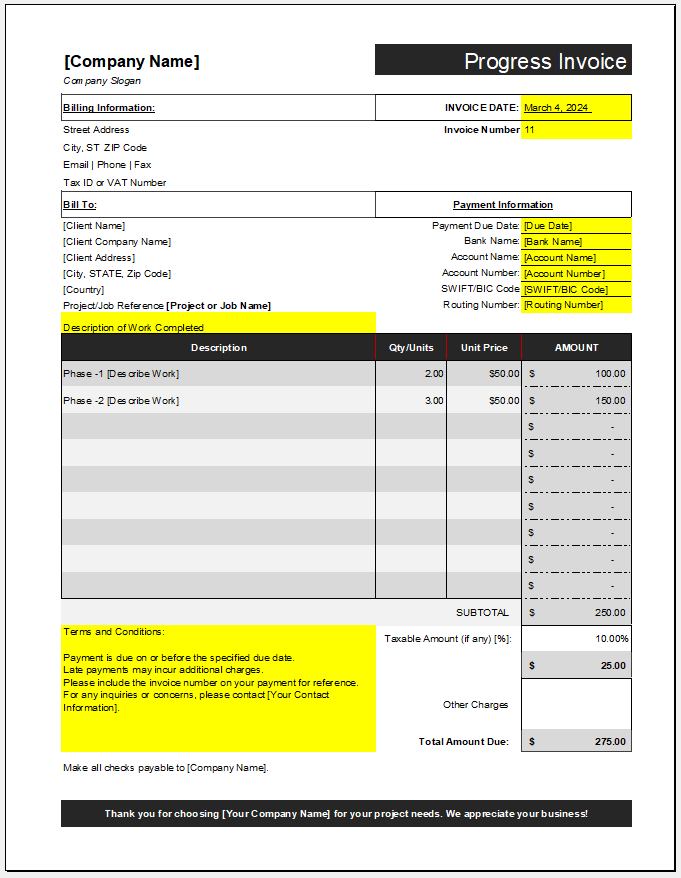
The Progress Invoice Generator is a professional online tool designed for businesses and contractors who bill clients based on the completion of project milestones or stages of work. Unlike a standard invoice that requests payment for the entire project, a progress invoice allows you to invoice customers as work progresses, making it ideal for long-term […]
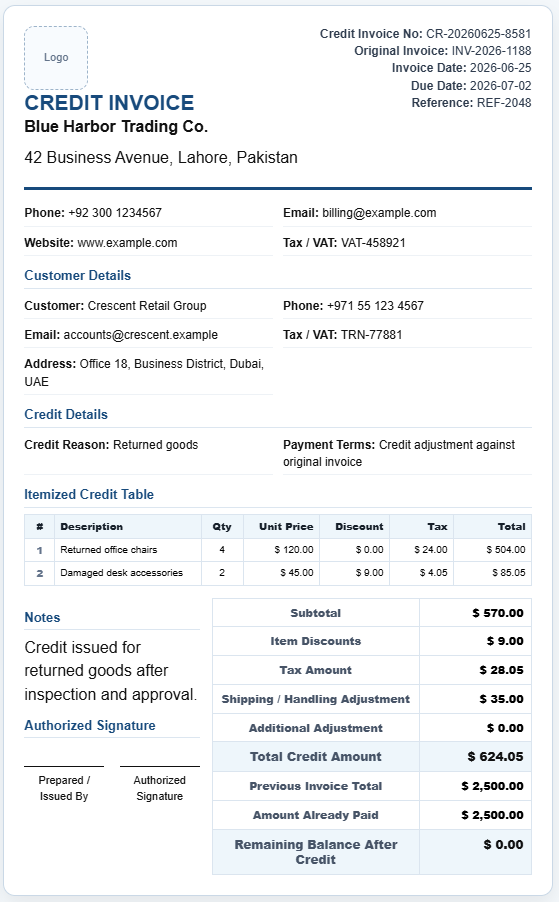
Our Online Credit Invoice Generator is designed to help businesses, freelancers, retailers, wholesalers, contractors, and service providers create professional credit invoices within minutes. Whether you need to issue a credit for returned products, billing corrections, overpayments, price adjustments, damaged goods, or service cancellations, this tool provides everything required to prepare an accurate and professional credit […]
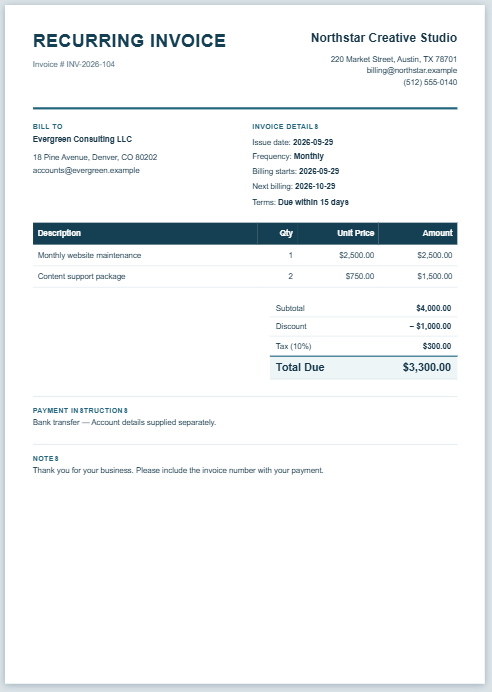
A recurring invoice is a billing document used to request payments for products or services provided regularly, such as weekly, monthly, quarterly, or annually. It is commonly used when a business charges its customers at fixed intervals for ongoing services, subscriptions, maintenance contracts, or rental agreements. How to Use the Recurring Invoice Generator? Our Recurring […]
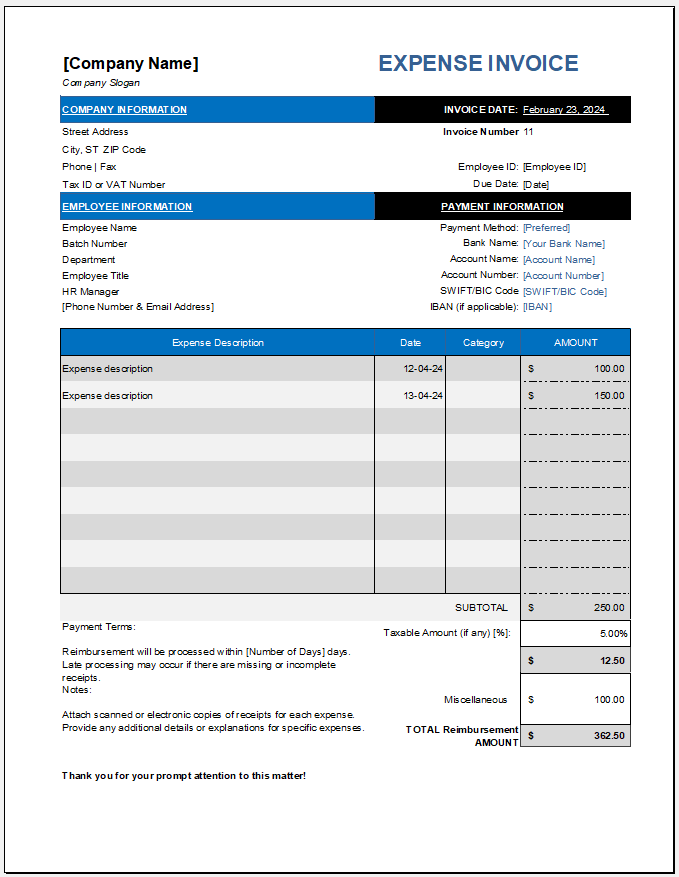
Sending an invoice is a professional way for businesses to request payment. Invoices serve as proof that payment was requested, services were provided, and a transaction took place. For this reason, it is difficult to imagine running a business efficiently without using invoices. An expense report invoice is similar to a standard invoice because it […]
An invoice is a simple list of all the goods and services a purchaser has purchased and the prices of all those added items. In simple language, an invoice is also known as a bill. Some sellers or suppliers immediately issue the invoice after the purchase. However, in some cases, the supplier does not send […]
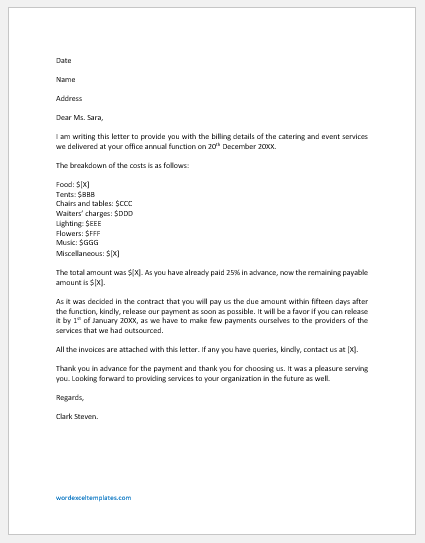
A billing statement letter for the services rendered is a letter that is written by the service provider and is addressed to the client organization, which has sought and received the services. In this letter, the amount payable by the organization is mentioned, with the breakdown of the costs. In addition to that, a request […]
What is a debit note for goods returned? A debit note is generally written from the buyer to the seller to request him to accept the return of goods because of any reason. The most common reason that buyers usually have to return goods is that they receive a damaged product that is totally useless […]