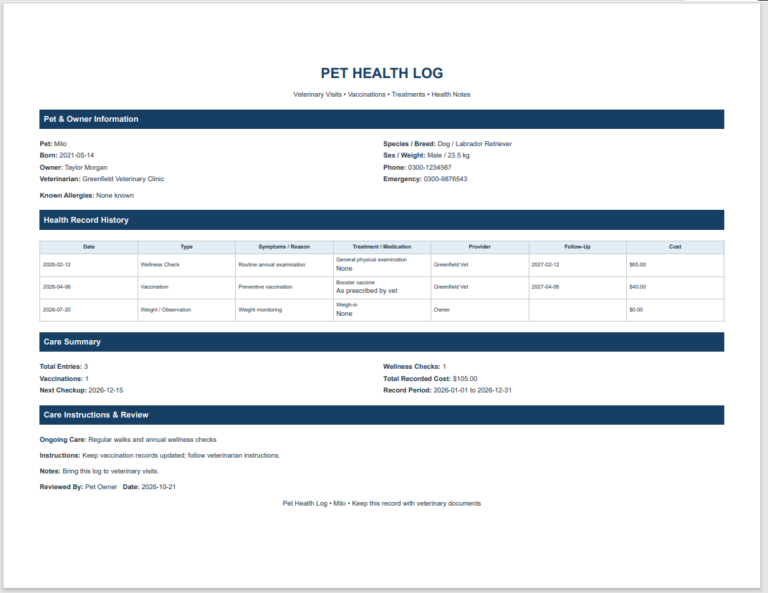
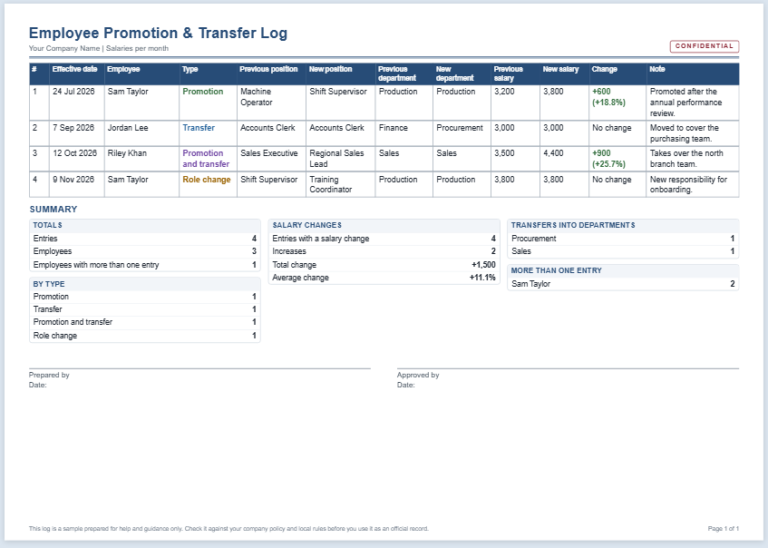
A workplace should be a safe place to work. Looking after the health and safety of employees is an important part of running any organisation. When an incident occurs, it should be recorded and followed up carefully. A health and safety incident log can be used for this.
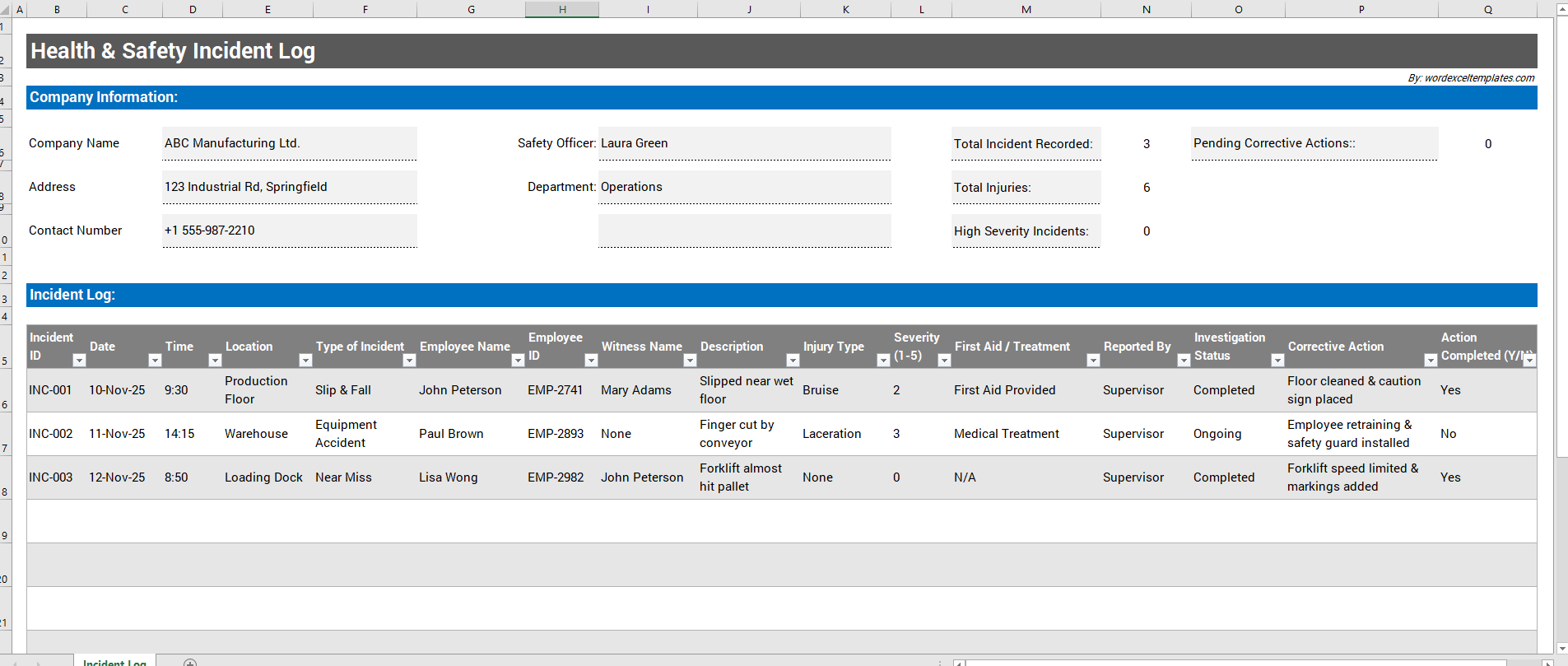
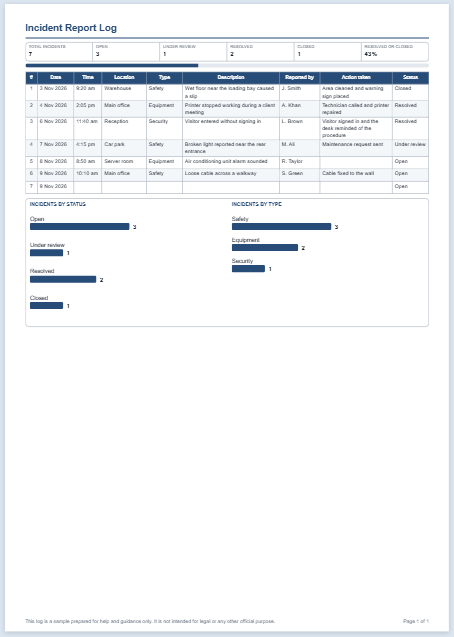
A health and safety incident log keeps a clear record of workplace incidents, so that the organisation can see what happened, what was done and what still needs to be done.
What is a health and safety incident log
A health and safety incident log is a document that records workplace incidents, such as accidents, injuries and near misses. It is kept in the organisation’s records so that it can be reviewed when needed.
Health and Safety Incident Log Generator
Record each incident with the date, location, a short description, the type and severity, the action taken, the follow-up action and its due date, and the status. The number of open and overdue incidents and the count by type are worked out for you. Check the preview, then print the log or save it as a PDF, or download an Excel workbook with working formulas. Leave the incidents empty to print a blank log. Your details stay in your browser and are not sent anywhere. This log is a sample prepared for help and guidance only. It is not intended for legal or any other official purpose.
Log Details
A follow-up is shown as overdue when its due date is before the log date and the status is not closed. Each incident gets a reference such as HS-001 in the order entered.
Incidents
Page & Style
Why the log is important
The log helps an organisation record health and safety issues, such as workplace accidents. It notes the safety issues that were reported and the action taken in response, which shows how each incident was handled.
Benefits of using the log
The following are some benefits of using a health and safety incident log.
- Details of each incident are recorded, so the organisation and the people concerned stay informed.
- The action taken is recorded, which supports clear and careful handling.
- The organisation can spot patterns and recurring hazards and think about ways to reduce similar incidents in future.
- A written record makes it easier to review incidents and follow up on actions.
What to include
The log should include certain details to be useful. These are described below.
Employee details
- Record the details of the person involved in the incident.
- Include their name, job title and any other relevant information.
- Check that the information is accurate, so that follow-up is easy.
Incident details
- Record the date, time and location of the incident.
- Note everyone involved, including any witnesses.
- Record any injuries.
- Add a clear description of what happened.
Action taken
- Record the action taken to deal with the incident.
- Note the follow-up actions planned to help prevent a similar incident, who is responsible and the date each is due.
Tips to make a good log
The following tips can help when you make the log.
Choose an application
The log should have a clear, professional format. It can be created in an application such as Microsoft Excel, which keeps the layout neat and easy to read.
Include the relevant details
The log should be easy to fill in and should include all the important details.
- Add a heading such as “Health and Safety Incident Log”.
- Add a place for the date of the report and the name of the person who made it.
- Include the name and job title of the person involved, and the details of the manager.
- Add a section for incident details, with the date, time and location.
- Add a section for a description of the incident, and for any witnesses.
- Add a section for the action taken, and for the reason for it.
- Add a place for the person reporting to write their name and the date, if your organisation asks for it.
Conclusion
A health and safety incident log is a useful record for any organisation. Incidents should be recorded carefully, so that managers can see what happened, how it was handled and what to do next. Keeping a clear log shows that incidents are taken seriously and followed up.