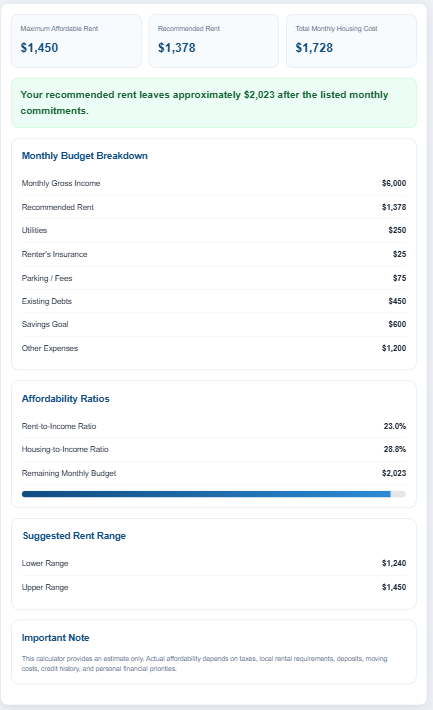
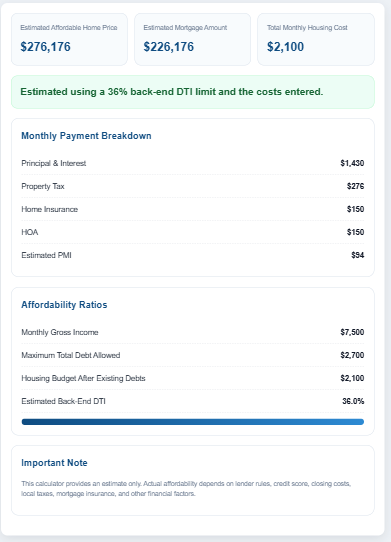
A Debt-to-Income Ratio Calculator helps you understand how much of your gross monthly income is already committed to required debt payments. This percentage is commonly reviewed by lenders when evaluating mortgage, personal loan, and other credit applications.
To use the calculator, enter your gross monthly salary and any additional reliable income. Next, add your monthly housing costs, including mortgage or rent, property tax, homeowners insurance, and HOA fees. Then enter other required debts such as auto loans, student loans, credit card minimum payments, and personal loans.
Debt-to-Income Ratio Calculator
Calculate front-end and back-end DTI ratios, review your borrowing position, and estimate a safer monthly debt limit.
Monthly Income
Monthly Housing Costs
Other Monthly Debts
Live Preview
Frequently Asked Questions
What is a debt-to-income ratio?
DTI compares your required monthly debt payments with your gross monthly income. It is commonly used to assess whether a new loan payment may be manageable.
What is the difference between front-end and back-end DTI?
Front-end DTI includes housing costs only. Back-end DTI includes housing costs plus auto loans, student loans, credit card minimums, and other recurring debts.
What is considered a good DTI ratio?
Lower ratios generally provide more financial flexibility. Many borrowers aim to keep back-end DTI around 36% or below, although lender limits vary by loan program and borrower profile.
Should living expenses be included?
DTI normally focuses on required debt payments rather than groceries, utilities, and discretionary spending. Those expenses should still be considered in your personal budget.
Does this calculator guarantee loan approval?
No. It provides an estimate only. Approval depends on the lender's underwriting rules, credit score, income documentation, loan type, down payment, and other factors.