In the business world, sellers often need to provide buyers with pricing and order details before a sale is completed. A proforma invoice serves this purpose by outlining the proposed goods, quantities, prices, and transaction terms.
Buyers can use this document to review the expected cost before confirming an order or arranging payment. It provides a written reference for discussing the proposed transaction and clarifying its details.
A seller may issue a proforma invoice when a prospective buyer requests one or when a transaction requires advance documentation. The buyer does not necessarily have to commit to the purchase before receiving it.
Unlike a final sales invoice, a proforma invoice is a preliminary document. Its prices may be estimated or agreed upon, but the document should clearly state any conditions, assumptions, and validity period.
It is generally issued before goods are shipped or services are provided. This gives the buyer an opportunity to review the details and request changes. Any changes or cancellations should be handled according to the terms agreed between the parties.
Create free proforma invoice below.
Seller and buyer details
Products and services
Add quoted products or services. Line amount = quantity × unit price.
Pricing and delivery terms
Review and authorization
Use Download for Excel to edit the invoice with formulas, or Print / Save PDF.
Why is a Proforma Invoice Important?
Although buyers and sellers may discuss an order over the phone, a written document provides a clearer record of the proposed transaction. It helps both parties review the same information and reduces the likelihood of misunderstandings.
A proforma invoice can be provided in print or electronically and retained for future reference. It brings together important details such as product descriptions, quantities, expected charges, and delivery arrangements.
What Information is Included in a Proforma Invoice?
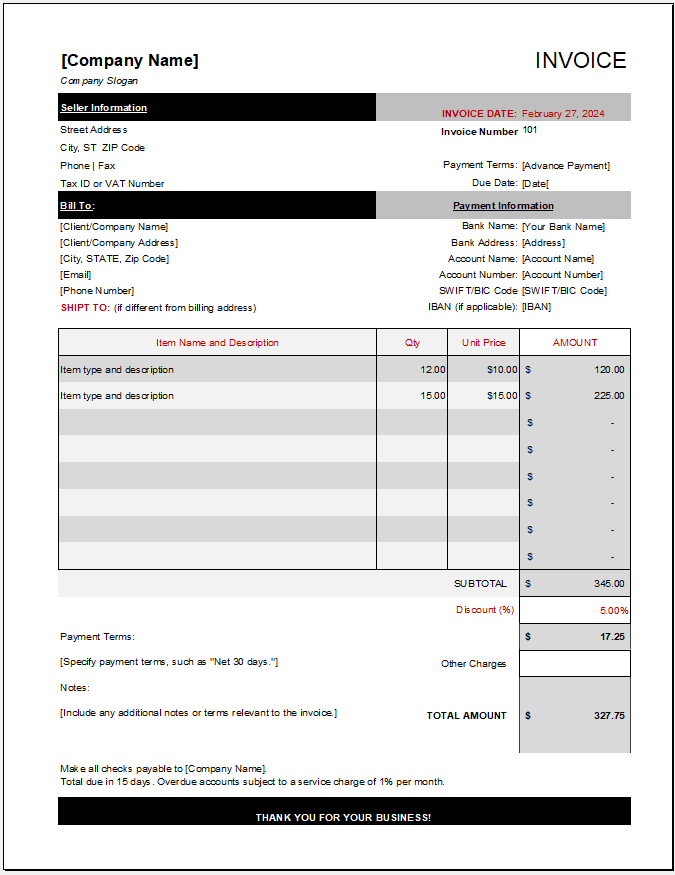
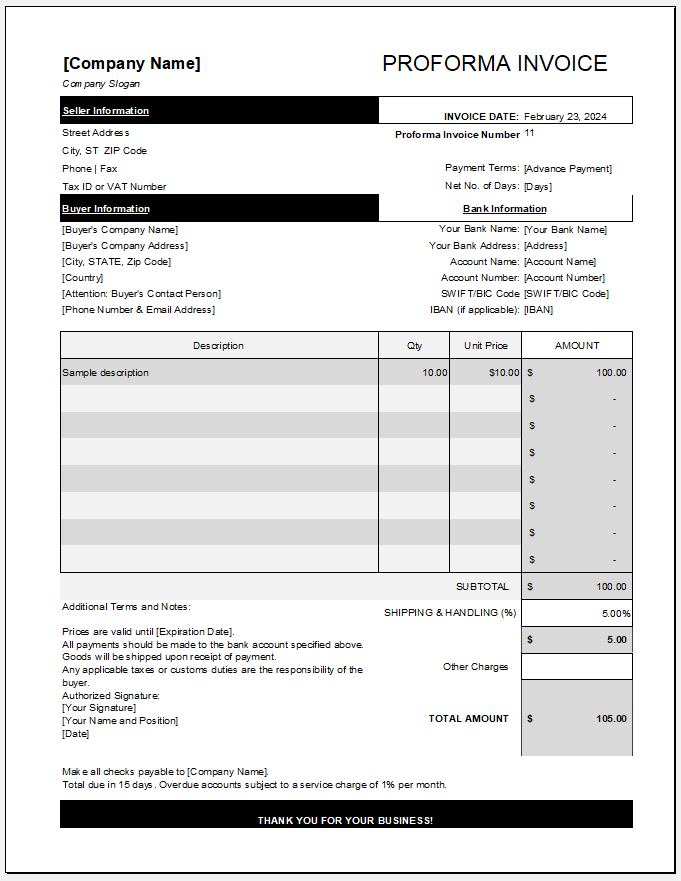
Clearly label the document “Proforma Invoice” and include its issue date, reference number, and validity period. Other common details include the following:
Buyer and Seller Information
Include the names, addresses, and contact details of both parties. The seller’s business logo may also be added for identification.
Product Descriptions
List each product with its description, quantity, unit price, and line total. Include relevant specifications, such as model numbers, sizes, or materials. For services, describe the proposed scope of work.
These details allow the buyer to check that the proposed order matches their requirements before proceeding.
Shipping Details
State the proposed shipping method, destination, estimated dispatch or delivery date, and any shipping charges. Explain which party is responsible for transportation costs and other relevant delivery arrangements.
Price Details
This section shows the expected total cost of the order. Provide a breakdown of the subtotal, discounts, shipping charges, and applicable taxes. State the currency clearly.
For international transactions, identify any duties or other charges included in the quoted total and clarify which charges, if any, are excluded or payable separately by the buyer. Clearly distinguish estimated amounts from confirmed charges.
Payment Terms
Include the proposed payment method, any advance payment required, and the timing of payment. Explain any conditions that must be met before the order is processed or shipped.
You can add other details relevant to your business or the transaction. An editable template can help you prepare the document consistently, but review all descriptions, amounts, and terms before sending it to the buyer.
Invoice Sample Size: 46 KB