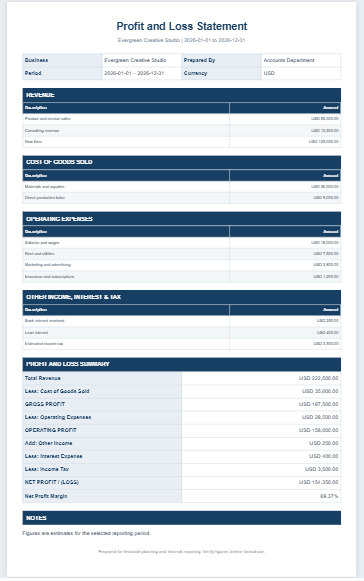
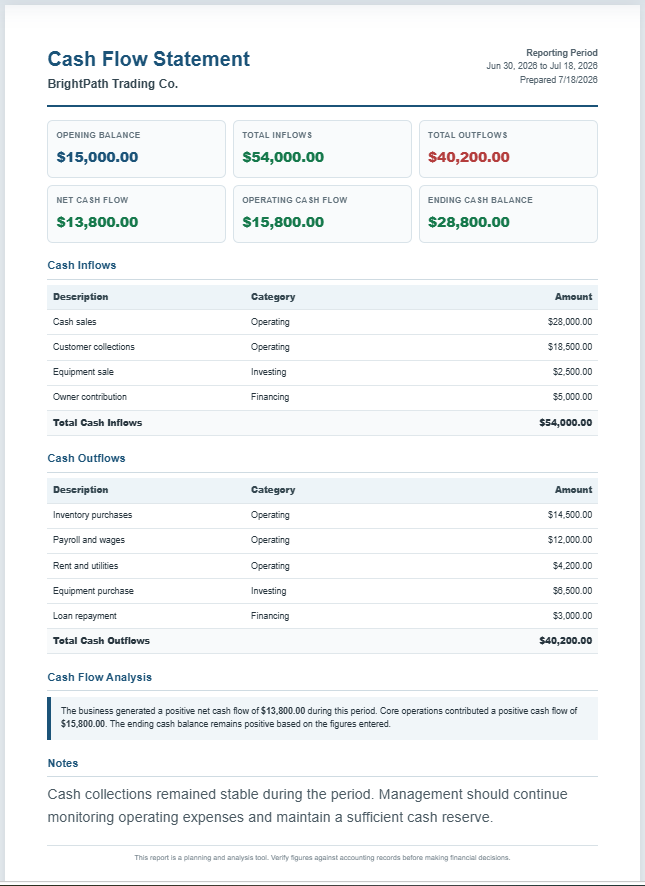
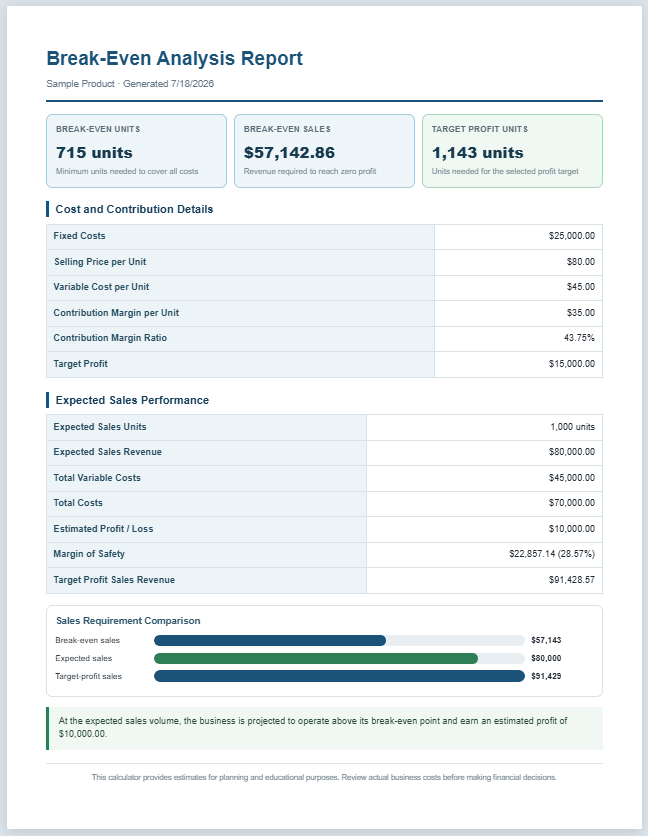
The Profit Margin Calculator is a practical business tool that helps you measure the profitability of your products, services, or overall business operations. Whether you run a small business, an online store, a retail shop, or work as a freelancer, understanding your profit margins is essential for making better pricing and financial decisions. This calculator makes the process simple by automatically calculating gross profit margin, operating margin, net profit margin, markup, and profit percentage based on the values you enter.
Profit Margin Calculator
Used to calculate markup.
Live Profitability Report
Profit Margin Report
Business profitability summary
Gross Profit$0.00
Operating Profit$0.00
Net Profit$0.00
Gross Margin0.00%
Operating Margin0.00%
Net Margin0.00%
Profitability Breakdown
| Measure | Amount / Rate |
|---|---|
| Total Revenue | $0.00 |
| Cost of Goods Sold | $0.00 |
| Gross Profit | $0.00 |
| Operating Expenses | $0.00 |
| Operating Profit | $0.00 |
| Interest, Tax & Other Costs | $0.00 |
| Net Profit | $0.00 |
| Markup on Unit Cost | 0.00% |
| Profit Percentage per Unit | 0.00% |
Per-Unit Analysis
| Item | Value |
|---|---|
| Selling Price per Unit | $0.00 |
| Cost per Unit | $0.00 |
| Profit per Unit | $0.00 |
| Units Sold | 0 |
| Revenue per Unit | $0.00 |
Target Margin Check
Enter your figures to review profitability.
Formula Reference
Gross Margin = (Revenue − Cost of Goods Sold) ÷ Revenue × 100
Operating Margin = Operating Profit ÷ Revenue × 100
Net Margin = Net Profit ÷ Revenue × 100
Markup = (Selling Price − Unit Cost) ÷ Unit Cost × 100
Profit Percentage = Profit per Unit ÷ Selling Price × 100
Frequently Asked Questions
What is a profit margin calculator?
A profit margin calculator measures how much profit remains after costs are deducted from sales revenue. It can calculate gross, operating, and net profit margins.
How is gross profit margin calculated?
Gross profit margin is calculated by subtracting cost of goods sold from revenue, dividing the result by revenue, and multiplying by 100.
What is operating profit margin?
Operating profit margin shows the percentage of revenue left after paying both direct product costs and normal operating expenses.
What is net profit margin?
Net profit margin is the final percentage of revenue remaining after all expenses, including operating costs, interest, taxes, and other charges.
What is the difference between margin and markup?
Margin measures profit as a percentage of selling price, while markup measures profit as a percentage of cost.
Can retailers use this calculator?
Yes. Retailers can compare selling prices, product costs, markup, and profit percentages before pricing inventory.
Is this calculator useful for freelancers?
Yes. Freelancers can enter service revenue and operating expenses to estimate operating and net margins.
Can eCommerce sellers calculate product profitability?
Yes. Sellers can include product cost, advertising, platform fees, shipping overhead, taxes, and other business expenses.
What is a good profit margin?
A good margin depends on the industry, business model, competition, and risk level. Compare your result with your own targets and relevant industry benchmarks.
Does the calculator save my data?
No. The calculator runs in your browser and does not send or permanently store the figures entered.