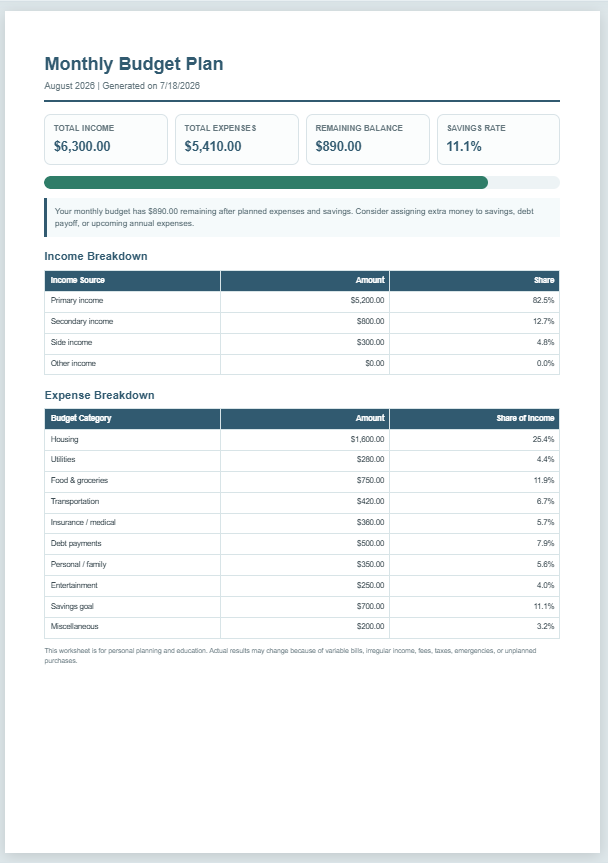
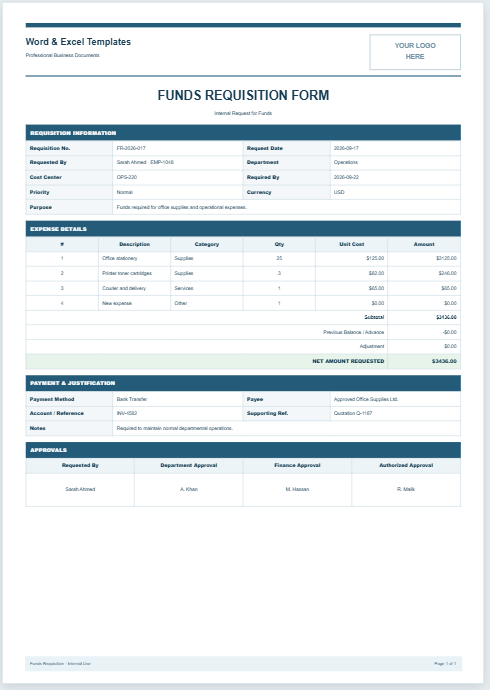
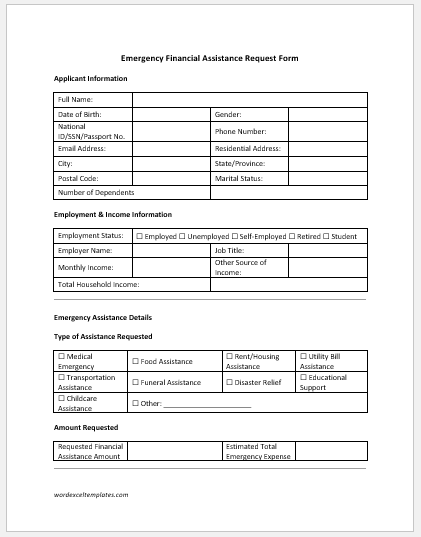
An Emergency Fund Worksheet is a much needed financial planning tool designed to help you calculate how much money you should save for unexpected situations. It organizes your essential monthly expenses, estimates your ideal emergency savings target, tracks your current progress, and shows how long it may take to reach your goal based on your monthly contributions. This worksheet includes fields for housing, utilities, groceries, transportation, insurance, debt payments, and other necessary expenses. It also allows users to select a savings coverage period, monitor progress with a visual indicator, and generate a professional printable report.
Why should you use an Emergency Fund Worksheet?
Unexpected events such as job loss, medical emergencies, home repairs, or vehicle breakdowns can create financial stress. Having a dedicated emergency fund helps you handle these situations without relying on credit cards or loans. This worksheet simplifies the planning process by calculating your total monthly essentials and recommending a savings goal based on three, six, nine, or even twelve months of living expenses. It also provides milestone tracking, making it easier to stay motivated while building your financial safety net.
(Online Editable Sheet)
Emergency Fund Worksheet
Calculate an ideal emergency fund, track savings progress, and estimate your target completion date.
Frequently Asked Questions
Helpful answers for building and tracking an emergency savings cushion.
1. What is an emergency fund?
An emergency fund is money set aside for unexpected expenses or income interruptions, such as medical bills, car repairs, urgent home repairs, or job loss.
2. How much should I save in an emergency fund?
A common guideline is three to six months of essential living expenses. Some households prefer nine to twelve months if income is variable, dependents rely on them, or job replacement may take longer.
3. How does this emergency fund worksheet calculate the target?
The worksheet adds your essential monthly expenses and multiplies that amount by your selected coverage period. For example, six months of coverage equals monthly essentials multiplied by six.
4. What expenses should be included?
Include necessary expenses such as housing, utilities, food, transportation, insurance, medical costs, minimum debt payments, and other basics required to keep your household stable.
5. Should non-essential spending be included?
Usually no. Emergency fund targets focus on essential living expenses. Optional subscriptions, entertainment, vacations, and discretionary shopping are normally excluded or reduced.
6. What does savings progress mean?
Savings progress shows your current emergency savings as a percentage of your target fund. It helps you see how far you have come and how much remains.
7. How is the target completion date estimated?
The completion date is estimated by projecting your current savings forward using your monthly contribution and optional savings APY until the target fund amount is reached.
8. Where should I keep an emergency fund?
Many people keep emergency funds in a savings account or money market account that is liquid, separate from daily spending, and easy to access when needed.
9. Can this worksheet be paired with an Emergency Fund Calculator?
Yes. An Emergency Fund Calculator can estimate the ideal target, while this worksheet can break down expenses, track current savings, monthly contributions, milestones, and completion timing.
10. Can I print or save the worksheet?
Yes. Use the Print / PDF button to print the live emergency fund plan or save it as a PDF through your browser's print dialog. Inputs and FAQs are excluded from the printed report.
How does the worksheet work?
The worksheet begins by asking you to enter your monthly essential expenses. It then totals these expenses and multiplies them by your selected coverage period to determine your recommended emergency fund target. After entering your current savings balance and planned monthly contribution, the worksheet estimates your savings progress and predicts when you are likely to achieve your goal. If desired, you can also include an estimated annual savings interest rate for more accurate projections. The worksheet automatically updates the live preview as values change, allowing you to instantly see the impact of your financial decisions.
Who can benefit from this worksheet?
This worksheet is useful for anyone who wants to improve financial security. Individuals, families, students, freelancers, self-employed professionals, and business owners can all use it to prepare for unexpected expenses. Financial advisors and budgeting coaches can also use it as a planning resource when helping clients establish healthy saving habits.
What features does this worksheet include?
The Emergency Fund Worksheet offers several helpful features, including automatic expense calculations, customizable savings targets, progress tracking, estimated completion dates, expense breakdown tables, savings milestones, multiple currency options, and a clean live preview. It also includes professional Print/PDF functionality, allowing users to save or print their emergency savings plan in a well-formatted report.
When should you update your emergency fund?
Your emergency fund should be reviewed whenever your financial situation changes. Major life events such as a salary increase, marriage, having children, moving to a new home, or changes in monthly expenses may require a larger or smaller emergency savings target. Updating the worksheet regularly ensures that your savings goal continues to match your current lifestyle and financial responsibilities.
Overall, this Emergency Fund Worksheet is an excellent budgeting companion that helps users build financial confidence, stay organized, and prepare for life’s unexpected challenges with a clear and realistic savings plan.